
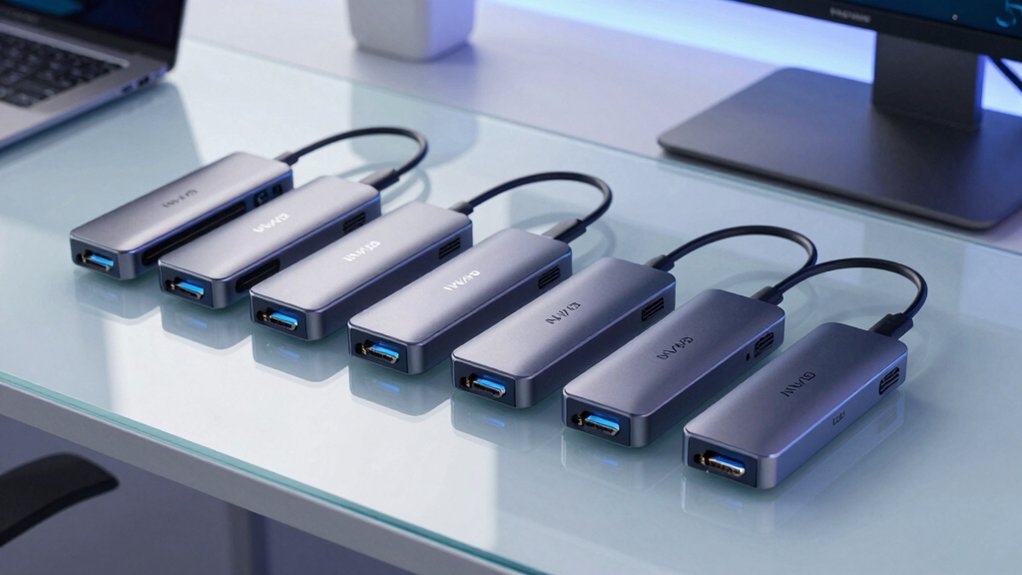

You’re evaluating 6NVMe-to-USB options for fast storage access. Start with the M.2 NVMe/SATA USB-C Dock, check its drive compatibility and tool-free setup. Next, compare ACASIS models for M/B Key and M/B+M Key layouts, noting cooling, USB-C 10Gbps support, and plug-and-play ease. Then review RIITOP’s docking simplicity, and the 10Gbps M.2 adapters for direct NVMe use. Finally, weigh overall build quality, airflow, and capacity claims up to 8 TB. A practical choice awaits if you want reliable, fast expansion.
| M.2 NVMe & SATA USB-C Docking Station |

| Best All-Royale | Interface: USB-C (USB 3.1 Gen 2 up to 10 Gbps; USB-C data cable included) | Drive support (M.2 keys): M.2 NVMe (M Key, B+M Key SSDs; NVMe/NVMe & SATA; not AHCI B Key) | Form factor: External docking station | VIEW LATEST PRICE | Read Our Analysis |
| ACASIS NVMe/SATA USB-C Enclosure Dock (M/B Key) |

| Best Heat Management | Interface: USB 3.2 Gen 2 (10 Gbps) | Drive support (M.2 keys): M.2 NVMe & SATA (M Key & B+M Key) | Form factor: External enclosure/dock | VIEW LATEST PRICE | Read Our Analysis |
| ACASIS NVMe to USB Docking Station (M/ B+M) |
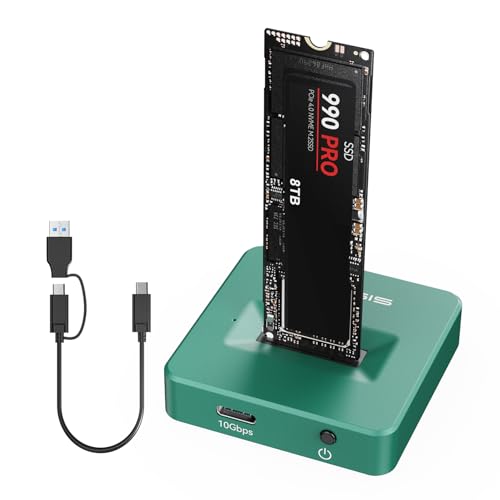
| Ultra-Portable Performer | Interface: USB 3.2 Gen 2 (10 Gbps) Type-C | Drive support (M.2 keys): M.2 NVMe (M Key) & B+M Key; includes SATA option | Form factor: External docking station | VIEW LATEST PRICE | Read Our Analysis |
| RIITOP NVMe to USB Docking Station Adapter |
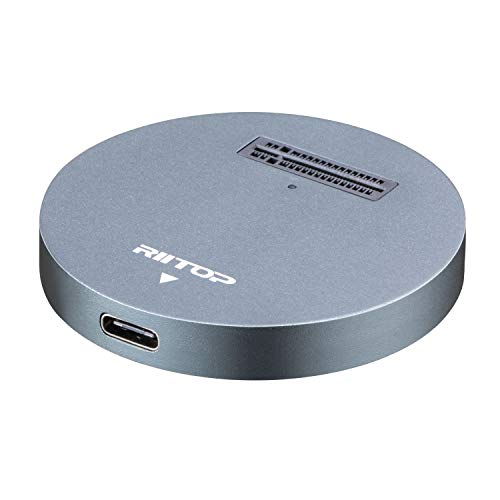
| Big-Brand Value | Interface: USB-C (NVMe to USB dock; USB-C to USB-C/adapter included) | Drive support (M.2 keys): M.2 NVMe (M Key) only; supports certain NVMe models | Form factor: External docking station | VIEW LATEST PRICE | Read Our Analysis |
| M.2 NVMe/SATA USB Adapter Enclosure (10Gbps) |
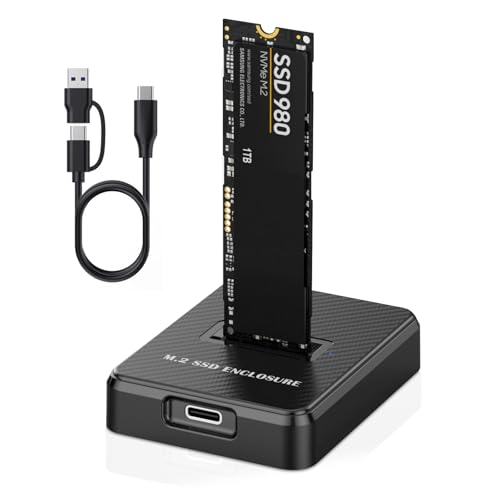
| 10Gbps Data Pro | Interface: USB 3.2 Gen 2 (10 Gbps) USB-C | Drive support (M.2 keys): M.2 NVMe (M Key) & (B+M Key) SATA SSDs | Form factor: External enclosure/adapter | VIEW LATEST PRICE | Read Our Analysis |
| NVMe to USB Docking Station for M.2 SSDs |

| Thunderbolt Ready | Interface: USB 3.2 Gen 2 (10 Gbps) Type-C | Drive support (M.2 keys): M.2 NVMe (M Key) & B+M Key; SATA compatible | Form factor: External docking station | VIEW LATEST PRICE | Read Our Analysis |
More Details on Our Top Picks
M.2 NVMe & SATA USB-C Docking Station
This M.2 NVMe & SATA USB-C Docking Station is a strong pick if you need broad compatibility and fast, no-fuss file transfers. You check compatibility first: supports M.2 sizes 2230/2242/2260/2280/22110 and works with NVMe PCIe M key or B+M key SSDs. Do not use M.2 SATA AHCI B Key SSDs. Connect the USB A to USB C cable for broader devices. Transfer speeds reach up to 10 Gbps for NVMe and 6 Gbps for SATA. It’s Plug & Play across Windows, Mac, Linux, Android; no driver needed, tool-free installation, and notes on heat.
- Interface:USB-C (USB 3.1 Gen 2 up to 10 Gbps; USB-C data cable included)
- Drive support (M.2 keys):M.2 NVMe (M Key, B+M Key SSDs; NVMe/NVMe & SATA; not AHCI B Key)
- Form factor:External docking station
- Heat management:Plastic shell with heat considerations noted; heatsink not allowed
- OS compatibility:Windows, Mac OS, Linux, Android
- Plug & Play:Plug & Play; driver-free
- Additional Feature:Heatsink not supported
- Additional Feature:Thunderbolt 3 compatibility stated
- Additional Feature:4 TB max capacity
ACASIS NVMe/SATA USB-C Enclosure Dock (M/B Key)
If you need a versatile, plug-and-play enclosure that handles both NVMe and SATA drives at USB 3.2 Gen 2 speeds, the ACASIS NVMe/SATA USB-C Enclosure Dock is a strong fit, especially for users who require quick backups and high-capacity storage. This device uses aluminum housing for cooling and supports M.2 NVMe and SATA SSDs with M Key or B+M Key. It delivers up to 10 Gbps transfer, and its tool-free, driver-free design simplifies setup. It fits 2230, 2242, 2260, 2280 sizes and scales to 8TB. Use USB-C, verify OS compatibility, and back up data efficiently.
- Interface:USB 3.2 Gen 2 (10 Gbps)
- Drive support (M.2 keys):M.2 NVMe & SATA (M Key & B+M Key)
- Form factor:External enclosure/dock
- Heat management:Aluminum housing; open layout for airflow
- OS compatibility:Windows, Linux, macOS
- Plug & Play:Tool-free & driver-free plug-and-play
- Additional Feature:Aluminum chassis cooling
- Additional Feature:Open toaster-style layout
- Additional Feature:8 TB capacity claim
ACASIS NVMe to USB Docking Station (M/ B+M)
ACASIS NVMe to USB Docking Station (M/ B+M) stands out for its broad drive compatibility and no-fuss setup. You connect an M.2 NVMe SSD (M Key) or M.2 B+M Key, or a SATA drive, to the dock’s USB 3.2 Type-C port. You’ll notice a toaster-style aluminum chassis that dissipates heat, aiding performance. Use the tool-free, plug-and-play design to insert the drive, then connect to a computer with 10Gbps USB. Expect up to 10 Gbps transfers, ideal for backups or large file handling. Supports sizes 2230–2280, OS compatibility spans Windows, macOS, and Linux for broad use.
- Interface:USB 3.2 Gen 2 (10 Gbps) Type-C
- Drive support (M.2 keys):M.2 NVMe (M Key) & B+M Key; includes SATA option
- Form factor:External docking station
- Heat management:Aluminum alloy; toaster-style with airflow
- OS compatibility:Windows, Linux, macOS
- Plug & Play:Tool-free; driver-free; plug & play
- Additional Feature:Aluminum housing
- Additional Feature:Toaster-style design
- Additional Feature:8 TB backing up data
RIITOP NVMe to USB Docking Station Adapter
RIITOP’s NVMe to USB Docking Station Adapter is ideal for users who need a compact, plug-and-play way to access NVMe M.2 SSDs as external drives. You insert the NVMe M.2 device into the slot, then connect the USB-C cable to your computer. It supports most M.2 PCIe-based NVMe SSDs up to 2 TB, including Samsung 970 EVO and WD Black SSD models. Do not use PCIe M Key AHCI or SATA B+M/B Key drives. Note temperatures can exceed 60°C. Hot-plugging isn’t supported, so avoid swapping SSDs while connected. The package includes a USB-C cable and adapter.
- Interface:USB-C (NVMe to USB dock; USB-C to USB-C/adapter included)
- Drive support (M.2 keys):M.2 NVMe (M Key) only; supports certain NVMe models
- Form factor:External docking station
- Heat management:Aluminum or metal body; mentions temperature caution
- OS compatibility:Windows, macOS, Linux (implied)
- Plug & Play:Plug & Play; no extra mounting screws; hot-plug cautions
- Additional Feature:M.2 NVMe M Key
- Additional Feature:2 TB max capacity
- Additional Feature:Hot-plugging not supported
M.2 NVMe/SATA USB Adapter Enclosure (10Gbps)
This M.2 NVMe/SATA USB Adapter Enclosure (10Gbps) is ideal when you need fast, plug‑and‑play external storage that supports both NVMe and SATA SSDs. You insert an NVMe or M.2 SATA SSD into the dock, connect the USB‑C cable, and start transfer. It supports NVMe and B+M Key interfaces, with full-size 2280/2260/2242/2230 forms. It uses USB 3.2 Gen2 at up to 10Gbps for NVMe and up to 6Gbps for SATA drives. It’s plug‑and‑play, driver‑free, and hot‑swapable (while powered). Built in aluminium housing, it’s portable and designed for quick data migration and recovery tasks.
- Interface:USB 3.2 Gen 2 (10 Gbps) USB-C
- Drive support (M.2 keys):M.2 NVMe (M Key) & (B+M Key) SATA SSDs
- Form factor:External enclosure/adapter
- Heat management:Aluminum alloy housing; intelligent cooling structure
- OS compatibility:Windows, Linux, MacOS, Android
- Plug & Play:Plug & Play; driver-free
- Additional Feature:Aluminum alloy housing
- Additional Feature:10Gbps USB 3.2 Gen2
- Additional Feature:Troubleshooting/data recovery focus
NVMe to USB Docking Station for M.2 SSDs
If you need portable, fast NVMe storage for on-the-go use, this NVMe to USB Docking Station for M.2 SSDs stands out because it supports NVMe M.2 PCIe drives in multiple sizes (2230/2242/2260/2280) with a USB 3.2 Gen 2 interface up to 10Gbps, plus optional SATA compatibility. Use it to connect an M.2 SSD via Thunderbolt 4/3 or USB-C. It supports M Key and B+M Key modules, and backs up data up to 8TB. Install quickly with the tool-free design, then plug into your system, format if needed, and transfer files at high speed. Monitor temps, ensure cooling, and store securely.
- Interface:USB 3.2 Gen 2 (10 Gbps) Type-C
- Drive support (M.2 keys):M.2 NVMe (M Key) & B+M Key; SATA compatible
- Form factor:External docking station
- Heat management:Aluminum alloy shell; toaster-style cooling
- OS compatibility:Windows, Linux, macOS
- Plug & Play:Tool-Free; Driver-Free; Plug & Play
- Additional Feature:Thunderbolt 4/3 compatibility
- Additional Feature:Aluminum alloy shell
- Additional Feature:Toaster-style design
Factors to Consider When Choosing NVMe to USB Docking Stations
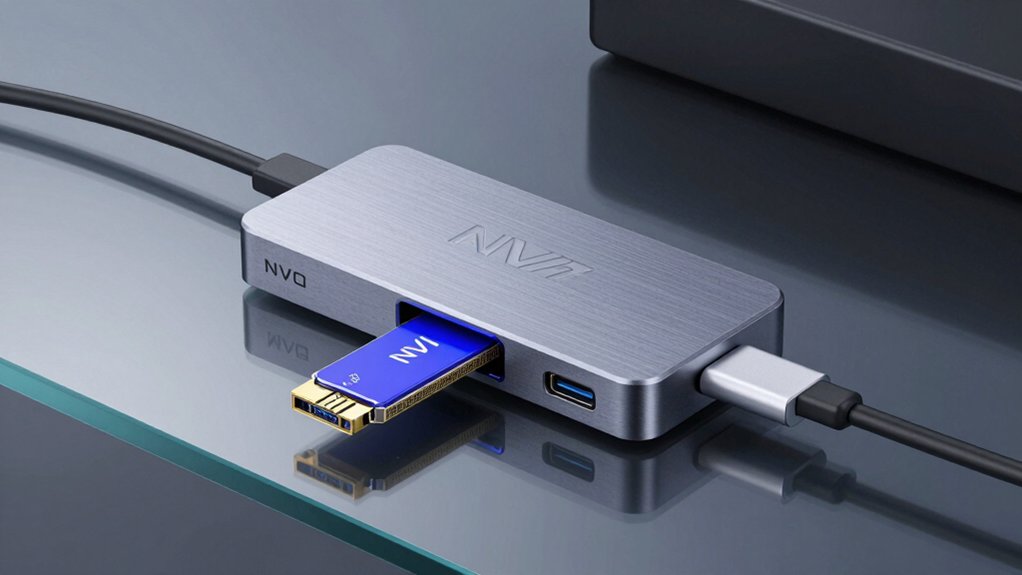
When choosing an NVMe-to-USB docking station, start by comparing speed and protocols to match your workload, such as USB 3.2 Gen 2×2 or USB4 for high-throughput tasks. Check key compatibility like drive form factors, NVMe interface versions, and whether you need support for Windows, macOS, or Linux. Consider the device’s thermal design, build quality, portability, power requirements, and typical use cases to determine which combination of performance, durability, and price fits your needs.
Speed and Protocols
Start by checking the speeds you’ll actually get with different USB interfaces. You’ll see USB 3.2 Gen 2 offers up to 10 Gbps, and USB 3.1 Gen 2 or USB-C can reach similar high speeds for NVMe and M.2 drives. When you use NVMe with a compatible USB 3.2 or Thunderbolt path, expect up to 10 Gbps data paths via the dock. If you choose a SATA NGFF (M.2 SATA) option, speeds drop to about 6 Gbps. Favor driver-free, plug-and-play designs that rely on native USB host support for immediate use. Consider heat dissipation; aluminum chassis or open layouts prevent throttling during long transfers. Prioritize docks that balance protocol support with your drive type and typical workload.
Key Compatibility
Key compatibility starts with matching the dock to your drive’s physical and interface needs. Verify the dock supports your M.2 key type, NVMe M Key or B+M Key, and excludes AHCI or SATA-only drives. Check drive size support and confirm that the enclosure accepts 2230, 2242, 2260, 2280, and 22110 dimensions you plan to use. If you need SATA, ensure the enclosure can handle both NVMe PCIe and M.2 SATA options. Inspect the USB interface to match your host, aiming for USB 3.2 Gen 2 10 Gbps or faster for optimum transfer speeds. Confirm OS compatibility and driver-free plug-and-play, ensuring seamless use on Windows, macOS, Linux, and Android. Follow these steps in order to avoid compatibility issues downstream.
Thermal Management
Choose a dock with solid thermal design to prevent throttling. Aluminum or metal enclosures offer better heat dissipation than plastic, so prefer metal shells for cooler operation under load. Open, toaster-style designs improve airflow and reduce hotspot buildup versus fully enclosed cases, making them a better choice when possible. Ensure the interior is spacious or vented to maintain lower sustained temps, especially with higher‑performance NVMe drives that generate more heat. Remember, active cooling isn’t commonly marketed; rely on passive heat dissipation by using quality materials, good ventilation, and airflow around the device. Avoid tight enclosures near walls or other heat sources. If in doubt, compare thermal specs or user reviews that report real‑world temps during sustained transfers to select a cooler option.
Build and Portability
When evaluating NVMe to USB docks for build and portability, prioritize how the chassis handles heat, size, and convenience. Start with the housing material; aluminum or alloy designs dissipate heat better than plastic, preserving SSD performance during long transfers. Look for open or toaster-style layouts that improve airflow and cooling over enclosed enclosures. Assess plug-and-play capability; tool-free setups let you insert or remove drives quickly, aiding portability. Check dimensions and weight; compact builds around 60–70 mm in length and about 60 g boost on-the-go usability. Consider slim form factors with no mounting screws if you need easy transport for mobile storage. Compare options based on heat management, size, and ease of use to select the most practical dock.
Power and Use Cases
Consider power needs and real-world use cases to pick the right NVMe to USB dock. Start by evaluating data rates: USB 3.2 Gen 2 supports up to 10 Gbps, enabling near-instant backups of large files like HD movies. Check drive compatibility: some docks support NVMe or SATA via M.2 (B+M Key) or NVMe M Key, expanding use cases to both NVMe and SATA SSDs. Review heat management: aluminum or toaster-style shells help keep temperatures down during intensive transfers. Look for plug-and-play and tool-free installation for quick setup. Confirm maximum drive capacity: several models claim up to 8 TB in one enclosure. Choose based on your typical workload, then verify that the dock’s cooling and chassis design meet your environment and use case.
Final Thoughts
To choose, compare cooling, drive compatibility, and connection type. For plug-and-play, pick a model with tool-free access and USB 3.2 Gen 2 or Thunderbolt. If you need NVMe only, pick a B+M key or M/B enclosure with solid airflow. For mixed NVMe/SATA, ensure both interfaces are supported. Check max capacity (up to 8 TB), verify aluminum housing for heat, and confirm open airflow. Finally, match to your system and budget, then test speed and stability.

Meet Ry, “TechGuru,” a 36-year-old technology enthusiast with a deep passion for tech innovations. With extensive experience, he specializes in gaming hardware and software, and has expertise in gadgets, custom PCs, and audio.
Besides writing about tech and reviewing new products, he enjoys traveling, hiking, and photography. Committed to keeping up with the latest industry trends, he aims to guide readers in making informed tech decisions.