
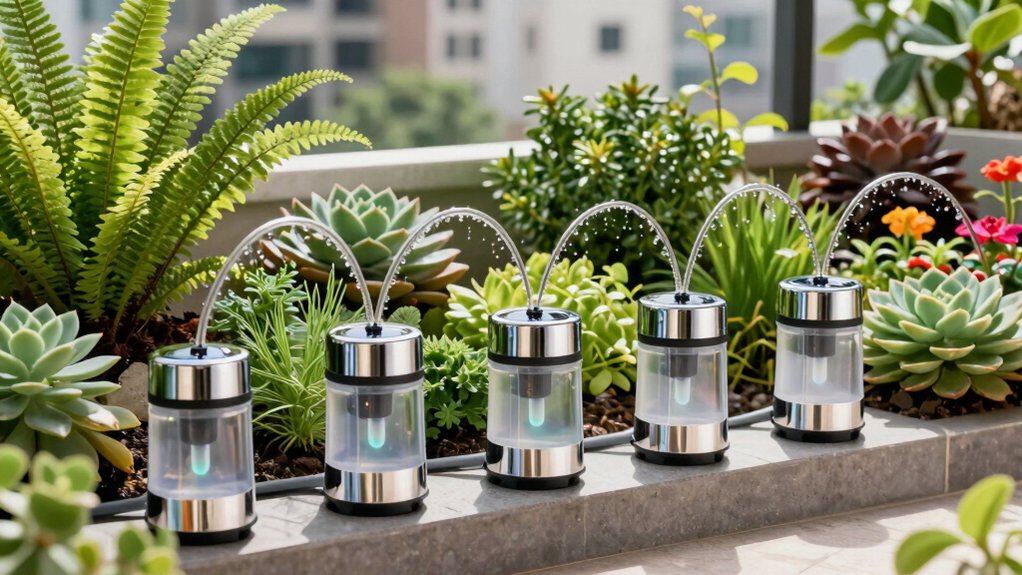

Here are five solid app-controlled options to contemplate. Start with the Rachio 8‑Zone for multi‑zone watering, weather intelligence, and quick per‑zone scheduling, then add the VIVOSUN Smart Drip Kit for plant‑level control and 1000 L/H flow; consider the RAINPOINT Hose Timer for garden hoses with rain delay and Alexa/Google compatibility; add LetPot for multi‑pot setups with an anti‑backflow valve, and finish with the Rachio Smart Hose Timer for scalable hose automation. Each has setup steps and integration tips; you’ll find clear, actionable details as you proceed. If you keep going, you’ll disclose more specifics.
| Rachio WiFi Smart Sprinkler Controller (8-Zone) |

| Best Overall Smart Controller | App Control: Yes (App-based control for schedules) | WiFi Connectivity: Yes (Dual-band WiFi) | Scheduling Ability: Yes (App-based schedules; grow-in) | VIEW LATEST PRICE | Read Our Analysis |
| VIVOSUN Smart Drip Irrigation Kit with App Control |

| Best for Plant Groups | App Control: Yes (App-Controlled watering via A10 GrowHub) | WiFi Connectivity: Yes (WiFi-enabled via GrowHub) | Scheduling Ability: Yes (Set custom schedules; Recipe/Cycle modes) | VIEW LATEST PRICE | Read Our Analysis |
| RAINPOINT WiFi Water Timer for Garden Hose Irrigation |
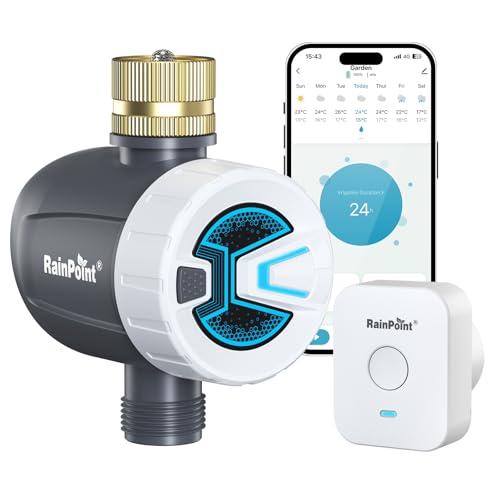
| Voice-Enabled Convenience | App Control: Yes (Smart WiFi App Control via TUYA) | WiFi Connectivity: Yes (2.4G WiFi) | Scheduling Ability: Yes (Automatic timers; manual/intervals) | VIEW LATEST PRICE | Read Our Analysis |
| LetPot Wi-Fi Smart Plant Watering System Kit |

| Indoor/Outdoor Plant Care Pro | App Control: Yes (LetPot app control with up to 5 tasks) | WiFi Connectivity: Yes (WiFi control) | Scheduling Ability: Yes (Custom schedules; intermittent/continuous modes) | VIEW LATEST PRICE | Read Our Analysis |
| Rachio Smart Hose Timer with WiFi Hub |

| Hassle-Free Hose Automation | App Control: Yes (App-Controlled Outdoor Timer) | WiFi Connectivity: Yes (WiFi Hub required) | Scheduling Ability: Yes (Program up to 8 hose valves) | VIEW LATEST PRICE | Read Our Analysis |
More Details on Our Top Picks
Rachio WiFi Smart Sprinkler Controller (8-Zone)
The Rachio WiFi Smart Sprinkler Controller (8-Zone) is ideal for users who want app-based control with smart weather adjustments. You install the device in about 30 minutes, then connect to dual-band WiFi. Open the app, add the 8-zone system, and create a schedule for each zone. Use Weather Intelligence to skip watering during rain, wind, or freeze events, and enable seasonal updates to adapt year-round. If you need quick watering, press Quick Run for a specific zone. It supports Alexa, Google Home, and IFTTT, and works with 8 or 16 zones. Outdoor use requires a weatherproof enclosure.
- App Control:Yes (App-based control for schedules)
- WiFi Connectivity:Yes (Dual-band WiFi)
- Scheduling Ability:Yes (App-based schedules; grow-in)
- Outdoor/Indoor Use:Indoor rated (outdoor with enclosure)
- Watering Automation Type:Rain skip, weather intelligence
- Expandability / Capacity:8-zone (8ZULW-C; supports 8 or 16 zones)
- Additional Feature:Seasonal data updates
- Additional Feature:Grow-in schedules
- Additional Feature:Quick Run buttons
VIVOSUN Smart Drip Irrigation Kit with App Control
If you need precise, app-controlled irrigation for up to 16 plants, the VIVOSUN Smart Drip Irrigation Kit with App Control stands out for its 16 emitters and A10 GrowHub integration. You install the 4 mm tubing, place emitters at each plant, and connect the pump. Use the app to set custom schedules, Cycle Mode, or Recipe Mode for daily timing and amounts. The system supports indoor or outdoor setups, with anti-siphon and a built-in filter. It can water remotely, so you schedule when you’re away. It delivers up to 1000 L/H while keeping soil evenly moist and waste low.
- App Control:Yes (App-Controlled watering via A10 GrowHub)
- WiFi Connectivity:Yes (WiFi-enabled via GrowHub)
- Scheduling Ability:Yes (Set custom schedules; Recipe/Cycle modes)
- Outdoor/Indoor Use:Indoor/outdoor (drip kit for indoor/outdoor plants)
- Watering Automation Type:Cycle/Recipe/Remote watering
- Expandability / Capacity:Up to 16 plants with 16 emitters
- Additional Feature:16 emitters included
- Additional Feature:1000 L/H pump
- Additional Feature:Cycle Mode scheduling
RAINPOINT WiFi Water Timer for Garden Hose Irrigation
Choose the RainPoint WiFi Water Timer when you want hands-free control with reliable 2.4G WiFi access and voice-enabled convenience. You set up via the TUYA app for remote access, monitor status, and quick schedule management. Connect the timer to Alexa or Google Assistant for voice control, or use the app for manual and automatic modes. One hub supports four timers, and you can add a soil moisture meter to prevent overwatering. Use Rain Delay options of 24/48/72 hours to save water. Manual watering ranges from 1 minute to 24 hours; automatic timers run from 1 minute to 7 days.
- App Control:Yes (Smart WiFi App Control via TUYA)
- WiFi Connectivity:Yes (2.4G WiFi)
- Scheduling Ability:Yes (Automatic timers; manual/intervals)
- Outdoor/Indoor Use:Outdoor yard/garden use implied
- Watering Automation Type:Rain Delay; automatic timers
- Expandability / Capacity:Hub supports up to 4 timers
- Additional Feature:4-timer hub expansion
- Additional Feature:360° brass swivel
- Additional Feature:Voice control compatibility
LetPot Wi-Fi Smart Plant Watering System Kit
Consider the LetPot Wi-Fi Smart Plant Watering System Kit when you need an app-controlled solution that supports up to five simultaneous watering tasks, making it suitable for small to medium setups with multiple pots. You install the kit outdoors or indoors, connect Wi‑Fi, and open the LetPot app. Create schedules, choose intermittent or continuous watering, and set frequencies and durations. Use the anti-backflow valve to prevent siphoning, and implement the 10‑dripper system for up to 10–20 pots. Enable low-water alerts, monitor status, and adjust connections or reminders as needed for reliable irrigation.
- App Control:Yes (LetPot app control with up to 5 tasks)
- WiFi Connectivity:Yes (WiFi control)
- Scheduling Ability:Yes (Custom schedules; intermittent/continuous modes)
- Outdoor/Indoor Use:Outdoor use (IP66 waterproof)
- Watering Automation Type:Auto-scheduling with multiple pots
- Expandability / Capacity:Supports up to 10–20 pots (2 sets included)
- Additional Feature:5 simultaneous tasks
- Additional Feature:IP66 waterproof
- Additional Feature:Lifetime service
Rachio Smart Hose Timer with WiFi Hub
The Rachio Smart Hose Timer with WiFi Hub is ideal if you want scalable, app-driven control for multiple outdoor hoses, with rain skip and real-time alerts. You set up the core kit: one valve, one WiFi hub, and install the hose timer. Connect the hub to a 2.4GHz WiFi network. Use the Rachio app to create schedules and add up to eight valves per hub. Enable rain skip to save water automatically. Start a manual run from the app or the built-in button. Receive smart alerts for low battery or flow issues, and integrate with Alexa, Google Home, or IFTTT.
- App Control:Yes (App-Controlled Outdoor Timer)
- WiFi Connectivity:Yes (WiFi Hub required)
- Scheduling Ability:Yes (Program up to 8 hose valves)
- Outdoor/Indoor Use:Outdoor faucet timer (hose)
- Watering Automation Type:Rain skip (water-saving)
- Expandability / Capacity:Up to 8 hose valves per hub
- Additional Feature:8 hose valves per hub
- Additional Feature:Rain skip water saving
- Additional Feature:2.4GHz WiFi hub only
Factors to Consider When Choosing App-Controlled Watering Systems
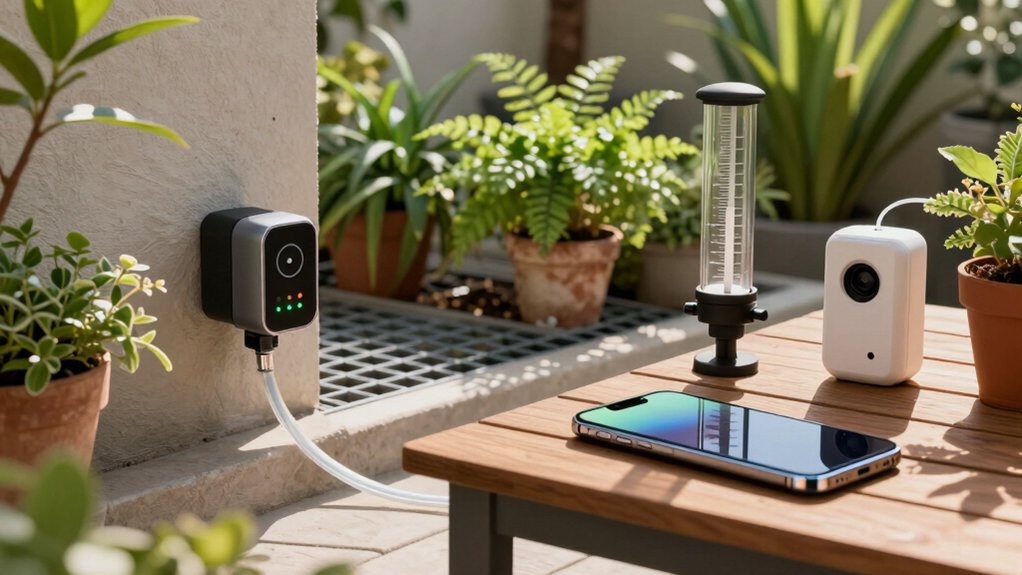
Start by checking System Compatibility: confirm your existing hoses, sprinklers, and smart home devices work with the app, and note any required hubs or bridges. Next, compare Weather Intelligence Capabilities, Installation Requirements, and Zone Capacity Versus Coverage, outlining how many zones you need, whether weather data updates automatically, and if you’ll install indoors or outdoors. Finally, review App Control Features, including scheduling, manual overrides, and alert options, and choose a model that clearly supports your preferred setup and real-world use.
System Compatibility Options
Many app-controlled watering systems vary in how they connect and operate, so start by checking system compatibility with your home setup. First, verify WiFi band support; some systems require 2.4 GHz only, which can affect setup and reliability if your router uses a mixed network. Second, confirm voice and smart home compatibility; look for integration with Alexa, Google Assistant, and IFTTT to enable cross-device control. Third, assess enclosure needs; indoor-rated controllers may need weatherproof housings for outdoor use, limiting placement. Fourth, review zoning and expansion options; determine how many valves you need now and if the system supports hubs or add-on timers for future growth. Finally, check companion apps for scheduling, remote access, and status alerts to ensure seamless operation.
Weather Intelligence Capabilities
Understanding weather intelligence helps you avoid waste and keep plants healthy. First, check if your system automatically adjusts or skips watering based on forecasted or current conditions, and note how this reduces unnecessary irrigation. Next, evaluate rain delay features that cancel scheduled watering when rain is detected or forecasted, saving water. Then, review seasonal data updates that refine schedules for changing conditions and support grow-in periods. Consider real-time weather data integration and determine whether the system offers basic rain skip or granular adjustments tied to forecast accuracy. Finally, look for configurable thresholds you can set, such as skip if precipitation probability or rainfall amount exceeds a value, to tailor irrigation to your local climate.
Installation Requirements
To choose an app-controlled watering system, start by checking the installation requirements that affect setup and long-term use. Verify the WiFi needs, ensuring the hub supports 2.4 GHz if required for setup or operation. Determine if the installation is DIY-friendly with a stated setup time, or if professional help is recommended for wiring or plumbing integration. Check compatibility with your existing valves and zones, and confirm the controller can handle the total number of zones in your system. Assess whether an indoor enclosure is required for outdoor use, and note any weatherproofing or IP ratings. Confirm the system includes a dedicated hub or bridge and whether it supports voice assistants or smart-home platforms during setup.
Zone Capacity Versus Coverage
When evaluating app-controlled watering systems, start by matching zone capacity to your landscape’s needs and expected coverage. Zone capacity is how many distinct irrigation zones the controller can manage, while coverage is the total area or number of plants watered within those zones. A higher zone count lets you control irregular landscapes more precisely, but it must align with the hardware limit to avoid under-delivery or overwatering. Coverage depends on emitter flow, tubing layout, and pressure, so two systems with the same zone count can water different areas in practice. Confirm that the stated zone count matches the number of independent schedules you can run simultaneously for accurate coverage. In multi-zone setups, consider expansion options to scale coverage without reconfiguring existing zoning.
App Control Features
App control features let you manage irrigation without touching the timer on site. Start by checking scheduling options, including single-run, recurring, and seasonal schedules. Verify that you can set start times, durations, and days for each zone, and ensure manual run is available for quick tests. Next, confirm remote access via mobile apps, with real-time updates and cloud or hub-based connectivity. Look for weather-based features, such as rain skips and soil moisture triggers, and understand how they adjust watering automatically. Check compatibility with voice assistants for hands-free commands, and test integration steps. Finally, identify hardware requirements, noting if a 2.4 GHz WiFi band or a dedicated hub is needed and plan setup accordingly.
Connectivity And Protocols
Are compatibility and connectivity the backbone of a reliable app-controlled watering system? You start by checking WiFi requirements. Most devices use 2.4 GHz, sometimes dual-band 2.4/5 GHz. Confirm your router supports the needed band, and note that some hubs require 2.4 GHz only. Next, review integration options. Look for voice assistant compatibility (Alexa, Google Assistant) and home platforms (IFTTT) for hands-free control. Then assess weather intelligence features. Ensure the system uses local weather data and rain-skip logic to reduce unnecessary irrigation. Consider hubs or gateways. Decide between battery-powered or wired hubs that connect multiple timers to one app interface. Finally, verify enclosure suitability. Outdoor units may need weatherproof housings and must match your network’s configuration to avoid compatibility gaps.
Power And Water Safety
Power and water safety should come first when selecting an app-controlled watering system. Start by checking for built-in water-flow monitoring or flow alerts, which detect leaks or abnormal usage and trigger alerts or shutoffs. Look for devices with rain delay or weather intelligence features to prevent watering during rainfall. Verify compatibility with your WiFi band (2.4 GHz vs 5 GHz) and determine if a hub or bridge is required for operation. Check for anti-backflow or anti-siphon mechanisms to prevent contamination back into the potable supply. Confirm a weather- or pressure-related safety feature, such as low-pressure warnings or shutoff if supply pressure is insufficient. Document the safety features, test them, and ensure they operate correctly before regular use.
Expandability And Upgrades
Expandable and upgradable designs matter when you plan for future needs. You start by checking expandability: see if the hub supports up to 8 hose valves and whether you can add more zones in multi-zone setups. Look for compatibility with additional hubs or multiple timers to cover larger properties. Evaluate upgrade paths: newer communication chips, faster 2.4GHz WiFi, and improved app reliability. Confirm expansion-friendly ecosystems, such as Alexa, Google Home, and IFTTT, to automate new components. Review modular design, including emitters, drippers, and accessories, that let you scale irrigation without replacing the core controller. Verify there are clear upgrade options and step-by-step instructions for adding hardware, hubs, or timers, ensuring you can grow without replacement.
Final Thoughts
Start by identifying your watering needs and budget. Compare the five options: Rachio 8-zone controller, VIVOSUN drip kit, RAINPOINT hose timer, LetPot plant system, and Rachio WiFi hose timer. For each, list setup steps, app features, and compatibility with your irrigation layout. Check WiFi reliability, monthly costs, and expandability. Decide on a primary use (lawn, garden, potted plants) and pick the model that covers your zones, supports schedules, and integrates with your preferred smart ecosystem. Then install and test.

Meet Ry, “TechGuru,” a 36-year-old technology enthusiast with a deep passion for tech innovations. With extensive experience, he specializes in gaming hardware and software, and has expertise in gadgets, custom PCs, and audio.
Besides writing about tech and reviewing new products, he enjoys traveling, hiking, and photography. Committed to keeping up with the latest industry trends, he aims to guide readers in making informed tech decisions.