
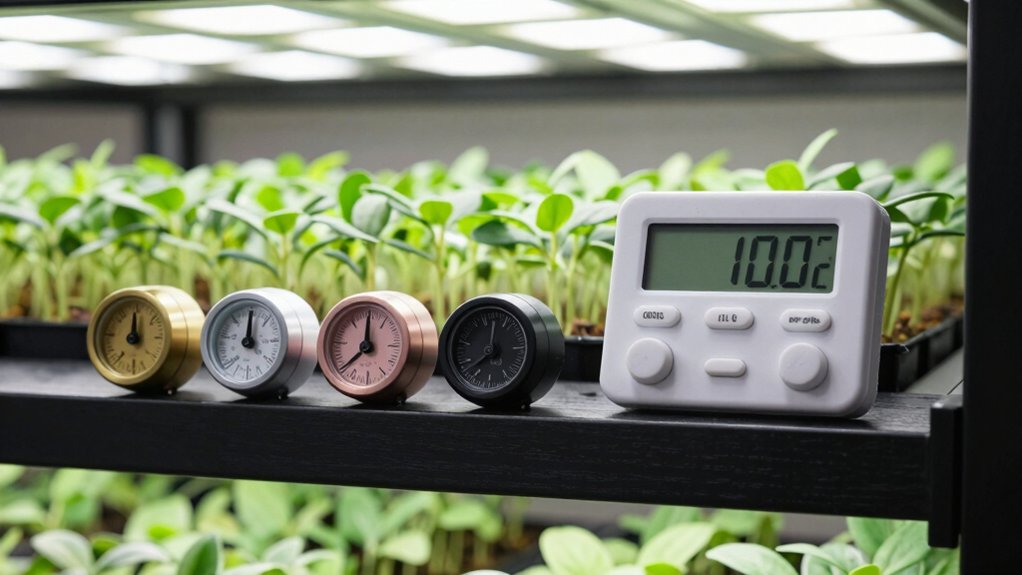

The five best grow-light timers you can use are BN-LINK 24-Hour Mechanical Outlet Timer (2-Pack), BN-LINK 8-Outlet Surge Protector with Timer, GE Grounded Outlet Timer (2 Pack), BN-LINK Indoor Digital Timer Outlet (2 Pack), and TiFFCOFiO 24-Hour Indoor Outlet Timers (2 Pack). Use each by setting ON/OFF pins or programs in 30-minute increments or via digital schedules. Choose mixed-outlet options, add surge protection, and note memory or battery backup. More specifics follow if you continue.
| BN-LINK 24-Hour Mechanical Outlet Timer (2-Pack) |

| Best All-Around | Type: Mechanical outlet timer (2-pack) | Pack Size: 2-pack | Programming Type: Pin-based 24 settings/day | VIEW LATEST PRICE | Read Our Analysis |
| BN-LINK 8-Outlet Surge Protector with Timer |
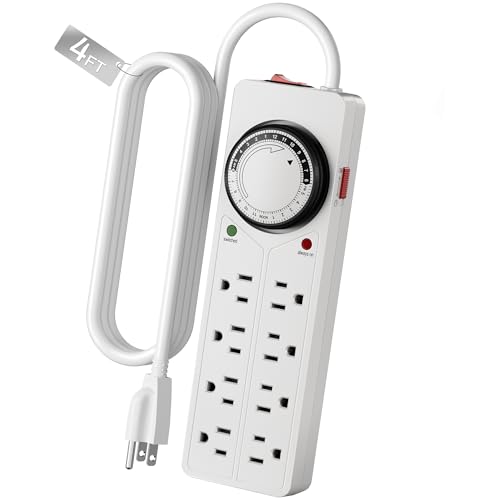
| Heavy-Duty 8-Outlet | Type: Mechanical timer with 8-outlet surge protector | Pack Size: 1 unit (8-outlet strip; listed as single surge protector) | Programming Type: Dial/programming with 24-hour repeat | VIEW LATEST PRICE | Read Our Analysis |
| GE Grounded Outlet Timer 2 Pack 24-Hour Indoor Usage |

| Simple Daily Timer | Type: Mechanical grounded outlet timer (2-pack) | Pack Size: 2-pack | Programming Type: Pushpin-based 24-hour cycle | VIEW LATEST PRICE | Read Our Analysis |
| BN-LINK Indoor Digital Timer Outlet (2 Pack) |
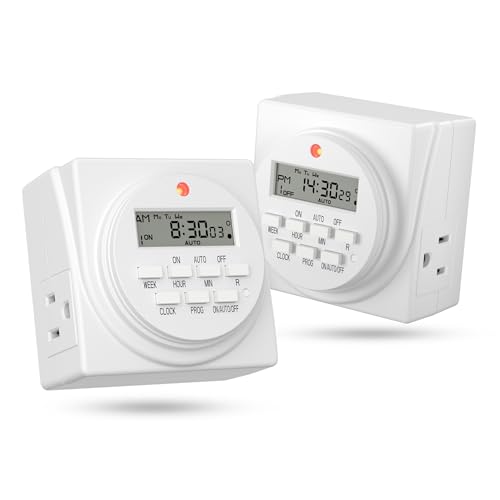
| Digital Precision | Type: Digital timer outlet (2-pack) | Pack Size: 2-pack | Programming Type: Digital 8 on/off programs per timer | VIEW LATEST PRICE | Read Our Analysis |
| TiFFCOFiO 24-Hour Indoor Outlet Timers (2 Pack) |

| Compact Mechanical Mix | Type: Mechanical outlet timer (2-pack) | Pack Size: 2-pack | Programming Type: Pin-based 48 settings/day | VIEW LATEST PRICE | Read Our Analysis |
More Details on Our Top Picks
BN-LINK 24-Hour Mechanical Outlet Timer (2-Pack)
The BN-LINK 24-Hour Mechanical Outlet Timer (2-Pack) is ideal for anyone who needs reliable, low-maintenance scheduling for grow lights. You will use the two 3-prong timers, white in color, with 24 daily settings. To start, press pins DOWN to turn ON, and UP to turn OFF. Pull all pins UP to begin setting, then position each pin for desired ON/OFF times in 30-minute increments. Each unit handles 125-Volt, 60 Hz, 15-Amp loads. Use one timer per location, or pair them for two spots. Verify compatibility with CFLs, LEDs, and small appliances, plug in, and test.
- Type:Mechanical outlet timer (2-pack)
- Pack Size:2-pack
- Programming Type:Pin-based 24 settings/day
- Output Count:2 outlets per timer
- Mounting/Placement:Indoor use; plug-in outlet timers
- Safety/Certifications:ETL listed (indoor)
- Additional Feature:2-location usability
- Additional Feature:30-minute intervals
- Additional Feature:Pins DOWN ON/OFF indicator
BN-LINK 8-Outlet Surge Protector with Timer
If you need reliable grow-light timing across multiple outlets, the BN-LINK 8-Outlet Surge Protector with Timer is a solid choice, especially when you want a mix of controlled and always-on outlets. Use the four timer-controlled outlets for your lights and the four always-on outlets for fans or pumps. All outlets are surge-protected, and a circuit breaker provides safety. Set the timer with the dial in 15-minute increments, repeating every 24 hours. Override lets you keep a row on, and LED indicators show each row’s status. Choose this when you need bundled timing and protection in one unit.
- Type:Mechanical timer with 8-outlet surge protector
- Pack Size:1 unit (8-outlet strip; listed as single surge protector)
- Programming Type:Dial/programming with 24-hour repeat
- Output Count:8 outlets total (4 timer-controlled, 4 always-on)
- Mounting/Placement:Indoor use; wall-mounted strip style
- Safety/Certifications:ETL listed; UL standards compliance
- Additional Feature:4 timer outlets
- Additional Feature:Row LEDs indicate power
- Additional Feature:15-minute dial increments
GE Grounded Outlet Timer 2 Pack 24-Hour Indoor Usage
Choose the GE Grounded Outlet Timer 2 Pack when you need reliable, daily control for indoor grow lights. You’ll plug the timer into an indoor outlet and connect two devices to the grounded outlets. Set the 24-hour cycle with pushpins for simple scheduling, using 30-minute steps to fine-tune timing. Both outlets operate simultaneously, so you can run lights and fans on the same cycle. Use the override switch to interrupt the timer if you need a manual pause. This 2-pack fits indoor use, stays in a sleek white finish, and supports 3-prong plugs.
- Type:Mechanical grounded outlet timer (2-pack)
- Pack Size:2-pack
- Programming Type:Pushpin-based 24-hour cycle
- Output Count:2 outlets
- Mounting/Placement:Indoor use; plug-in outlet timers
- Safety/Certifications:General indoor use; grounded outlets
- Additional Feature:24-hour daily cycle
- Additional Feature:Pushpin mechanical setup
- Additional Feature:2 timed grounded outlets
BN-LINK Indoor Digital Timer Outlet (2 Pack)
Need reliable, clocked control for your grow lights? Use the BN-LINK Indoor Digital Timer Outlet (2 Pack). Each timer has two grounded outlets and supports up to 8 on/off programs per unit. Set schedules by choosing specific days or pre-set days, with options down to one-minute settings. Activate both outlets together for synchronized lighting. Use Daylight Savings mode to adjust automatically, and rely on the backup battery to preserve settings during power outages. The ETL-listed units guarantee safety, with a red LED indicator showing when power is on. This 2-pack covers multiple devices at 120V, 60 Hz.
- Type:Digital timer outlet (2-pack)
- Pack Size:2-pack
- Programming Type:Digital 8 on/off programs per timer
- Output Count:2 outlets per timer
- Mounting/Placement:Indoor use; plug-in outlet timers
- Safety/Certifications:ETL listed
- Additional Feature:8 on/off programs per timer
- Additional Feature:Daylight Savings mode
- Additional Feature:Backup battery memory
TiFFCOFiO 24-Hour Indoor Outlet Timers (2 Pack)
The TiFFCOFiO 24-Hour Indoor Outlet Timers (2 Pack) offer a practical solution for automating grow lights, with 48 ON/OFF settings per day and each pin representing a 30-minute interval. You set pins to ON for times you want light, OFF for rest periods, and the timer repeats daily. Use the 3-prong outlets indoors, with output ports underneath to save space. To operate, pull pins for OFF and push pins for ON, then plug in. It’s ETL listed, with reliable after-sales support within six hours. This two-pack fits multiple outlets and simplifies scheduling.
- Type:Mechanical outlet timer (2-pack)
- Pack Size:2-pack
- Programming Type:Pin-based 48 settings/day
- Output Count:2 outlets
- Mounting/Placement:Indoor use; plug-in outlet timers
- Safety/Certifications:ETL listed
- Additional Feature:48 settings per day
- Additional Feature:Compact outlet-saving design
- Additional Feature:ETL listed safety
Factors to Consider When Choosing Grow Light Timers
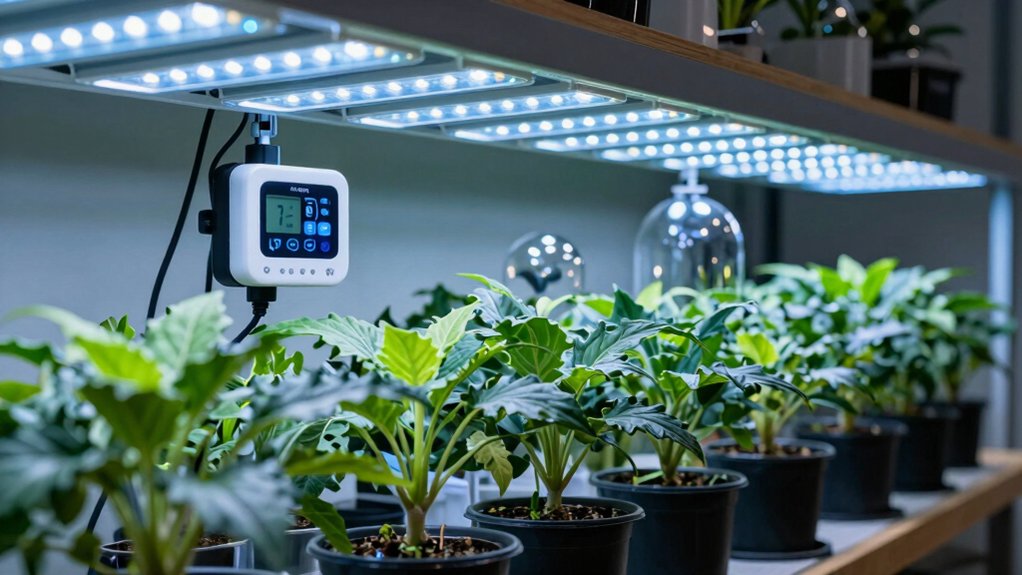
Consider timer type comparisons to determine which model fits your setup, such as basic dial timers, programmable digital timers, and smart Wi‑Fi options, and note how each affects scheduling flexibility. Assess programming granularity, choosing units that let you set exact on/off times, multiple daily cycles, or seasonal schedules, and confirm how easy it is to edit or copy presets. Review outlet configuration, power handling, and safety features by inspecting the number of outlets, load ratings, surge protection, cord management, and durable housings to ensure reliable, long-term use.
Timer Type Comparisons
Timer Type Comparisons: choose the right timer by weighing reliability, scheduling flexibility, and compatibility. Start with mechanical timers for simple, repeatable 24-hour cycles. They use pins or dials, with pins DOWN ON, UP OFF, and 30-minute increments. Check for 15–30 minute options and note you may need daily manual reset for yearly use. Next, consider digital timers for complex schedules. They offer programmable days and programs, up to eight on/off settings per outlet, and memory backups to survive outages. Multi-outlet timers add mixed control, letting some outlets stay always on while others follow a timer. Finally, assess safety and compatibility. Look for ETL or UL listings, indoor use ratings, and load compatibility around 15A or 1875W for your grow lights. Choose based on your needs.
Programming Granularity Matters
To fine-tune grow light schedules, examine programming granularity and how it shapes daily routines. Granularity is how finely you can schedule on/off events, with options like 15, 30, or 60-minute steps. Higher granularity lets you match sunrise and sunset patterns more closely, improving growth precision. Look for 24-hour cycling with 30-minute or smaller steps to enable exact timing. More granular timers allow frequent reprogramming within a day, supporting complex schedules for different growth stages. Some devices offer multiple on/off settings per day, such as up to 48 changes in 24 hours, which supports varied daily light needs. Ensure the timer can repeat the programmed pattern daily to maintain consistent cycles without daily adjustments.
Outlet Configuration Options
Outlet configuration options matter for a scalable grow-light setup. Choose a timer with the right number of outlets for your needs, such as 2, 4, or 8 outlets, to control multiple devices at once. Decide if you need mixed-use outlets, with some always-on and others timer-controlled, to run lights alongside fans or sensors. Look for models that support multiple devices on separate outlets, so you can program different schedules per device. Check if the timer supports a variety of outlet layouts, and guarantee the arrangement fits your setup space. Verify safety features like ETL/UL listings and built-in surge protection, plus backup memory so settings survive power loss. Confirm the timer’s 24-hour cycle with 15- or 30-minute granularity for precise repeats.
Power Handling Capacity
Power handling capacity determines if a timer can safely manage your grow light’s total draw without tripping or overheating. Start by checking the timer’s resistive, tungsten, and ballast ratings, such as 125V, 60 Hz, and up to 1875W resistive, and compare them to your light’s draw. Next, confirm the timer’s maximum load in watts or amps exceeds both starting surge and continuous running wattage. If you use high-wattage LEDs, verify a ballast-capable rating of 5A–8A if applicable, to avoid overload. Look for clearly labeled load ratings on the device. Prefer models with a dedicated surge-protected outlet row to support stable power delivery. Finally, ensure the chosen timer matches your light’s total wattage and allows for future upgrades without exceeding its limits.
Durability And Safety
Durability and safety start with certification and construction. Choose timers with ETL or UL listing to ensure formal safety testing and compliance for indoor use. Inspect the housing: opt for sturdy, heat-resistant plastic and secure, well-made prongs that withstand frequent plug and unplug cycles. For reliability, check the timer’s mechanism: mechanical timers should have reliable pin operation, while digital timers should offer backup power to preserve settings during outages. Verify load ratings, such as 125V and 15A/1875W resistive, and confirm they match your grow light and any other connected devices. Favor models with clear status indicators and safe-overload protection, like a circuit breaker or surge protection, to prevent electrical hazards. Follow these checks to enhance durability and safety.
Display And Ease
Display and ease of use matter because you’ll rely on these timers daily. Start with mechanical timers if you want simple setup. Use the dial or pins to designate ON and OFF times; DOWN pins typically mean ON, UP pins mean OFF. A 24-hour timer can store up to 24 on/off settings per day, with intervals as small as 30 minutes. If you prefer digital, programs are more flexible: create multiple on/off schedules per outlet and check status with the LED readout. Decide if you need a mix by choosing timers that support both timed and always-on outlets. For outages, consider digital models with a small internal battery backup to preserve settings briefly. Ensure the display is legible and buttons respond reliably.
Backup And Memory Features
Backup and memory features help ensure your grow lights stay on schedule even when power issues occur. Start by checking for a backup battery. If present, confirm it preserves settings during outages so you don’t reprogram daily cycles. Next, evaluate memory retention. Ensure the timer keeps your on/off patterns after temporary power loss or unplugging. Compare digital versus mechanical models. Digital timers store more complex schedules and can handle multi-day programs, which helps with flexible photoperiods. Mechanical models may rely on manual re-entry after outages. Look for explicit notes about timing integrity; backups support precise schedules for consistent light exposure. Verify how long memory remains intact without power and whether reinitialization is required after long outages. Choose a timer that matches your growth cycle needs and reliability goals.
Final Thoughts
Choose a timer type that fits your setup. If you want simple, reliable control, pick a mechanical outlet timer and set 24-hour on/off cycles. For more outlets or surge protection, use a surge-protected timer strip. If you need multiple units, select a pack and sync them. For digital precision, use a digital timer and program daily schedules. Install per manufacturer instructions, test, and adjust. Consider durability and compatibility with your grow lights and power needs.

Meet Ry, “TechGuru,” a 36-year-old technology enthusiast with a deep passion for tech innovations. With extensive experience, he specializes in gaming hardware and software, and has expertise in gadgets, custom PCs, and audio.
Besides writing about tech and reviewing new products, he enjoys traveling, hiking, and photography. Committed to keeping up with the latest industry trends, he aims to guide readers in making informed tech decisions.