
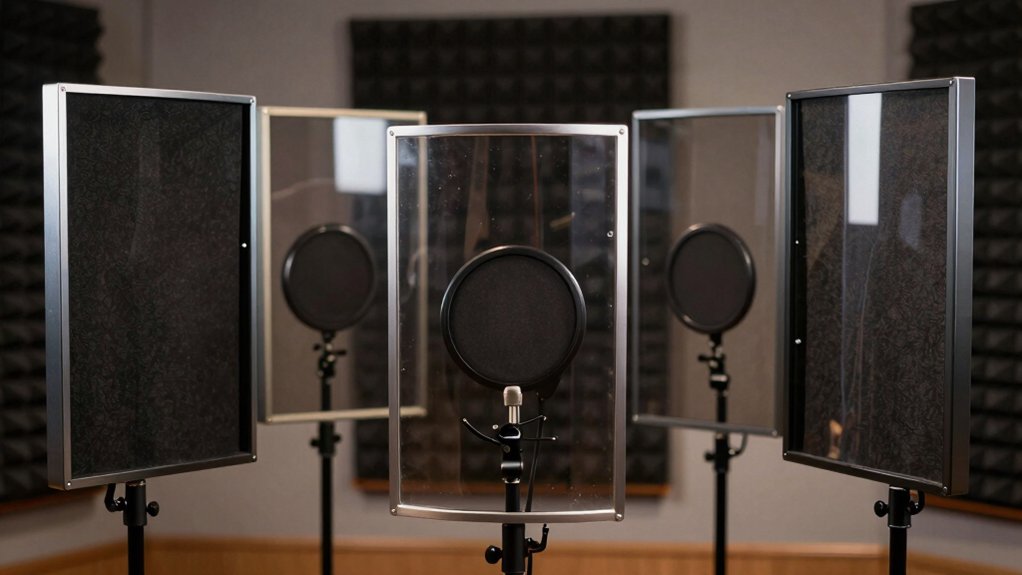

When you’re recording vocals at home or in a professional studio, room reflections and plosive sounds compromise your audio quality. You’ll need a reflection filter that handles wind noise, absorbs low frequencies, and mounts securely to your microphone stand. The right filter makes the difference between amateur and polished recordings. Let’s explore five models that professionals trust—and what makes each one stand out.
| Microphone Wind Shield Pop Filter Acoustic Isolation Ball |

| Best Compact Shield | Primary Function: Noise reduction pop filter with acoustic isolation | Plosive/Noise Reduction: 5-sided noise reduction with double-layered filters | Portability: Lightweight (120g); easy to mount on various stands | VIEW LATEST PRICE | Read Our Analysis |
| Microphone Isolation Shield with Pop Filter & Stand |

| Best All-in-One Kit | Primary Function: Isolation shield with pop filter and mic stand | Plosive/Noise Reduction: Adjustable dual-layer pop filter | Portability: Foldable, portable design with lightweight construction | VIEW LATEST PRICE | Read Our Analysis |
| Aokeo Microphone Isolation Shield with Triple Sound Insulation |

| Best Professional Grade | Primary Function: Isolation shield with sound-absorbing foam | Plosive/Noise Reduction: Sound-proof foam front with ventilated back panel | Portability: Lightweight and portable; foldable design | VIEW LATEST PRICE | Read Our Analysis |
| Professional Microphone Isolation Shield with Pop Filter |

| Best Budget Option | Primary Function: Isolation shield with dual-layer pop filter | Plosive/Noise Reduction: Dual-layer pop filter for sibilance and plosives | Portability: Lightweight (200g); easy mounting on various stands | VIEW LATEST PRICE | Read Our Analysis |
| TroyStudio Portable Vocal Booth Microphone Isolation Shield |

| Best Portable Booth | Primary Function: Portable vocal booth isolation shield | Plosive/Noise Reduction: Egg-crate foam reduces ambient noise and reflections | Portability: Highly portable; folds to 6″ height; setup in 1 minute | VIEW LATEST PRICE | Read Our Analysis |
More Details on Our Top Picks
Microphone Wind Shield Pop Filter Acoustic Isolation Ball
When you’re recording vocals in a home studio or small space, do you struggle with plosive sounds, wind noise, and reflections that muddy your recordings? The Microphone Wind Shield Pop Filter Acoustic Isolation Ball solves these problems with its five-sided design that seals around your microphone. The filter includes a double-layered side that prevents sound from scattering, delivering cleaner vocals. You’ll mount it on your existing stand using the included adjustable holder, which fits condenser microphones with jacket diameters between 50–75 mm. At 120 grams, it’s lightweight and portable. The foam construction reduces plosive sounds, wind interference, and saliva spray that can damage your equipment. Install it three to six inches from your microphone for optimal filtering without affecting tone quality.
- Primary Function:Noise reduction pop filter with acoustic isolation
- Plosive/Noise Reduction:5-sided noise reduction with double-layered filters
- Portability:Lightweight (120g); easy to mount on various stands
- Microphone Compatibility:Most XLR/USB mics; condenser mics 50-75mm diameter
- Acoustic Material:Filters with noise-canceling design
- Ideal Use Cases:Personal live recording, professional studios, outdoor performances
- Additional Feature:Five-sided seal design
- Additional Feature:120g lightweight construction
- Additional Feature:Fits 50–75mm condenser mics
Microphone Isolation Shield with Pop Filter & Stand
If you’re recording vocals or instruments at home and you’re frustrated with unwanted reflections muddying your sound, this microphone isolation shield with pop filter and stand offers the practical solution you need. The high-density absorbing foam reduces sound reflections, clarifying your recordings. You’ll position the adjustable dual-layer pop filter to eliminate plosives and wind noise. The durable steel boom arm rotates 360 degrees, letting you place your microphone exactly where you need it. The foldable design measures 10.8 by 7.48 inches and fits most mic stands. Mount it on your desktop or attach it to an existing stand. Note that it doesn’t work with Blue Yeti microphones.
- Primary Function:Isolation shield with pop filter and mic stand
- Plosive/Noise Reduction:Adjustable dual-layer pop filter
- Portability:Foldable, portable design with lightweight construction
- Microphone Compatibility:Most mic arm stands; not suitable for Blue Yeti
- Acoustic Material:High-density absorbing foam on inner shield
- Ideal Use Cases:Live broadcasts and professional recording
- Additional Feature:Foldable, portable design
- Additional Feature:360° rotation boom arm
- Additional Feature:Adjustable angle panels
Aokeo Microphone Isolation Shield with Triple Sound Insulation
The Aokeo Microphone Isolation Shield works best for vocalists who need to reduce background noise while recording in untreated spaces. This shield features sound-absorbing foam on the front and a ventilated metal back panel that reduces reflections while maintaining vocal clarity. The 23.2 x 11 x 2-inch design accommodates various microphones through its standard 3/8 mount and included 5/8 adapter. You’ll appreciate its lightweight construction and foldable design for portable setup. The included desktop stand provides immediate usability, and the professional-grade metal alloy frame ensures durability. Its compatibility with popular microphones like Blue Yeti and most shock mounts makes integration straightforward. A 2-year warranty with 90-day replacement coverage protects your investment during regular recording sessions.
- Primary Function:Isolation shield with sound-absorbing foam
- Plosive/Noise Reduction:Sound-proof foam front with ventilated back panel
- Portability:Lightweight and portable; foldable design
- Microphone Compatibility:Blue Yeti, Blue Snowball, iCE; standard 3/8″ thread mount
- Acoustic Material:Professional sound-absorbing foam with metal alloy construction
- Ideal Use Cases:Vocals, podcasts, singing, broadcasting, guitars, violins
- Additional Feature:Ventilated metal back panel
- Additional Feature:2-year warranty included
- Additional Feature:Standard 3/8″ threaded mount
Professional Microphone Isolation Shield with Pop Filter
Looking for a reflection filter that handles both room noise and vocal imperfections in one compact unit? This isolation shield combines acoustic foam with a dual-layer pop filter to reduce reflections and control sibilance simultaneously. The 200-gram design mounts easily on most mic stands, fitting microphones between 40–60 mm in diameter. Position it behind your microphone to absorb sound waves bouncing off walls and hard surfaces. The pop filter addresses plosives from B and P sounds without degrading audio quality. Use it in home studios, offices, or professional recording spaces. You’ll notice reduced processing needs during editing. The one-year warranty provides coverage for standard use.
- Primary Function:Isolation shield with dual-layer pop filter
- Plosive/Noise Reduction:Dual-layer pop filter for sibilance and plosives
- Portability:Lightweight (200g); easy mounting on various stands
- Microphone Compatibility:Most condenser mics; 40-60mm diameter
- Acoustic Material:High-density acoustic foam
- Ideal Use Cases:Recording, podcasting, dubbing, live streaming
- Additional Feature:Dual-layer pop filter
- Additional Feature:200g lightweight portable
- Additional Feature:Compatible 40–60mm diameter mics
TroyStudio Portable Vocal Booth Microphone Isolation Shield
For vocalists who record in untreated rooms or need to move their setup between locations, this portable isolation shield delivers professional sound quality without requiring permanent installation. The booth’s inner surfaces feature thick egg-crate foam that eliminates echoes and reduces ambient noise by 92.7%. You’ll set it up in one minute and disassemble it in twenty seconds. The lightweight design—just two pounds—fits in a suitcase for recording anywhere. Five high-density foam pieces resist sagging and maintain structural integrity. Compatible with most microphone types and stands, it works in home studios, apartments, basements, and bedrooms. Read setup instructions carefully to ensure stability during recording sessions.
- Primary Function:Portable vocal booth isolation shield
- Plosive/Noise Reduction:Egg-crate foam reduces ambient noise and reflections
- Portability:Highly portable; folds to 6″ height; setup in 1 minute
- Microphone Compatibility:Broad compatibility with vocal, condenser, USB mics
- Acoustic Material:2-inch thick dense egg-crate foam on all inner surfaces
- Ideal Use Cases:Podcasting, audiobooks, vocals, music, voice-over, instruments
- Additional Feature:One-minute quick setup
- Additional Feature:92.7% room reverb reduction
- Additional Feature:2-inch thick egg-crate foam
Factors to Consider When Choosing Reflection Filters for Vocal Recording
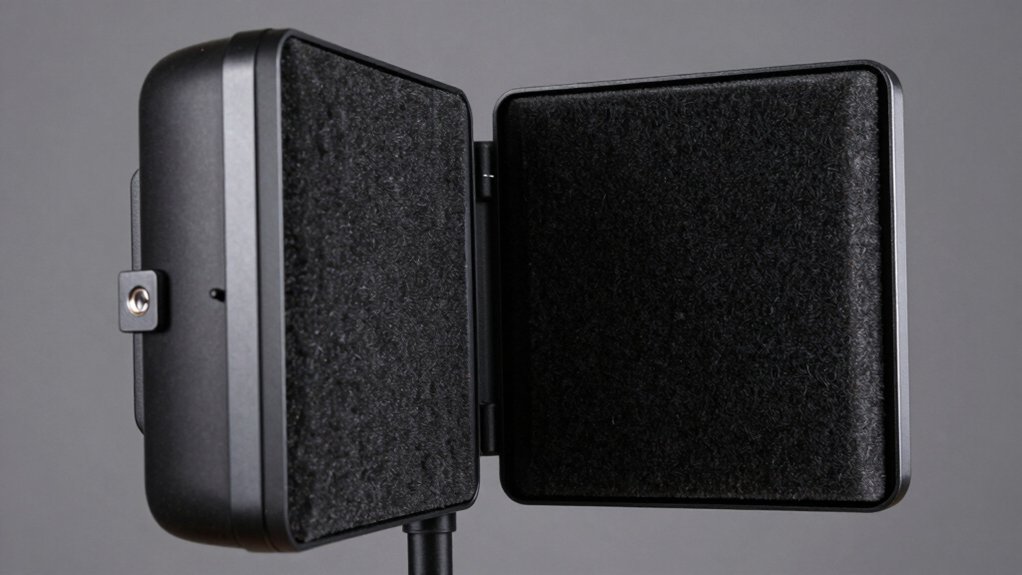
When you’re selecting a reflection filter for vocal recording, you’ll need to evaluate five key areas: the sound absorption quality of the materials, whether the filter fits your microphone type and size, how easily you can transport and store it in your space, the pop filter’s ability to reduce plosive sounds, and the mounting options that work with your existing stand setup. Start by checking the acoustic material’s density and frequency response range to ensure it absorbs the frequencies you want to control, then verify that the filter’s clamp or mounting system accommodates your specific microphone model and stand type. Finally, measure your recording area and consider whether you need a portable filter you can move between locations or a stationary one you’ll keep in a fixed position.
Sound Absorption Quality
The acoustic performance of your reflection filter hinges on three core construction elements: foam density, panel size, and internal cavity depth. Higher density foam absorbs mid- and high-frequency reflections that typically muddy vocal recordings. Larger shield surfaces reduce wave reflections bouncing back toward your microphone, improving overall clarity. Internal cavities deeper than two inches trap more sound energy before it escapes.
Next, examine the back panel design. Ventilated panels allow airflow while maintaining frequency response across your vocal range. Dense back panels block leakage more effectively but require proper ventilation to prevent proximity effect issues.
Finally, check whether the shield offers adjustable or modular panels. This feature lets you shape the acoustic boundary around your microphone, targeting absorption where you need it most for your specific vocal characteristics.
Microphone Compatibility Requirements
How do you know if a reflection filter will work with your microphone? Check your microphone’s diameter first. Most filters fit mics ranging from 40–60 mm or 50–75 mm. Measure your mic’s outer diameter, then compare it to the filter’s specifications. Next, identify your mic’s mounting system. Standard mics use 3/8 inch or 5/8 inch threaded mounts compatible with most clips and shock mounts. Verify whether your mic has a removable jacket, as larger diameters may need wider-fitting filters. Consider your setup type—handheld or desktop—since shock-mount compatibility varies. Certain models won’t fit specific mics like the Blue Yeti due to size constraints. Review the manufacturer’s compatibility list before purchasing to avoid incompatibility issues.
Portability And Storage Space
You’ll often find that portability becomes a pivotal factor when selecting a reflection filter, especially if you record in multiple locations or have limited desk space. Foldable designs collapse into compact footprints, reducing storage requirements between sessions. Look for models weighing 1–2 pounds that fit into small bags or cases for transport. Check the folded dimensions to confirm they match your available storage area. Verify that the filter includes integrated cable openings and compatible stand options—desktop, boom arm, or floor stands—so you can position it flexibly in tight spaces. Some models balance compact external size with substantial internal absorption, maintaining recording quality without consuming excess room. Measure your desk or recording area before purchasing to ensure the setup fits your workspace during active use.
Pop Filter Effectiveness Features
What makes a pop filter effective for vocal recording? Dual-layer designs reduce plosives from B and P sounds while blocking wind interference, which clarifies your vocals. You’ll want to position the filter at an adjustable angle relative to your microphone for optimal plosive reduction. Some filters include additional wind protection or saliva spray shielding, keeping your recordings cleaner. Mount the filter to your mic stand or boom arm to maintain stable, repeatable positioning without introducing handling noise. Check compatibility with your microphone size and stand type before purchasing, as certain designs have limitations. Most common mic sizes work with standard filters, but verify specifications for your equipment. These features combine to deliver professional-quality vocal recordings with minimal unwanted sounds.
Mounting And Stand Flexibility
Three mounting options’ll cover most vocal recording setups: desktop stands, mic arms, and boom arms. Desktop stands offer stability for stationary recording sessions and require minimal space. Mic arms attach directly to your microphone stand, providing flexibility to adjust the filter’s angle and distance from the vocalist. Boom arms mount to furniture or stands, allowing you to position the filter precisely where you need it.
Check your microphone’s diameter and thread type before selecting a filter. Most filters accommodate 40–60 mm or 50–75 mm diameters. Verify compatibility with your existing stand setup to avoid purchasing incompatible hardware. Choose filters with steel mounting hardware for durability during vocal takes. Foldable designs enhance portability if you record across multiple spaces.
Budget And Warranty Protection
How much protection do you need for your reflection filter purchase? Start by comparing warranty lengths, which typically range from 1 to 2 years. Check return policies carefully—most brands offer 30-day windows, though some extend 90-day replacement periods. Next, review what’s covered beyond standard warranty terms. Some manufacturers require registration or proof of purchase, which adds steps but activates coverage. Calculate potential extra costs before buying. Then assess whether warranty terms match your setup: home studio or professional environment affect what protection you actually need. Finally, weigh the product’s price against its coverage level. A budget filter with basic warranty may suit casual use, while professional settings warrant extended protection plans. Balance upfront costs with long-term coverage reliability.
Final Thoughts
You’ve reviewed five reflection filters designed to improve your vocal recordings. To choose the right one, evaluate your space size, budget, and portability needs. Compare pop filter effectiveness, foam density, and stand stability across models. Test mic compatibility before purchasing. Install your selected filter properly, position it 6 inches from your microphone, and adjust angles to minimize room reflections. You’ll achieve cleaner, more professional vocals consistently.

Meet Ry, “TechGuru,” a 36-year-old technology enthusiast with a deep passion for tech innovations. With extensive experience, he specializes in gaming hardware and software, and has expertise in gadgets, custom PCs, and audio.
Besides writing about tech and reviewing new products, he enjoys traveling, hiking, and photography. Committed to keeping up with the latest industry trends, he aims to guide readers in making informed tech decisions.