
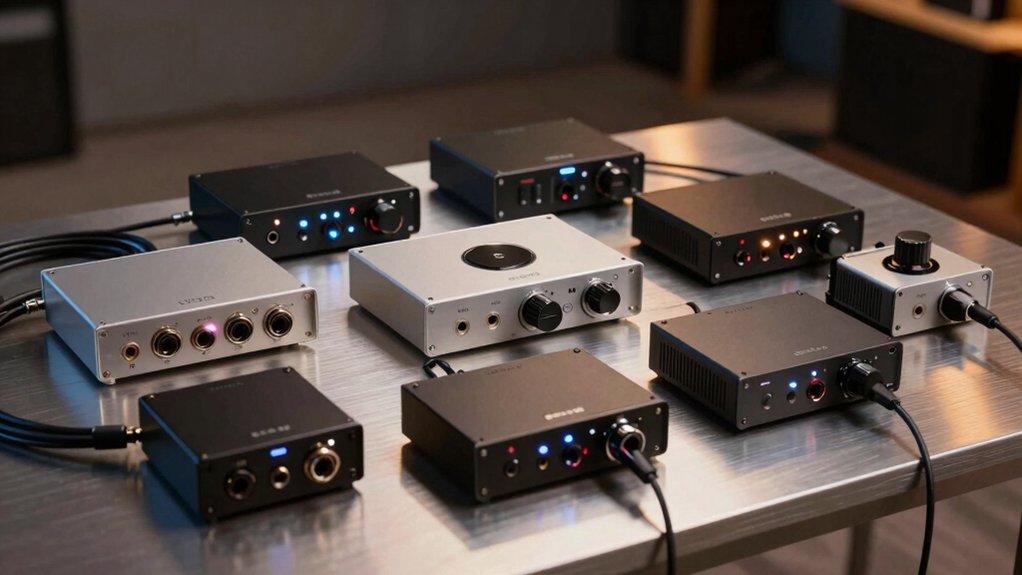

To improve your guitar’s sound quality, you’ll need to select an audio interface that matches your setup and budget. You can choose from compact USB-C models like the Focusrite Scarlett Solo, versatile options such as the M-Audio M-Track Solo, or smartphone-friendly devices like the IK Multimedia iRig 2. Each type offers different features—from mic inputs to low-latency monitoring—that affect your recording results. Understanding your specific needs comes first, but which interface truly delivers…
| Focusrite Scarlett Solo 3rd Gen USB Audio Interface |

| Best Overall | Audio Resolution: 24-bit/192kHz | Primary Input Type: XLR microphone + instrument | Monitoring Output: Balanced XLR + headphones | VIEW LATEST PRICE | Read Our Analysis |
| Focusrite Scarlett Solo 4th Gen USB Audio Interface |

| Most Advanced Features | Audio Resolution: 24-bit/192kHz | Primary Input Type: XLR microphone + instrument | Monitoring Output: Balanced XLR + headphones | VIEW LATEST PRICE | Read Our Analysis |
| M-Audio M-Track Solo USB Audio Interface |
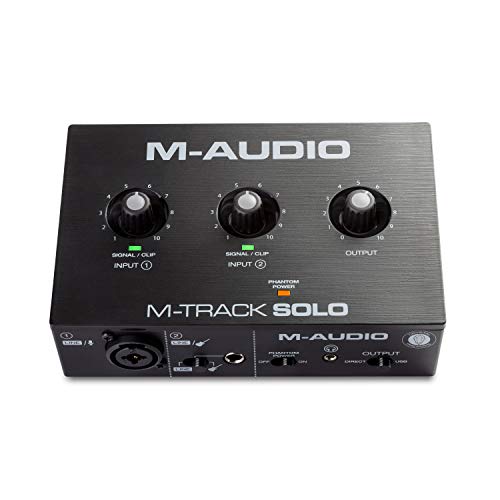
| Best Value | Audio Resolution: 48kHz | Primary Input Type: XLR combo + line/instrument | Monitoring Output: RCA + 1/8″ headphone | VIEW LATEST PRICE | Read Our Analysis |
| JOYO Guitar Audio Interface with Type-C and Lightning (MOMIX CAB) |

| Best Portable Option | Audio Resolution: Not specified | Primary Input Type: 6.35mm guitar jack | Monitoring Output: 3.5mm headphone jack | VIEW LATEST PRICE | Read Our Analysis |
| MAONO USB Audio Interface with XLR Input (PS22 Lite) |

| Best For Streamers | Audio Resolution: 24-bit/192kHz | Primary Input Type: XLR microphone + dedicated instrument | Monitoring Output: Headphone output (side-mounted) | VIEW LATEST PRICE | Read Our Analysis |
| Synido USB-C Audio Interface with XLR Input |

| Most Versatile | Audio Resolution: 24-bit/48kHz | Primary Input Type: XLR microphone + instrument | Monitoring Output: Stereo RCA + 3.5mm headphone | VIEW LATEST PRICE | Read Our Analysis |
| Guitar Audio Interface with Type-C & Lightning Connector |

| Best For Mobile | Audio Resolution: 24-bit/48kHz | Primary Input Type: 6.35mm guitar jack | Monitoring Output: 3.5mm headphone jack | VIEW LATEST PRICE | Read Our Analysis |
| IK Multimedia iRig 2 Portable Guitar Audio Interface |
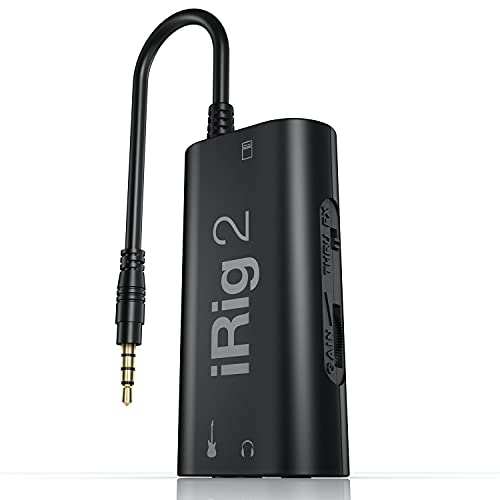
| Best For iPhone | Audio Resolution: Not specified | Primary Input Type: 1/4″ instrument jack | Monitoring Output: 1/8″ headphone + 1/4″ amp out | VIEW LATEST PRICE | Read Our Analysis |
| Ueteto Portable Audio Interface for Guitar and Smartphones |

| Best Budget Pick | Audio Resolution: Not specified | Primary Input Type: USB-C guitar jack | Monitoring Output: 3.5mm headphone jack | VIEW LATEST PRICE | Read Our Analysis |
| EBXYA 2×2 Audio Interface USB Recording Studio |
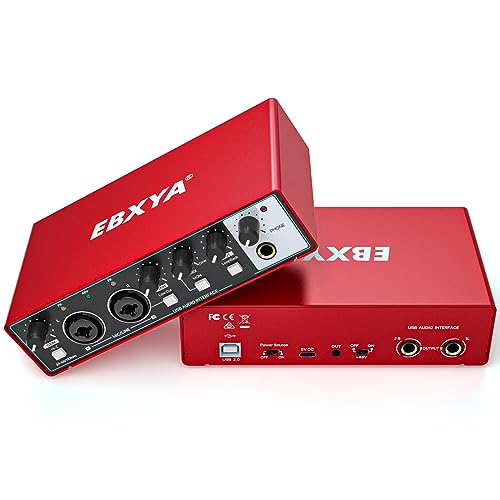
| Professional Grade | Audio Resolution: 24-bit/192kHz | Primary Input Type: XLR combo inputs (2x) | Monitoring Output: TRS main out + stereo headphone | VIEW LATEST PRICE | Read Our Analysis |
More Details on Our Top Picks
Focusrite Scarlett Solo 3rd Gen USB Audio Interface
Why should you consider the Focusrite Scarlett Solo 3rd Gen if you’re starting your recording journey? It delivers studio-quality capture with high-performance mic preamps and instrument inputs for guitar or bass. The Air mode adds clarity to acoustic recordings. You’ll record at up to 24-bit/192kHz resolution, ensuring professional sound. Monitor your work through balanced outputs and headphones with crystal-clear audio. The included software—Pro Tools Intro+, Ableton Live Lite, and Hitmaker Expansion—provides essential effects and instruments. You’re ready to record podcasts, vocals, or music immediately. Three-year worldwide warranty covers manufacturing issues, protecting your investment.
- Audio Resolution:24-bit/192kHz
- Primary Input Type:XLR microphone + instrument
- Monitoring Output:Balanced XLR + headphones
- Phantom Power Support:Yes (Air mode for mics)
- Included Software:Pro Tools Intro+, Ableton Live Lite, Hitmaker Expansion
- Portability/Form Factor:Desktop interface
- Additional Feature:Air mode clarity enhancement
- Additional Feature:Three-year worldwide warranty
- Additional Feature:High-headroom instrument inputs
Focusrite Scarlett Solo 4th Gen USB Audio Interface
The Focusrite Scarlett Solo 4th Gen delivers studio-quality sound with a 120dB dynamic range, making it ideal for guitarists, vocalists, and producers who need professional recording capabilities without complexity. You’ll record using converters from Focusrite’s flagship interfaces, ensuring high-fidelity audio capture. The Air mode feature lifts vocals and guitars to the front of your mix by adding musical presence and rich harmonic drive. You’ll gain immediate access to Pro Tools Intro+ for Focusrite, Ableton Live Lite, and the Hitmaker Expansion, which provides essential effects, software instruments, and mastering tools. This setup gives you everything required to record, mix, and master music in one complete package.
- Audio Resolution:24-bit/192kHz
- Primary Input Type:XLR microphone + instrument
- Monitoring Output:Balanced XLR + headphones
- Phantom Power Support:Yes (Air mode for mics)
- Included Software:Pro Tools Intro+, Ableton Live Lite, Hitmaker Expansion
- Portability/Form Factor:Desktop interface
- Additional Feature:120dB dynamic range
- Additional Feature:Air mode presence lifting
- Additional Feature:Flagship converter technology
M-Audio M-Track Solo USB Audio Interface
Looking for an audio interface that handles multiple input types without breaking your budget? The M-Audio M-Track Solo delivers exactly that. You get one combo XLR/Line input with phantom power for condenser microphones, plus a separate Line/Instrument input for guitars. The transparent crystal preamp ensures clean signal capture from any source. You’ll monitor through 1/8″ headphones or stereo RCA outputs, switching between USB and direct monitoring to eliminate latency. Recording happens at 48kHz resolution. The included MPC Beats software provides production tools, making this interface practical for recording vocals, guitars, and instruments simultaneously without unnecessary complexity or expense.
- Audio Resolution:48kHz
- Primary Input Type:XLR combo + line/instrument
- Monitoring Output:RCA + 1/8″ headphone
- Phantom Power Support:Yes (condenser mic support)
- Included Software:MPC Beats Software
- Portability/Form Factor:Compact USB device
- Additional Feature:Zero latency monitoring switch
- Additional Feature:Transparent Crystal Preamp
- Additional Feature:Stereo RCA outputs
JOYO Guitar Audio Interface with Type-C and Lightning (MOMIX CAB)
If you’re a guitarist who records directly to your smartphone for live streaming or quick audio captures, the JOYO MOMIX CAB delivers plug-and-play functionality without requiring a power source. Connect your electric guitar or bass using the 6.35mm jack, then attach the interface to your phone via USB-C or Lightning. Use the 3.5mm jack for ear monitoring during recording. The back clip design lets you store it in your pocket for portable use. Note that not every app works with this interface, and you can’t adjust monitoring volume independently. If you push the volume too high, distortion occurs, signaled when the indicator light shifts from green to red. This device focuses on straightforward recording without editing or mixing capabilities.
- Audio Resolution:Not specified
- Primary Input Type:6.35mm guitar jack
- Monitoring Output:3.5mm headphone jack
- Phantom Power Support:No
- Included Software:None specified
- Portability/Form Factor:Pocket-sized with clip
- Additional Feature:Back clip pocket storage
- Additional Feature:Distortion indicator light system
- Additional Feature:No charging required
MAONO USB Audio Interface with XLR Input (PS22 Lite)
MAONO’s PS22 Lite delivers professional-grade recording capabilities in a compact, palm-sized package—making it an excellent choice if you’re a beginner or hobbyist guitarist who wants to capture high-quality audio without cluttering your workspace. The interface records at 24-bit/192kHz with a 106dB dynamic range, ensuring clear guitar tones. You’ll connect your instrument to the dedicated guitar input, which features adjustable impedance and built-in effects. The included ProStudio Routing Software lets you set up virtual channels and loopbacks for flexible monitoring. Setup requires selecting the MAONO ASIO driver in your DAW—whether you’re using Ableton Live, Cubase, or Reaper. Direct monitoring through the side headphone jack reduces cable mess while letting you hear yourself in real time.
- Audio Resolution:24-bit/192kHz
- Primary Input Type:XLR microphone + dedicated instrument
- Monitoring Output:Headphone output (side-mounted)
- Phantom Power Support:Yes (48V phantom power)
- Included Software:ProStudio Routing Software, ASIO driver
- Portability/Form Factor:Palm-sized, compact
- Additional Feature:ProStudio routing software included
- Additional Feature:106dB dynamic range
- Additional Feature:Dynamic light ring indicator
Synido USB-C Audio Interface with XLR Input
The Synido USB-C Audio Interface with XLR Input works best for guitarists who need a compact, portable recording setup without sacrificing audio quality. This 2×2 interface delivers 24-bit depth at 48 kHz sampling rate through an independent audio chip that reduces latency. You’ll access three monitoring modes: Stereo for original input, Mix for real-time blending, and USB for computer audio only. The XLR input accepts both 6.35mm and XLR microphones, with easy switching between line and instrument inputs. Professional 48V phantom power supports condenser microphones. Weighing just 300 grams, you’ll carry it easily between locations. Connect via USB-C to computers or mobile devices running Windows, Mac, Android, or iOS for immediate plug-and-play recording.
- Audio Resolution:24-bit/48kHz
- Primary Input Type:XLR microphone + instrument
- Monitoring Output:Stereo RCA + 3.5mm headphone
- Phantom Power Support:Yes (48V phantom power)
- Included Software:ASIO driver, routing software
- Portability/Form Factor:Portable, lightweight (300g)
- Additional Feature:Three monitoring modes available
- Additional Feature:30-day warranty included
- Additional Feature:300g lightweight portable design
Guitar Audio Interface with Type-C & Lightning Connector
Musicians who record or stream on multiple devices—smartphones, tablets, and laptops—will find this pocket-sized interface especially practical because it connects to Android via Type-C USB, works with iPad and iPhone through a Lightning-to-Type-C adapter, and functions across most live streaming apps. Plug your 1/4″ guitar cable into the jack, then monitor through the 3.5mm headphone output while adjusting volume with the dedicated buttons. The indicator light shows green for normal levels and red when distortion occurs. Recording happens at 24-bit/48kHz quality with zero latency, meaning your audio stays synchronized with video. Simply clip it to your pocket, connect your device, and start recording or streaming immediately—no batteries or complicated setup required.
- Audio Resolution:24-bit/48kHz
- Primary Input Type:6.35mm guitar jack
- Monitoring Output:3.5mm headphone jack
- Phantom Power Support:No
- Included Software:None specified
- Portability/Form Factor:Pocket-sized with clip
- Additional Feature:24bit/48KHz recording quality
- Additional Feature:Volume status indicator light
- Additional Feature:Back clip pocket design
IK Multimedia iRig 2 Portable Guitar Audio Interface
Want to record guitar directly to your iPhone, iPad, or Mac without carrying bulky equipment? The IK Multimedia iRig 2 connects your instrument through its 1/8″ TRRS connector to your mobile device. Adjust the gain dial to set proper input levels, then launch AmpliTube CS to access virtual stompbox effects and amp models. You can switch between processed and clean signals using the built-in selector. Monitor through headphones via the 1/8″ jack or connect a 1/4″ cable to your amplifier for live use. This straightforward setup lets you record high-quality audio instantly without adapters.
- Audio Resolution:Not specified
- Primary Input Type:1/4″ instrument jack
- Monitoring Output:1/8″ headphone + 1/4″ amp out
- Phantom Power Support:No
- Included Software:AmpliTube CS (free iOS app)
- Portability/Form Factor:Lightweight, portable adapter
- Additional Feature:Adjustable gain dial control
- Additional Feature:100% analog signal path
- Additional Feature:Switch between processed/clean signal
Ueteto Portable Audio Interface for Guitar and Smartphones
If you’re just starting out with guitar recording and need something you can take anywhere, the Ueteto Portable Audio Interface delivers plug-and-play simplicity without requiring drivers or charging. Connect your guitar via USB-C or Lightning cable to your iPhone, iPad, or Android device. The indicator light shows green for proper levels and turns red when volume’s too high, preventing distortion. Use the 3.5mm headphone jack to monitor your sound while recording directly into your device. This compact interface works best for beginners doing live streaming or basic recordings, though it won’t work with GarageBand or complex editing software.
- Audio Resolution:Not specified
- Primary Input Type:USB-C guitar jack
- Monitoring Output:3.5mm headphone jack
- Phantom Power Support:No
- Included Software:None specified
- Portability/Form Factor:Pocket-sized, compact
- Additional Feature:No driver installation needed
- Additional Feature:High-quality internal recording sync
- Additional Feature:Compact pocket-sized design
EBXYA 2×2 Audio Interface USB Recording Studio
The EBXYA 2×2 delivers plug-and-play simplicity for home recordists, podcasters, and mobile musicians who don’t want to deal with driver installation or complex setup procedures. Connect the USB-C cable to your Mac, PC, or mobile device, then plug in the 5V power adapter. You’ll access two XLR/Line combo inputs with up to 60dB gain and a HI-Z switch for guitars or condenser mics with 48V phantom power. The interface captures 24-bit/192kHz audio with minimal latency for real-time monitoring. Route output to studio speakers via balanced TRS connections or use the independent headphone control. Its compact design fits backpacks for recording anywhere.
- Audio Resolution:24-bit/192kHz
- Primary Input Type:XLR combo inputs (2x)
- Monitoring Output:TRS main out + stereo headphone
- Phantom Power Support:Yes (48V phantom power)
- Included Software:Compatibility with Pro Tools, Cubase, Logic Pro, Reaper
- Portability/Form Factor:Ultra-portable, small form factor
- Additional Feature:60dB maximum input gain
- Additional Feature:HI-Z instrument switch included
- Additional Feature:2-year premium warranty
Factors to Consider When Choosing Audio Interfaces for Guitar
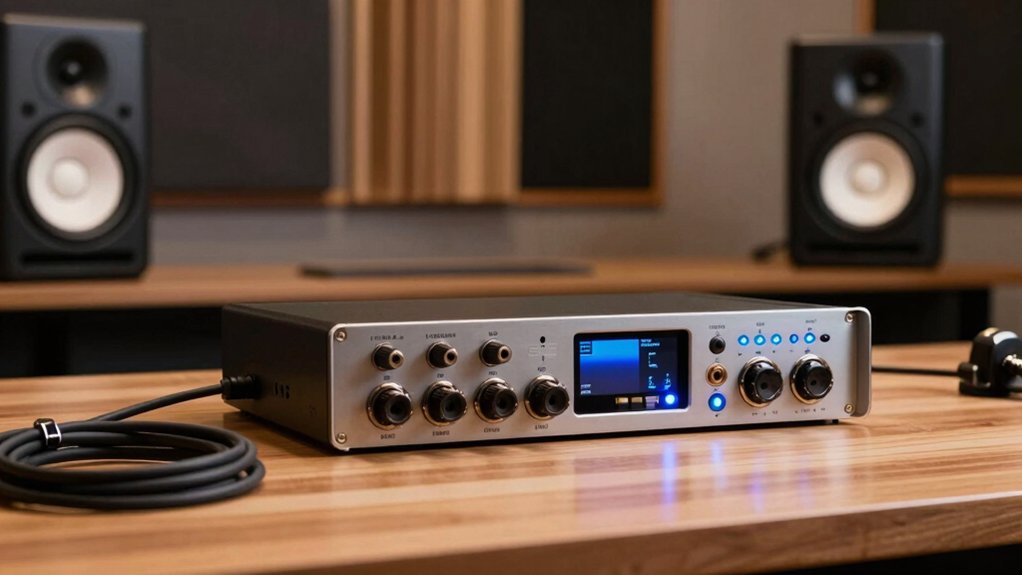
You’ll want to evaluate five critical factors before selecting an audio interface: check the input types and connectors to ensure they match your guitar cable and microphone needs, assess the audio quality and resolution specifications since higher bit depth and sample rates capture more detail, and examine the monitoring capabilities and latency performance so you can hear yourself clearly while recording without delay. Next, consider the portability and form factor by determining whether you need a compact device for travel or a larger stationary setup for your studio space. Finally, review the software bundle included with the interface and verify compatibility with your computer’s operating system and your digital audio workstation (DAW) before making a purchase.
Input Types And Connectors
What input connections does your audio interface actually need? First, prioritize a dedicated Hi-Z instrument input with a 1/4″ jack. This preserves your guitar’s natural tone by handling high-impedance signals correctly. Second, consider combo inputs that accept both XLR and 1/4″ connectors. These let you connect vocal microphones and instrument DI boxes to the same input. Third, verify phantom power availability if you’re using condenser microphones alongside guitars. Most interfaces with XLR inputs include 48V phantom power. Fourth, check for impedance controls or Hi-Z switches that optimize signal quality for different guitar types. Finally, examine your output options—1/4″ TRS, RCA, or XLR connectors—to match your monitoring setup. These connections determine how effectively you capture and monitor your recordings.
Audio Quality And Resolution
Most audio interfaces offer either 16-bit/44.1kHz or 24-bit/192kHz conversion specs, and this difference directly impacts your guitar recordings. Higher resolution interfaces capture fuller dynamic range and more detailed harmonic content in your performances. When you choose 24-bit depth, you get a lower noise floor and greater headroom, which prevents digital clipping during loud transients like aggressive strumming or high-gain tones. The quality of the DAC/ADC converters determines perceived clarity—better converters deliver tighter transient response and more accurate harmonic reproduction. Check the interface’s dynamic range specification, typically 100dB–120dB, to ensure quiet passages and subtle pick attack remain audible when recording alongside other sources. Prioritize interfaces with high-quality preamps and low-latency circuitry to preserve dynamics during real-time monitoring.
Monitoring Capabilities And Latency
When you’re recording guitar, latency—the delay between playing a note and hearing it through your headphones—can throw off your timing and make overdubbing difficult. Look for interfaces with direct monitoring switches that let you hear your instrument signal without computer processing. This eliminates delay entirely. Check whether the interface offers independent headphone controls so you can blend your direct guitar signal with playback from your DAW. Some interfaces provide USB-only monitoring routes, which may increase latency. Examine LED indicators on the interface to monitor input levels and prevent clipping during live monitoring. Choose interfaces with quality preamps and solid driver support to reduce hiss and maintain clarity in your monitor path.
Portability And Form Factor
How portable does your audio interface need to be? Consider your recording habits first. If you tour, busk, or travel frequently, choose pocket-sized interfaces weighing under 0.5 kg that fit easily into bags or backpacks. Look for clip-on or back-pocket designs that attach directly to your gear for maximum portability.
Next, check connectivity options. USB-C or Lightning ports ensure compatibility with modern smartphones and laptops, enabling quick setup without drivers. Battery-free operation means you’ll plug in and start recording immediately—no charging delays.
Finally, examine the enclosure durability. Rugged cases protect your interface during transport and live performances. Compact footprints reduce weight and bulk without sacrificing functionality. These practical features let you maintain your recording setup regardless of location.
Software Bundle And Compatibility
The software that comes with your audio interface can either jumpstart your production workflow or leave you buying expensive plugins separately. Check whether your interface includes Pro Tools Intro, Ableton Live Lite, or similar DAWs that match what you already use. Verify ASIO driver support on Windows for low-latency recording. Confirm the bundle covers essential recording, editing, and mastering tools like virtual instruments and effects. Test cross-platform compatibility if you work on Mac, Windows, or iPad. Review whether updates or expansion packs come included to keep your software current. Compare interfaces that offer comprehensive bundles against those requiring separate plugin purchases, then calculate total costs before deciding.
Final Thoughts
To choose your audio interface, identify your needs: portable smartphone recording, home studio setup, or professional use. Compare specs like USB-C connectivity, bit depth, and latency. Check compatibility with your devices. Test low-noise performance and input quality. Match features to your budget. Purchase from retailers offering return policies. Install drivers, connect your guitar, and configure input levels before recording.

Meet Ry, “TechGuru,” a 36-year-old technology enthusiast with a deep passion for tech innovations. With extensive experience, he specializes in gaming hardware and software, and has expertise in gadgets, custom PCs, and audio.
Besides writing about tech and reviewing new products, he enjoys traveling, hiking, and photography. Committed to keeping up with the latest industry trends, he aims to guide readers in making informed tech decisions.