
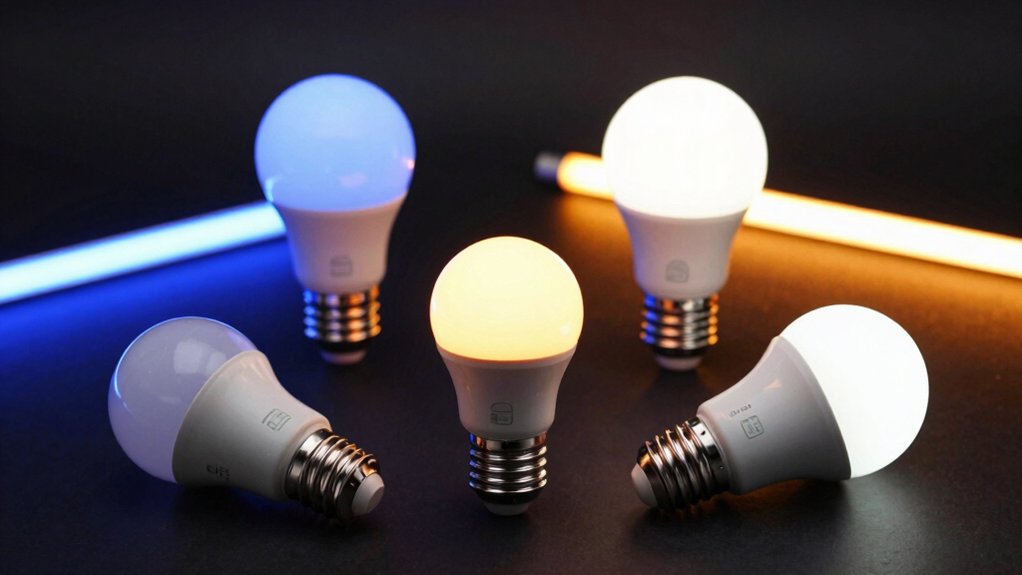

You’re considering smart lighting upgrades but balking at Philips Hue’s premium prices. LIFX, Sengled, Wyze, Govee, and Nanoleaf deliver comparable features at lower costs. Each option covers different priorities—brightness, affordability, design, or assistant compatibility. Before you commit to any system, you’ll need to evaluate specific factors that determine whether an alternative truly fits your home’s requirements and budget constraints.
| Philips Hue Bridge Pro Smart Light Hub |
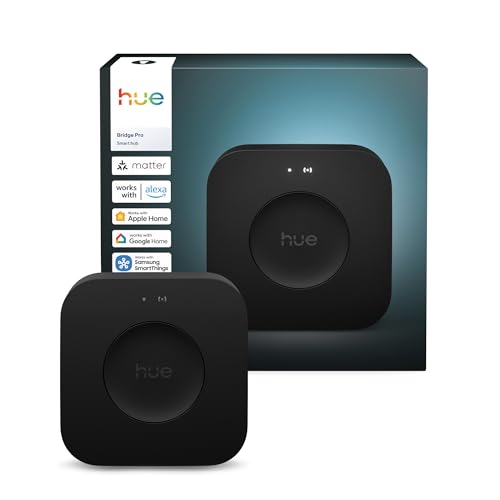
| Best Smart Hub | Smart Home Ecosystem Compatibility: Apple Home, Alexa, Google, Samsung SmartThings | Hue Bridge Requirement: Wireless smart light hub (is the Bridge) | Installation Type: Plug-in hub (no installation) | VIEW LATEST PRICE | Read Our Analysis |
| PHILIPS Hue Smart Dimmer Switch with Remote |

| Most Convenient Control | Smart Home Ecosystem Compatibility: Apple Home, Alexa, Google (via Hue Bridge); Matter support | Hue Bridge Requirement: Required for automations and remote control | Installation Type: Wall-mount with adhesive or magnetic backing; handheld remote option | VIEW LATEST PRICE | Read Our Analysis |
| Philips Hue Smart LED A19 Bulb White & Color |

| Essential Smart Bulb | Smart Home Ecosystem Compatibility: Alexa, Google Assistant, Apple Home | Hue Bridge Requirement: Optional for broader home assistant control | Installation Type: Screw-in bulb | VIEW LATEST PRICE | Read Our Analysis |
| PHILIPS Hue Smart RGBWW LED Lightstrip with HomeKit |

| Best Ambiance Lighting | Smart Home Ecosystem Compatibility: Alexa, Google Assistant, Apple HomeKit; Matter compatible | Hue Bridge Requirement: Required for automations, remote control, secure connection | Installation Type: Cut-to-fit, adhesive stick, plug-in power | VIEW LATEST PRICE | Read Our Analysis |
| PHILIPS Hue Wireless Smart Light Switch Button |
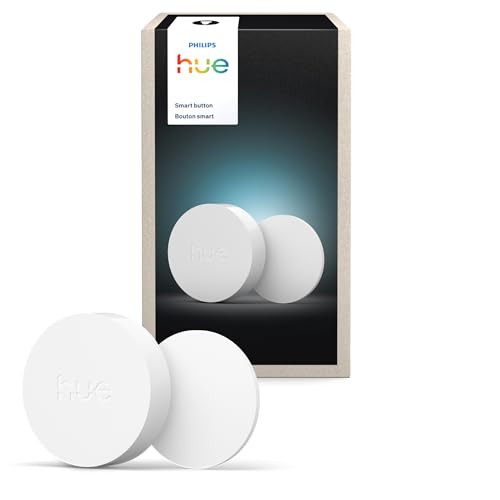
| Best Portable Switch | Smart Home Ecosystem Compatibility: Hue app control; requires Hue Bridge for full integration | Hue Bridge Requirement: Required for full functionality | Installation Type: Wireless with adhesive mounting or magnetic surface placement | VIEW LATEST PRICE | Read Our Analysis |
More Details on Our Top Picks
Philips Hue Bridge Pro Smart Light Hub
If you’re managing a large smart home setup with 150+ lights and accessories, the Philips Hue Bridge Pro delivers the processing power and memory you’ll need to run everything smoothly. The device features a 1.7 GHz Quad-core processor and 8 GB of memory, enabling fast response times and complex automations. You can store 500 personalized scenes and use motion sensing to trigger lights automatically. The Bridge Pro integrates with Apple Home, Alexa, Google, and Samsung SmartThings. Advanced encryption protects your data through Zigbee Trust Center security. Migrate your existing Hue devices to this hub and expand your system as needed with future compatibility.
- Smart Home Ecosystem Compatibility:Apple Home, Alexa, Google, Samsung SmartThings
- Hue Bridge Requirement:Wireless smart light hub (is the Bridge)
- Installation Type:Plug-in hub (no installation)
- Control Methods:Hub-based; supports connected devices and automations
- Automation & Scene Capabilities:500 personalized scenes; motion sensing automations
- Color & Light Output:Supports 150+ lights and 50+ accessories (hub capacity)
- Additional Feature:Supports 150+ connected devices
- Additional Feature:Ultra-fast 1.7 GHz processing
- Additional Feature:Stores 500+ personalized scenes
PHILIPS Hue Smart Dimmer Switch with Remote
Want to control your Hue lights from anywhere in your home without reaching for your phone? The Philips Hue Smart Dimmer Switch with Remote lets you do exactly that. This V2 battery-powered device mounts on your wall using adhesive or magnetic backing, then removes to function as a handheld remote. You’ll dim and brighten lights, turn them on and off, and cycle through four preset scenes. After connecting it to your Hue Bridge through the app, you select which lights it controls and customize settings based on time of day. The bridge enables automations and remote access while preventing Wi-Fi drain.
- Smart Home Ecosystem Compatibility:Apple Home, Alexa, Google (via Hue Bridge); Matter support
- Hue Bridge Requirement:Required for automations and remote control
- Installation Type:Wall-mount with adhesive or magnetic backing; handheld remote option
- Control Methods:Physical dimmer switch with remote functionality
- Automation & Scene Capabilities:Cycles through 4 preset scenes; automation support
- Color & Light Output:Works with any Hue lights selected in app
- Additional Feature:Detachable handheld remote design
- Additional Feature:Magnetic wall mounting option
- Additional Feature:Cycles four preset scenes
Philips Hue Smart LED A19 Bulb White & Color
The Philips Hue Smart LED A19 Bulb White & Color works best for anyone who wants precise color control across their entire home lighting setup. You’ll get 1100 lumens of full-spectrum light ranging from 1000K to 20000K, letting you adjust warmth and color exactly how you want. Installation takes minutes: screw in the bulb, download the Hue app, and start controlling lights remotely. The Chromasync technology ensures all your bulbs produce identical colors when synced together. You can dim from full brightness down to 0.2%, and the bulb lasts around 25,000 hours. Compatible with Alexa, Google Assistant, and Apple Home, you’ll have flexible control options.
- Smart Home Ecosystem Compatibility:Alexa, Google Assistant, Apple Home
- Hue Bridge Requirement:Optional for broader home assistant control
- Installation Type:Screw-in bulb
- Control Methods:Remote control via Hue app
- Automation & Scene Capabilities:No scene storage mentioned
- Color & Light Output:Full spectrum 1000K-20000K; 1100 lumens; dimmable to 0.2%
- Additional Feature:Ultra-low dimming to 0.2%
- Additional Feature:25,000 hour lifespan
- Additional Feature:Chromasync color consistency technology
PHILIPS Hue Smart RGBWW LED Lightstrip with HomeKit
Looking to outfit large surfaces with customizable color-changing lighting? The PHILIPS Hue Smart RGBWW LED Lightstrip delivers 1700 lumens across a 10-foot strip, featuring RGBWW LEDs for full-color and white light options. Installation is straightforward: cut the strip to your desired length, stick it to your surface, then plug it in. The silicone sleeve provides a milky white finish suitable for living rooms, bedrooms, ceilings, and stairs. You’ll control it via the Hue App with compatibility for Alexa, Google Assistant, and Apple HomeKit. Note that you’ll need a Hue Bridge for automations and remote access, and once cut, the strip cannot be reconnected.
- Smart Home Ecosystem Compatibility:Alexa, Google Assistant, Apple HomeKit; Matter compatible
- Hue Bridge Requirement:Required for automations, remote control, secure connection
- Installation Type:Cut-to-fit, adhesive stick, plug-in power
- Control Methods:Remote control via Hue app
- Automation & Scene Capabilities:Base kit; expand for full features
- Color & Light Output:RGBWW; 1700 lumens; true color output
- Additional Feature:Cut-to-fit installation flexibility
- Additional Feature:10-foot premium silicone sleeve
- Additional Feature:1700 lumens output capacity
PHILIPS Hue Wireless Smart Light Switch Button
If you’re seeking a portable control solution that doesn’t require any wiring or professional installation, the Philips Hue Wireless Smart Light Switch Button delivers straightforward functionality through simple clicks and holds. Click to turn lights on or off and cycle through scenes. Press and hold to dim or brighten gradually. The battery-powered device mounts flexibly using adhesive or magnets anywhere in your home. Customize button assignments in the Hue app by selecting rooms or zones. Set up automations to trigger lights at specific times, then start or stop them with a single press. You’ll need a Hue Bridge to access full automation features and remote control capabilities.
- Smart Home Ecosystem Compatibility:Hue app control; requires Hue Bridge for full integration
- Hue Bridge Requirement:Required for full functionality
- Installation Type:Wireless with adhesive mounting or magnetic surface placement
- Control Methods:Physical button; wireless with app customization
- Automation & Scene Capabilities:Time-based automation; customizable scene assignment
- Color & Light Output:Light control capability (specific spectrum not detailed)
- Additional Feature:Battery-powered wireless portability
- Additional Feature:Time-based lighting optimization
- Additional Feature:Press-and-hold dimming control
Factors to Consider When Choosing Philips Hue Alternatives
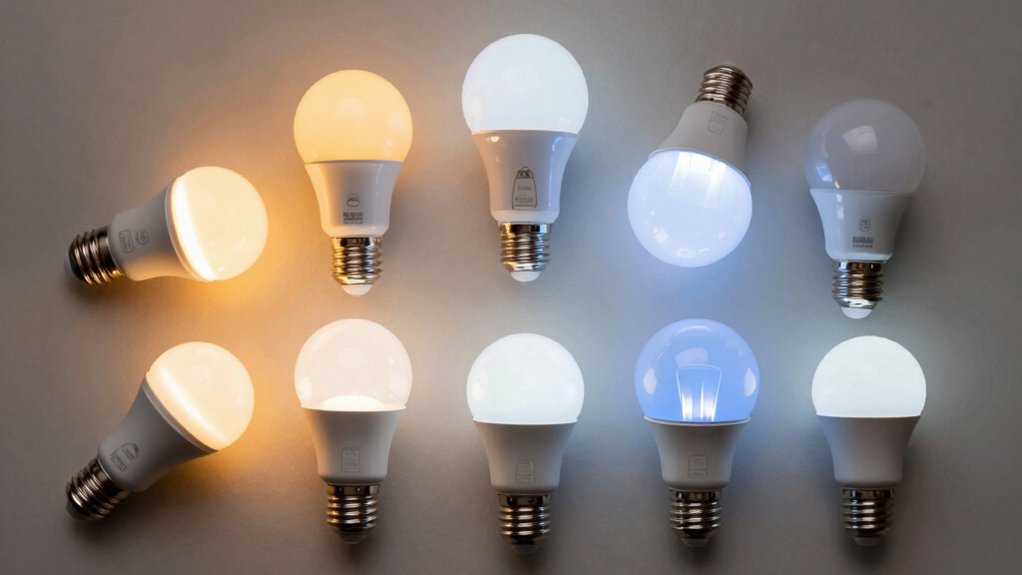
When you’re evaluating Philips Hue alternatives, you’ll need to assess ecosystem compatibility with your existing smart home devices, compare upfront costs against long-term value, and determine whether the installation and setup process fits your technical skill level. You should also examine each option’s feature set—such as color range, dimming capabilities, and scheduling functions—alongside its scalability, meaning whether you can easily add more lights or accessories as your system grows. Finally, match these factors against your specific needs: budget constraints, integration requirements with platforms like Alexa or Google Home, and your willingness to handle complex installation versus plug-and-play simplicity.
Ecosystem Compatibility And Integration
How do you know which smart lighting system will actually work with your existing devices?
First, check whether the alternative system requires a separate hub or bridge for automations and remote access. Next, verify compatibility with your current voice assistants—Apple Home, Alexa, Google, or Samsung SmartThings. Then, confirm Matter support, which enables broader interoperability across different ecosystems. Finally, assess whether you can migrate existing devices into the new system without replacing them.
Review each alternative’s official compatibility list before purchasing. Cross-reference your current devices against this list. If integration requires a bridge, factor that cost into your total expenses. Consider how easily you can expand the system later. These steps ensure your new lighting setup connects seamlessly with what you already own.
Budget And Cost Considerations
Most smart lighting options require you to calculate total cost of ownership rather than focusing on individual bulb prices alone. You’ll need to account for the hub or bridge purchase, which can cost $50–$150 depending on the system. Next, compare price per lumen to determine brightness value across brands. Then, identify which accessories you actually need—motion sensors, remotes, or extensions—and factor those costs in. Check whether your chosen system demands specific ecosystem compatibility that unlocks automations and remote access; some features require proprietary hubs you must buy separately. Finally, research whether future firmware updates or premium features involve additional charges. By examining these components systematically, you’ll identify which alternative delivers genuine savings beyond the initial bulb cost.
Installation Complexity And Setup
Before you commit to a Philips Hue alternative, you’ll want to evaluate how much setup work each option demands. Some systems require a central hub or bridge to function fully, while others operate with limited features without one. Installation methods vary notably—certain products offer plug-and-play simplicity, whereas lighting strips may need adhesive mounting or physical wiring. Check whether your chosen system requires app configuration, account creation, and automation setup for remote control capabilities. Compatibility matters too: verify support for Matter, Alexa, Google Assistant, or Apple Home, as this affects pairing steps. Finally, confirm whether the system offers migration assistance to transfer your existing scenes and lighting schedules, which reduces manual reconfiguration time and streamlines your transition process considerably.
Feature Set And Capabilities
What’ll make or break your smart lighting system is whether it’s got the processing power and storage capacity to handle everything you’re throwing at it. Look for hubs with multi-core CPUs and sufficient RAM to support real-time responses and complex automations. Check the maximum device capacity to ensure the system grows with your needs. Verify that the hub stores hundreds of personalized scenes and supports motion or time-based automation triggers. Confirm whether motion sensing is built into the hub or requires separate sensors. Finally, assess ecosystem compatibility by checking support for Apple Home, Alexa, Google, and Matter standards. These factors determine how smoothly your system performs and adapts to future expansion.
Scalability And Expansion Options
How can you ensure your smart lighting system won’t become obsolete as your needs grow? Select hubs that support 150+ lights and 50+ accessories to handle expanding setups without replacement. Verify the hub has sufficient onboard memory and processing power, such as 8 GB RAM and fast CPUs, to manage hundreds of scenes and complex automations simultaneously. Confirm multi-ecosystem compatibility with Apple Home, Alexa, Google, and SmartThings, allowing flexible future additions. Check the system’s expansion pathways—whether you can migrate to larger hubs or easily integrate additional devices as your network grows. Review the manufacturer’s track record for releasing new compatible products and updating firmware regularly. This approach prevents costly system overhauls when your lighting needs increase.
Final Thoughts
You’ve got five solid alternatives to Philips Hue: LIFX for brightness without hubs, Sengled for reliable color on a budget, Wyze for affordable bulbs with assistant compatibility, Govee for budget-friendly strips and dynamic scenes, and Nanoleaf for modular color-rich panels. Compare each option’s features, price, and compatibility with your smart home setup. Pick the one that matches your budget, lighting needs, and existing devices.

Meet Ry, “TechGuru,” a 36-year-old technology enthusiast with a deep passion for tech innovations. With extensive experience, he specializes in gaming hardware and software, and has expertise in gadgets, custom PCs, and audio.
Besides writing about tech and reviewing new products, he enjoys traveling, hiking, and photography. Committed to keeping up with the latest industry trends, he aims to guide readers in making informed tech decisions.