

You’re investing in a 4K video editing desktop, and you need to know what separates professional-grade machines from ordinary computers. The right workstation handles massive video files, supports multiple monitors, and renders footage faster than standard setups. You’ll encounter specific CPU requirements, RAM configurations, and GPU options that directly impact your editing speed and project quality. Understanding these components—and how they work together—determines whether you’re wasting money or building a reliable system.
| HP OmniDesk M03 Business Desktop PC with RTX 5060 |

| Business Productivity Leader | Processor: Intel Core Ultra 7 265 (20-core) | RAM: 64 GB DDR5 | Storage: 2 TB NVMe SSD | VIEW LATEST PRICE | Read Our Analysis |
| CPU Solutions Express 4K Video Editing Workstation PC |
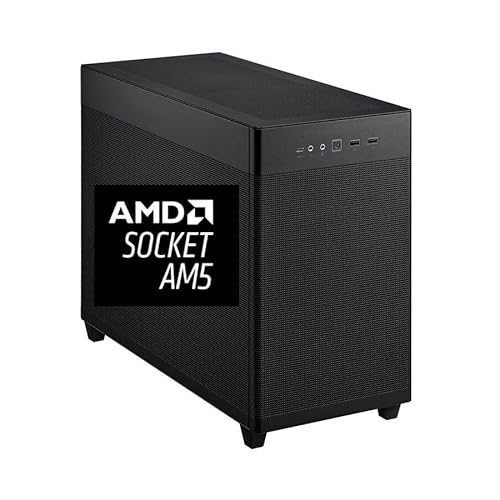
| Professional 4K Workstation | Processor: AMD Ryzen 9 9950X (16-core) | RAM: 64 GB DDR5 (expandable to 192 GB) | Storage: 2 TB NVMe SSD | VIEW LATEST PRICE | Read Our Analysis |
| HP Workstation PC Desktop Computer with NVIDIA Quadro K1200 |

| Entry-Level Editing | Processor: Intel Core i5 8th Gen (6-core) | RAM: 32 GB DDR4 | Storage: 1 TB SSD + 4 TB HDD | VIEW LATEST PRICE | Read Our Analysis |
| HP EliteDesk 805 G9 Business Desktop Computer |

| Compact Business Desktop | Processor: AMD Ryzen 5 8500G (6-core) | RAM: 32 GB DDR5 (up to 64 GB supported) | Storage: Up to 2 TB PCIe SSD | VIEW LATEST PRICE | Read Our Analysis |
| Prebuilt Gaming PC Ryzen 7 RTX 4060 16GB |

| Budget Gaming Crossover | Processor: AMD Ryzen 7 5700X (8-core) | RAM: 16 GB DDR4 | Storage: 1 TB NVMe SSD | VIEW LATEST PRICE | Read Our Analysis |
| Dell Workstation Desktop Computer with Nvidia Quadro P620 |

| Renewed Professional Value | Processor: Intel Core i7-9700 9th Gen (8-core) | RAM: 32 GB DDR4 | Storage: 1 TB SSD + 4 TB HDD | VIEW LATEST PRICE | Read Our Analysis |
| CPU Solutions 4K to 8K Video Editing Workstation |
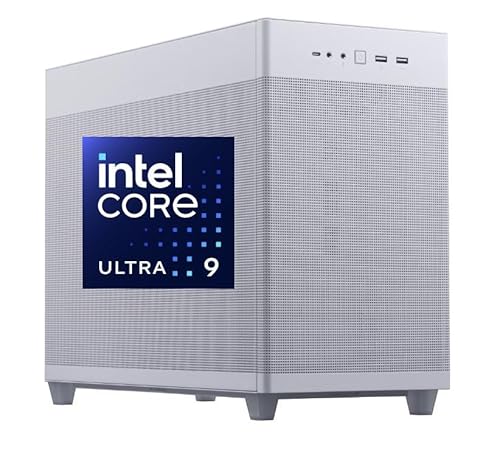
| Premium 8K Capable | Processor: Intel Core Ultra 9 15th Gen (24-core) | RAM: 64 GB DDR5 | Storage: 2 TB NVMe SSD | VIEW LATEST PRICE | Read Our Analysis |
More Details on Our Top Picks
HP OmniDesk M03 Business Desktop PC with RTX 5060
If you’re a video editor, motion graphics designer, or content creator who needs to manage multiple 4K video tracks simultaneously while running complex rendering tasks, the HP OmniDesk M03 delivers the processing power you’ll require. The Intel Core Ultra 7 265 processor with 20 cores handles demanding timelines efficiently. You’ll benefit from 64 GB DDR5 RAM for smooth playback and the RTX 5060 GPU for faster rendering. The 2 TB NVMe SSD stores your projects without lag. Connect four 4K monitors via HDMI and DisplayPort to expand your workspace. Windows 11 Pro provides enterprise-level tools for file management and security. Use the multiple USB ports to attach external storage, cameras, and peripherals simultaneously.
- Processor:Intel Core Ultra 7 265 (20-core)
- RAM:64 GB DDR5
- Storage:2 TB NVMe SSD
- Graphics:NVIDIA GeForce RTX 5060
- Display Support:4K (4-monitor support)
- Operating System:Windows 11 Pro
- Additional Feature:4-monitor 4K support
- Additional Feature:64GB flash drive bundle
- Additional Feature:Wi-Fi 6 connectivity
CPU Solutions Express 4K Video Editing Workstation PC
The CPU Solutions Express 4K Video Editing Workstation PC is built for editors who need to handle demanding projects without system slowdowns. You’ll get a Ryzen 9 9950X processor with 16 cores and up to 5.7 GHz performance, paired with 64 GB of DDR5 RAM expandable to 192 GB. The Quadro RTX 2000 ADA graphics card provides 16 GB dedicated VRAM and 2,816 CUDA cores for rendering tasks. You receive 2 TB of NVMe storage for fast file access and four Mini DisplayPort outputs supporting 7680 x 4320 resolution. The mini tower design includes premium cooling and a 650 W power supply. Windows 11 Pro comes clean without bloatware, and you’re covered by a one-year warranty.
- Processor:AMD Ryzen 9 9950X (16-core)
- RAM:64 GB DDR5 (expandable to 192 GB)
- Storage:2 TB NVMe SSD
- Graphics:NVIDIA Quadro RTX 2000 ADA (16 GB)
- Display Support:7680 x 4320 at 60 Hz (4 displays)
- Operating System:Windows 11 Pro
- Additional Feature:Quadro RTX 2000 ADA graphics
- Additional Feature:Expandable to 192GB RAM
- Additional Feature:Water cooling compatible
HP Workstation PC Desktop Computer with NVIDIA Quadro K1200
You’re looking for a workstation that handles professional-grade 4K video editing without breaking your budget—and this HP setup delivers exactly that. The Intel Hexa-Core i5 processor paired with 32GB DDR4 RAM provides solid performance for Adobe and similar editing software. The NVIDIA Quadro K1200 graphics card accelerates rendering tasks efficiently. Storage includes a 1TB SSD for fast boot times and a 4TB HDD for large project files. Two DisplayPort connections let you connect dual monitors for timeline and preview monitoring. The renewed condition keeps costs down while maintaining full functionality for 4K workflows.
- Processor:Intel Core i5 8th Gen (6-core)
- RAM:32 GB DDR4
- Storage:1 TB SSD + 4 TB HDD
- Graphics:NVIDIA Quadro K1200 (4 GB)
- Display Support:2 x DisplayPort (up to 4K)
- Operating System:Windows 11 Pro
- Additional Feature:Hybrid 1TB SSD + 4TB HDD
- Additional Feature:ISV software certified compatibility
- Additional Feature:Renewed condition warranty
HP EliteDesk 805 G9 Business Desktop Computer
Looking for a compact desktop that handles 4K video editing without consuming your entire desk space? The HP EliteDesk 805 G9 delivers solid performance in a small footprint. Its AMD Ryzen 5 8500G processor with six cores handles multitasking efficiently, while 32 GB DDR5 RAM supports smooth editing workflows. You’ll connect dual 4K monitors via DisplayPort 1.4a connections for expanded workspace. The system includes up to 2 TB PCIe SSD storage for fast file access. Windows 11 Pro provides professional-grade stability. At 11 pounds with dimensions of 6.1 x 11.7 x 12.8 inches, this desktop fits tight office setups while delivering enterprise-level reliability for video projects.
- Processor:AMD Ryzen 5 8500G (6-core)
- RAM:32 GB DDR5 (up to 64 GB supported)
- Storage:Up to 2 TB PCIe SSD
- Graphics:AMD Radeon 740M
- Display Support:Dual 4K via DisplayPort/HDMI
- Operating System:Windows 11 Pro
- Additional Feature:Small Form Factor design
- Additional Feature:Dual 4K display support
- Additional Feature:TPM 2.0 security
Prebuilt Gaming PC Ryzen 7 RTX 4060 16GB
If you’re a content creator who wants a ready-to-use system without assembly hassle, this Ryzen 7 5700X and RTX 4060 prebuilt delivers solid performance for 4K video editing at a mid-range price point. The 8-core processor handles multi-track timelines and effects rendering efficiently, while 16GB DDR4 RAM supports simultaneous applications. The RTX 4060 accelerates video encoding and rendering tasks through CUDA acceleration. You’ll connect your 4K monitor via DisplayPort, then install your editing software directly. The 1TB NVMe SSD provides fast file access for project files. This system balances cost and capability for creators transitioning to 4K workflows without premium workstation pricing.
- Processor:AMD Ryzen 7 5700X (8-core)
- RAM:16 GB DDR4
- Storage:1 TB NVMe SSD
- Graphics:NVIDIA GeForce RTX 4060
- Display Support:1440p/4K capable (3x DisplayPort, 1x HDMI)
- Operating System:Windows
- Additional Feature:Fully assembled and tested
- Additional Feature:Ray tracing and DLSS
- Additional Feature:Upgrade-friendly expandable design
Dell Workstation Desktop Computer with Nvidia Quadro P620
The Dell Workstation Desktop with Nvidia Quadro P620 serves professionals who need certified hardware for demanding creative workflows without premium pricing. You’re getting an Intel i7-9700 processor, 32GB RAM, and 1TB SSD paired with a workstation-grade GPU. This combination handles 4K video editing, 3D design, and AutoCAD projects reliably. The machine supports dual DisplayPort outputs for multi-monitor setups, essential for editing timelines and reference materials simultaneously. Windows 11 Pro and ISV certification ensure software compatibility with Adobe Creative Suite and industry-standard tools. With 4TB secondary storage, you’ve got ample capacity for project files and media libraries.
- Processor:Intel Core i7-9700 9th Gen (8-core)
- RAM:32 GB DDR4
- Storage:1 TB SSD + 4 TB HDD
- Graphics:NVIDIA Quadro P620 (2 GB)
- Display Support:Up to 4096 x 2160 (2x DisplayPort)
- Operating System:Windows 11 Pro
- Additional Feature:Wi-Fi 5G + Bluetooth
- Additional Feature:1TB SSD + 4TB HDD
- Additional Feature:Microsoft Authorized Refurbisher certified
CPU Solutions 4K to 8K Video Editing Workstation
For professionals handling 4K-to-8K video projects demanding sustained performance, the CPU Solutions workstation delivers the processing power you’ll need. The 15th Core Ultra 9 processor with 24 cores reaches 5.7 GHz, handling complex timelines and effects rendering. You’ll get 64GB RAM and 2TB NVMe SSD storage with read speeds up to 5.0 GB/s for smooth playback. The NVIDIA Quadro RTX 2000 Ada GPU provides 2,816 CUDA cores and 88 Tensor Cores, accelerating encoding tasks. Connect up to four displays at 7680 x 4320 resolution for detailed color grading and timeline management. Windows 11 Pro comes bloatware-free, and the mesh cooling design maintains stable operation during extended editing sessions. The 3-year warranty protects your investment.
- Processor:Intel Core Ultra 9 15th Gen (24-core)
- RAM:64 GB DDR5
- Storage:2 TB NVMe SSD
- Graphics:NVIDIA Quadro RTX 2000 Ada (16 GB)
- Display Support:7680 x 4320 at 60 Hz (4 displays)
- Operating System:Windows 11 Pro
- Additional Feature:3-year comprehensive warranty included
- Additional Feature:Up to 5.0GB/s SSD speeds
- Additional Feature:Bloatware-free Windows 11 Pro
Factors to Consider When Choosing a 4K Video Editing Desktop
When you’re selecting a 4K video editing desktop, you’ll need to evaluate five critical hardware components: processor power that handles real-time rendering, graphics card specifications that accelerate your workflow, RAM capacity sufficient for smooth playback of high-resolution files, storage speed and capacity to manage large video projects, and display output capabilities that let you monitor your work accurately. Start by determining your budget and project requirements, then assess each component’s specifications against your editing software’s minimum recommendations. Match these hardware factors to your specific editing tasks—whether you’re working with 4K, 6K, or 8K footage—to ensure your system delivers the performance you need without overspending on unnecessary features.
Processor Power And Performance
Why does processor selection matter so much for 4K video editing? Your CPU handles the heavy lifting of rendering, playback, and effects processing. You’ll want a processor with higher core and thread counts—they enable smoother workflows with multi-track timelines and effects-heavy projects. Look for CPUs offering turbo boost frequencies up to 5.7 GHz to reduce render and export times. Prioritize processors with 64 MB or larger caches to improve playback and real-time scrubbing of large 4K media libraries. Ensure your CPU uses 64-bit architecture and modern instruction sets for efficient handling of large files and multitasking. Focus on CPUs combining high core counts with strong per-core speed, since editing software scales performance across multiple threads.
Graphics Card Specifications Matter
Your GPU’s role in 4K video editing is just as critical as your processor, since it accelerates rendering, effects processing, and real-time playback of high-resolution timelines. Look for dedicated graphics cards with at least 8 GB of VRAM to handle 4K projects smoothly. Choose GPUs featuring modern RT cores and tensor cores, which speed up ray tracing, AI-assisted denoise, and upscaling tasks. Prioritize high memory bandwidth and PCIe bandwidth to improve data transfer rates between your CPU, RAM, and storage. For multi-monitor setups, select a card with multiple DisplayPort outputs to maintain performance across several 4K displays. Higher CUDA core counts directly improve timeline scrubbing responsiveness and reduce rendering wait times in professional editing software.
RAM Requirements For Editing
Because 4K video editing demands rapid access to large amounts of data, you’ll need sufficient system RAM to keep your timeline responsive and prevent your computer from relying on slower disk storage. Start with a minimum of 32 GB for basic multitasking, but plan for 64 GB if you’re working with multiple 4K tracks, color corrections, and GPU-accelerated effects. For complex projects, consider 128 GB to avoid system slowdowns. Choose DDR5 RAM over DDR4 when possible—it offers faster memory bandwidth that improves editing responsiveness and rendering times. Pair your RAM upgrade with adequate GPU VRAM to reduce disk caching during high-resolution previews. If your workstation supports higher capacities, prioritize expanding RAM first to maximize 4K editing performance.
Storage Speed And Capacity
When you’re setting up a 4K editing workstation, how fast your storage performs matters just as much as how much you have. You’ll want NVMe PCIe SSDs instead of SATA models because they deliver substantially faster speeds—up to 5.0 GB/s read and 4.2 GB/s write. Aim for at least 1–2 TB of NVMe storage to hold large project files, caches, and libraries without constant external transfers. Consider splitting your setup: use one fast drive for your OS and applications, then add a larger secondary NVMe for media and projects. This separation reduces performance bottlenecks during timeline scrubbing and rendering. Verify your system supports multiple NVMe slots so you can expand storage as your projects grow larger.
Display Output Capabilities
How many monitors do you actually need to run simultaneously during your 4K editing sessions? Check your GPU’s display outputs first. Look for systems with multiple HDMI and DisplayPort connections—ideally four or more ports. Verify each port supports DisplayPort 1.4a or HDMI 2.1 to handle 4K at 60 Hz without bandwidth limitations. Test whether your system can drive all monitors at native 4K resolution without downscaling. This matters because real-time playback of color-managed timelines demands full resolution on every connected display. Avoid setups requiring adapters, as these introduce compatibility issues. Count your actual workflow needs: primary editing monitor, reference monitor, timeline preview, and effects preview. Select a desktop that supports this configuration natively through its GPU outputs.
Thermal Management Solutions
Sustained 4K editing demands that your desktop maintain stable temperatures under continuous heavy processing, which is why thermal management deserves careful attention during your selection process. Look for cases with mesh front and side panels that enable multiple intake and exhaust paths. Pair higher-TDP CPUs with quality air coolers or liquid cooling systems to prevent throttling during demanding timelines. Verify that your case offers adequate internal clearance and organized cable routing, both essential for efficient airflow. Select PWM fans that adjust speed automatically based on processor temperature. Install a capable power supply with sufficient headroom beyond your system’s peak draw. Finally, ensure the builder applies quality thermal compound between the CPU and cooler, as proper contact directly impacts sustained performance during complex 4K projects.
Budget And Warranty Coverage
What’s your realistic spending range for a 4K editing desktop? Higher-end workstations with 64 GB RAM and multi-core CPUs start around $2,500–$4,000, while systems offering 192 GB RAM exceed $6,000. Next, examine warranty coverage carefully. Standard plans include 1-year parts and labor, but extended multi-year warranties with on-site service cost more upfront and provide better long-term protection. Check what components your warranty covers—some exclude GPUs and storage devices. Refurbished units cost 20–40% less but typically come with limited warranties of 90 days to 1 year. Finally, verify power supply specifications (650 W minimum) and cooling capacity, as inadequate cooling voids many warranties under sustained 4K workloads. Balance your budget against warranty length and component coverage to protect your investment.
Software Compatibility And Support
Before you finalize your 4K editing desktop purchase, you’ll need to verify that your chosen system supports the professional software you rely on daily. Check ISV certification statements from Adobe, Autodesk, and other vendors to confirm seamless compatibility with Creative Suite, AutoCAD, and 3D modeling tools. Confirm the workstation runs Windows 11 Pro or higher with enterprise security features like Windows Hello and Windows Defender. Verify GPU drivers for cards like RTX 2000 Ada support hardware acceleration and AI Tensor Core functionality. Review the vendor’s driver and firmware update schedule to guarantee ongoing software certification. Finally, match the system’s RAM, CPU cores, and NVMe storage bandwidth against your specific editing demands—4K timelines and large media libraries require substantial resources to prevent workflow bottlenecks.
Final Thoughts
You’ll want to prioritize CPU cores (20–24), RAM (64–192 GB), and NVMe storage (2 TB+) for smooth 4K editing. Select a desktop with robust GPU support like RTX 5060 or Quadro RTX Ada. Verify four 4K outputs, reliable cooling, and warranty coverage. Compare upgrade paths and dual-drive configurations for OS and media separation. Match your specific software requirements and budget constraints before purchasing.

Meet Ry, “TechGuru,” a 36-year-old technology enthusiast with a deep passion for tech innovations. With extensive experience, he specializes in gaming hardware and software, and has expertise in gadgets, custom PCs, and audio.
Besides writing about tech and reviewing new products, he enjoys traveling, hiking, and photography. Committed to keeping up with the latest industry trends, he aims to guide readers in making informed tech decisions.