
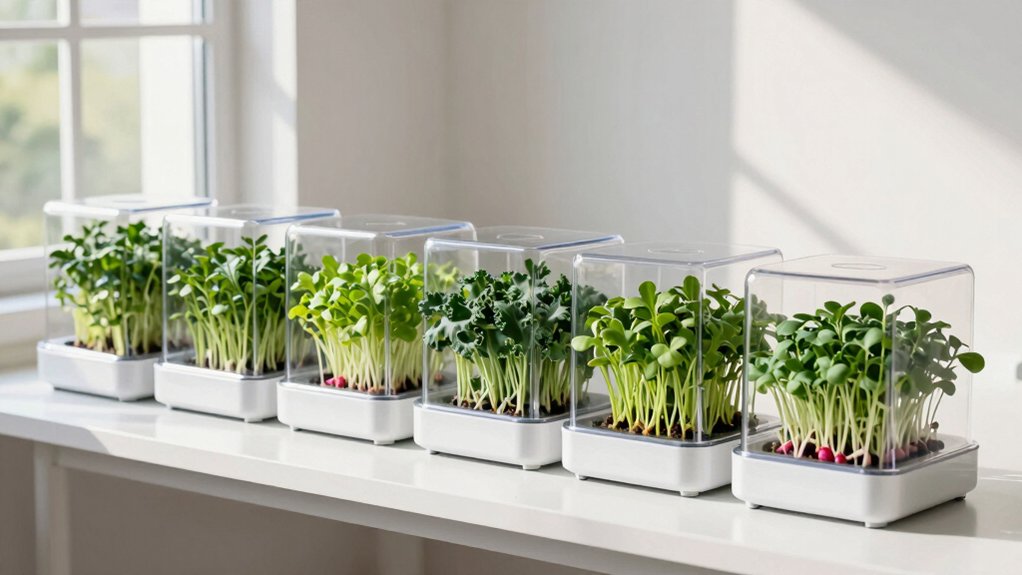

You’ll compare seven proven indoor kits that cover soil-based, hydroponic, self-watering, and mat/tray options. Start with an Indoor Garden unit for multi-tier growth and app control, then evaluate a Hydroponic Tower Planter for full-spectrum lights and WiFi, and a ZESTIGREENS self-watering kit for counter use. Consider a Microgreens Mat and Tray Kit for sustainability, plus a 4-Tier Sprouter and a 4-Tier Seed Sprouting option for space. Plan space, tray count, and maintenance, then choose the best fit for steady harvests and efficiency for your setup, and you’ll gain practical guidance for more details to come.
| Indoor Garden: Automated LED Microgreens Growing Unit |

| Best Overall | Purpose: Indoor microgreens/herbs growing unit | Watering method: Automated water/system | Growing medium: Organic soil-based | VIEW LATEST PRICE | Read Our Analysis |
| 4-Tier Seed Sprouting Kit with Drain Holes |

| Easy/Soil-Free Starter | Purpose: Seed sprouting kit | Watering method: No-soil, water-based sprouting | Growing medium: No soil | VIEW LATEST PRICE | Read Our Analysis |
| ZESTIGREENS Organic Self-Watering Microgreens Kit |
| Flexible Dual-Method Kit | Purpose: Self-watering microgreens kit | Watering method: Self-watering | Growing medium: No soil | VIEW LATEST PRICE | Read Our Analysis |
| Microgreens Growing Mat with Tray Kit 10×10 in |

| Budget Microgreens Starter | Purpose: Microgreens growing mats/tray kit | Watering method: No-soil, mat-based moisture without explicit reservoir | Growing medium: Jute mat (no soil) | VIEW LATEST PRICE | Read Our Analysis |
| Hydroponic Tower Planter Kit with WiFi Grow Light |

| Premium Hydroponics Tower | Purpose: Hydroponic growing kit | Watering method: Hydroponic with smart controls | Growing medium: Hydroponic medium (not soil) | VIEW LATEST PRICE | Read Our Analysis |
| 4-Tier Seed Sprouter with Air Holes & Draining Tray |
| High-Throughput Sprouter | Purpose: Seed sprouter | Watering method: No-soil with drain/spout | Growing medium: No soil | VIEW LATEST PRICE | Read Our Analysis |
| Self-Watering Microgreens Kit with Grow Mats and Trays |

| Self-Watering Convenience | Purpose: Self-watering microgreens kit | Watering method: Self-watering with capillary mats | Growing medium: Capillary mats (no soil) | VIEW LATEST PRICE | Read Our Analysis |
More Details on Our Top Picks
Indoor Garden: Automated LED Microgreens Growing Unit
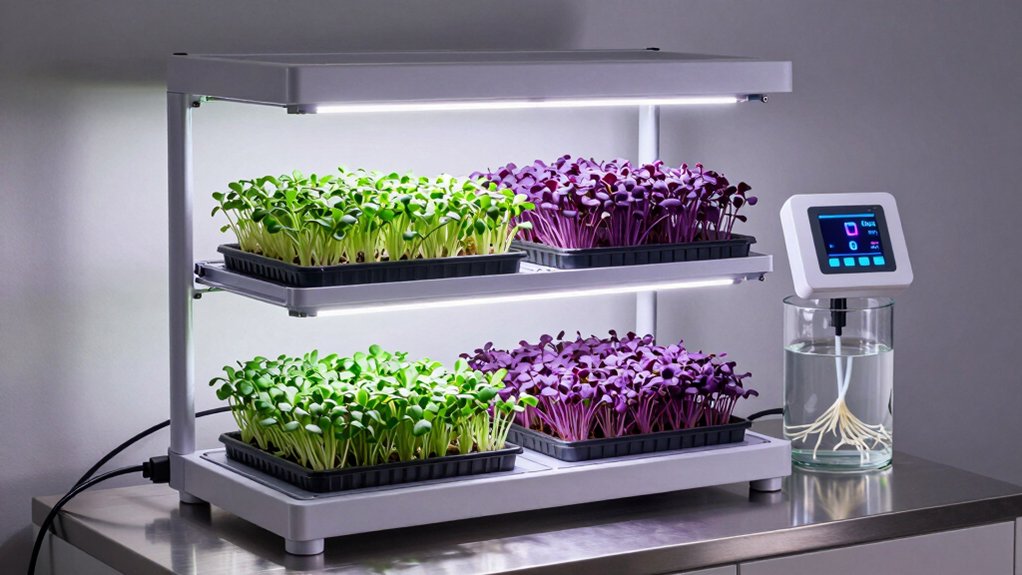
The Indoor Garden: Automated LED Microgreens Growing Unit stands out for its fully automated, soil-based setup with 18 included seed trays and a smart LED lighting and watering system. You set up the unit by placing it where it gets stable power and horizontal airflow. Fill the removable water reservoir, power on, and connect the Instafarm Connect app for control. Load trays with organic soil and seeds, then select a growing program. Use the three levels to stagger harvests, and monitor moisture and light via the app. Maintenance remains low; clean trays between cycles for best results.
- Purpose:Indoor microgreens/herbs growing unit
- Watering method:Automated water/system
- Growing medium:Organic soil-based
- Indoor use:Indoor only
- Assembly/Setup:Assembled in USA (standalone)
- Return/warranty support:Warranty available
- Additional Feature:App access for control
- Additional Feature:3-level rectangular trays
- Additional Feature:Self-watering nozzle
4-Tier Seed Sprouting Kit with Drain Holes
A Tier Seed Sprouting Kit with Drain Holes stands out for efficient germination and drainage, making it a strong choice if you need fast, healthy sprouts without soil. You set up the corrugated design, position drainage holes to concentrate excess water in the bottom tray, and begin with seeds. Water, not soil, feeds sprouts; the bottom tray collects moisture for ideal development. Stack the units as needed, using small holes for ventilation and humidity control. Clean easily by rinsing with water, reuse with premium food-grade PP materials, and store by reversible stacking for space efficiency. Suitable for beans, wheat grass, and microgreens.
- Purpose:Seed sprouting kit
- Watering method:No-soil, water-based sprouting
- Growing medium:No soil
- Indoor use:Indoor use
- Assembly/Setup:Simple setup (no soil)
- Return/warranty support:Satisfaction guarantee
- Additional Feature:Drain holes in design
- Additional Feature:Stackable tray system
- Additional Feature:Ventilated small holes
ZESTIGREENS Organic Self-Watering Microgreens Kit
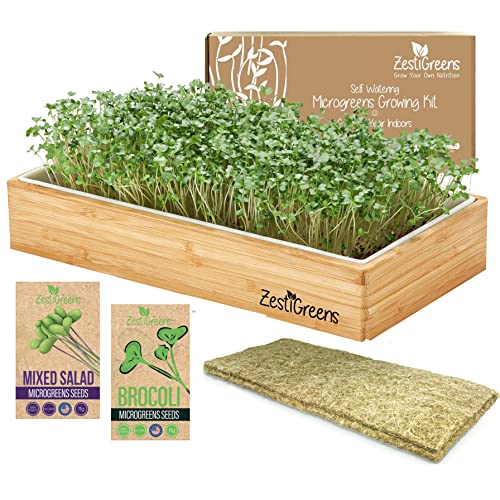
If you want a self-watering, soil-free option you can use on a kitchen counter, the ZESTIGREENS Organic Self-Watering Microgreens Kit stands out. You receive a reusable indoor grow tray with a bamboo frame, plus organic seeds, grow mats, a hydroponic insert, and a blackout felt lid. Use the water-based system with no soil, or remove the hydroponic insert to grow in soil. Expect a 7–10 day harvest. This kit includes two hemp grow mats, a Red Garnet Amaranth pack, and a Superfood Mix. Follow the 16-page guide for setup, maintenance, and options. Satisfaction guarantee available.
- Purpose:Self-watering microgreens kit
- Watering method:Self-watering
- Growing medium:No soil
- Indoor use:Indoor use
- Assembly/Setup:Kit with components; setup required
- Return/warranty support:Warranty information referenced
- Additional Feature:Bamboo frame tray
- Additional Feature:Hydroponic or soil option
- Additional Feature:16-page illustrated grow guide
Microgreens Growing Mat with Tray Kit 10×10 in
Looking for a practical starter kit that aligns with the 7 Best Automated Microgreen Growing Systems? The Microgreens Growing Mat with Tray Kit 10×10 in includes six seed sprouting mats and six seed starter trays without holes. Use the 10″×10″ mats to support seedling rooting and boost germination, then place seedlings into the BPA-free trays. The mats are 100% natural jute and paired with eco-friendly hemp fiber for sustainability. After sprouts, repurpose mats for plant baskets, small planters, or compost. This kit supports growing wheatgrass, herbs, pea shoots, microgreens, and barley grass at home for healthier options.
- Purpose:Microgreens growing mats/tray kit
- Watering method:No-soil, mat-based moisture without explicit reservoir
- Growing medium:Jute mat (no soil)
- Indoor use:Indoor use
- Assembly/Setup:Kit with mats and trays (assembly)
- Return/warranty support:Not specified
- Additional Feature:Jute growing mats
- Additional Feature:Reusable, durable trays
- Additional Feature:BPA-free trays
Hydroponic Tower Planter Kit with WiFi Grow Light
This Hydroponic Tower Planter Kit with WiFi Grow Light stands out for its complete, all-in-one design that lets you manage indoor greens from a single system. You set up the kit indoors, place it in a 17×17 inch footprint, and height at 38 inches. Use the full-spectrum LED lights for fast growth, then enable WiFi control for automated settings. The unit includes dishwasher-safe parts and reusable net cups, reducing waste. Monitor nutrient delivery to prevent wilting, and keep the whisper-quiet pump running. Maintain year-round harvests by cleaning components and reusing the reusable cups.
- Purpose:Hydroponic growing kit
- Watering method:Hydroponic with smart controls
- Growing medium:Hydroponic medium (not soil)
- Indoor use:Indoor use
- Assembly/Setup:All-in-one kit with setup
- Return/warranty support:Not specified
- Additional Feature:Full spectrum LED lights
- Additional Feature:WiFi control
- Additional Feature:Compact 17×17 footprint
4-Tier Seed Sprouter with Air Holes & Draining Tray
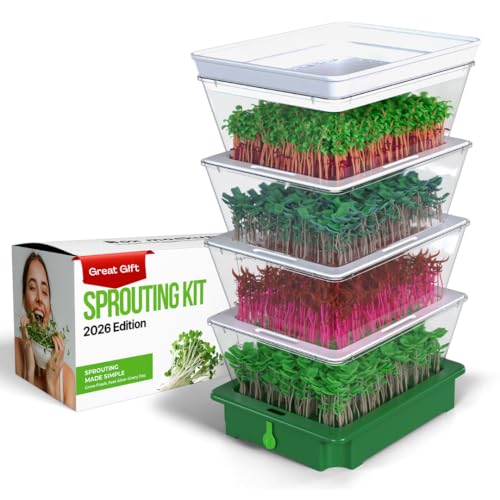
The Tier Seed Sprouter with Air Holes & Draining Tray offers a scalable, soil-free solution that fits both small batches and full harvests. You use 1–4 trays to grow your way, choosing small batches or a full set. Each tray sits tall for better airflow and fuller growth. Rinse and drain directly into the sink through the built-in spout, without unstacking. Do not force usage of all levels; adjust as needed. Expect a 3–5 day sprouting timeline with broccoli, alfalfa, or bean sprouts. Note seeds may shift during rinsing; this does not affect growth. Flexible, easy, efficient.
- Purpose:Seed sprouter
- Watering method:No-soil with drain/spout
- Growing medium:No soil
- Indoor use:Indoor use
- Assembly/Setup:4-tier system (assembly)
- Return/warranty support:Warranty implied by product details
- Additional Feature:Sink drain spout
- Additional Feature:3–5 day sprouting timeline
- Additional Feature:Tall trays for airflow
Self-Watering Microgreens Kit with Grow Mats and Trays
A self-watering system with capillary grow mats and four trays across two modular planters stands out for continuous, soil-free microgreen production. You set up the two planters side by side, place the four trays in each, and insert the capillary mats. Fill the built-in water reservoir, then layer seeds on mats and cover with the humidity dome to speed germination. Monitor moisture; refill as needed and allow the planters to draw water automatically. Use food-safe materials, harvest when greens reach desired size, and clean trays and mats after each batch for next use. This supports multiple varieties or staggered crops.
- Purpose:Self-watering microgreens kit
- Watering method:Self-watering with capillary mats
- Growing medium:Capillary mats (no soil)
- Indoor use:Indoor use
- Assembly/Setup:Modular setup
- Return/warranty support:Not specified
- Additional Feature:Two planters, four trays
- Additional Feature:Humidity dome included
- Additional Feature:Capillary grow mats
Factors to Consider When Choosing Automated Microgreen Growing Systems
Start by evaluating System Automation Level to see if you need manual, semi-automatic, or fully automatic controls, and outline how it will handle monitoring, feeding, and timing. Check Growing Method Compatibility to match your chosen system with your preferred seed types, tray sizes, and grow media, noting any adapters or add-ons required. Assess Space Efficiency Design, Watering and Lighting Integration, and Seed Tray Capacity by measuring your available area, confirming integrated irrigation and LEDs, and ensuring your tray count matches your planned microgreen rotations.
System Automation Level
Consider how automation level affects your daily workflow and long-term reliability. Higher automation integrates LED lighting, irrigation, and climate controls into one system, reducing manual steps for microgreen care. Fully autonomous units often include companion apps or smartphone control to schedule watering, lighting, and environmental settings. Look for scalable options, such as expandable trays or levels, versus fixed capacity. Automated watering reduces over- or under-watering risk by delivering precise amounts through smart nozzles or reservoirs. Systems vary from drum-style self-watering trays to multi-level cabinets with built-in sensors, so note maintenance and calibration needs. If you need growth expansion, prioritize models that support scalability; if not, choose fixed-capacity units with straightforward workflows.
Growing Method Compatibility
Growing method compatibility matters for effective setup and long-term use. First, confirm if the system supports soil-based, soil-free (hydroponic), or both methods to match your preferences. If you want soil, look for units designed for organic soil-based seed trays with self-watering features. If you want soil-free, check for hydroponic or capillary-mat designs that require no soil. Some units offer dual methods, giving flexibility for future changes; single-method kits require reconfiguration or replacement to switch. For soil-free options, verify if the kit includes self-watering reservoirs and capillary mats to maintain moisture without daily misting. When mixing methods, ensure accessories (trays, mats, grow inserts) are compatible for proper drainage, airflow, and nutrient delivery.
Space Efficiency Design
To maximize space in an automated microgreen setup, start by evaluating vertical or multi-tier designs that stack growing areas, which lets you gain more output without expanding the footprint. Look for configurations that use 4- to 38-inch tall builds, so you can place multiple levels in a small room. Consider stackable tray systems and modular planter units that flex with your space, allowing easy reconfiguration as you grow. Check for integrated drain or sink-drain features to reduce extra water management space and minimize rinsing mess. Favor compact footprints around 17×17 inches, enabling countertop or small-area placement while still holding several seed trays. Prefer self-watering or reservoir-based systems to maintain moisture with minimal manual irrigation in tight setups.
Watering and Lighting Integration
If you want reliable growth, you must match lighting with a dependable watering system. Automated microgreen setups couple full-spectrum LEDs with a smart irrigation method to sustain consistent photoperiods and moisture. Look for units with self-watering reservoirs and nozzle networks that deliver precise water amounts to seed trays, reducing manual work. Check lighting specs: intensity and spectrum support rapid growth and even canopy development. Use apps or digital controls to schedule light cycles and watering routines, enabling remote monitoring. Understand how cycles coordinate watering and lighting; some systems run them simultaneously, others stagger them to prevent overwatering while maintaining photosynthesis. Verify compatibility with your trays, alarm options, and easy calibration steps to ensure consistent results.
Seed Tray Capacity
Seed tray capacity sets how many microgreens you can grow at once and how often you can harvest. First, check the total tray count to estimate your weekly output and plan staggered planting if you want continuous harvests. Second, note that larger tray counts enable multi-variety setups, increasing year-round production potential. Third, understand that the number of trays often mirrors system footprint, so measure your indoor space before purchasing. Fourth, recognize higher capacity systems typically support bulk harvests but may require more water, light, and ventilation planning. Finally, compare each model by exact tray dimensions and total tray count to ensure compatibility with your chosen greens and your growing area. Record measurements and create a space plan before buying.
Durability and Warranty
Durability and warranty matter because a reliable system saves time and reduces downtime. First, look for a warranty: many systems include product warranties with details accessible via a provided link, showing long-term support and terms. Next, check build materials and construction: choose sturdy plastics or fiber-reinforced components designed for repeated use and easy cleaning. Then, consider assembly and fit: select sturdier designs that resist warping or tipping, especially in multi-tier or tall setups. Also review maintenance requirements: ensure leak-proof water reservoirs and secure fittings to prevent failures. Finally, evaluate longevity indicators: favor models with reusable trays and drip-free watering mechanisms to sustain performance over time. Choose options that match your setup and confirm warranty validity before purchase.
Final Thoughts
To pick your automated microgreen system, compare features and costs, then choose a model that fits your space. Start by mapping your needs: LED intensity, size, and water autonomy. Next, list options, review setup steps, and note maintenance tasks. For each system, outline assembly steps, plug in, plant seeds, and monitor humidity. Confirm warranty and support. Finally, decide on a budget, purchase, and schedule regular harvests, rotating crops to maximize yield.

Meet Ry, “TechGuru,” a 36-year-old technology enthusiast with a deep passion for tech innovations. With extensive experience, he specializes in gaming hardware and software, and has expertise in gadgets, custom PCs, and audio.
Besides writing about tech and reviewing new products, he enjoys traveling, hiking, and photography. Committed to keeping up with the latest industry trends, he aims to guide readers in making informed tech decisions.