


If you’re struggling with weak FM signals on your stereo receiver, you’ll need the right dipole antenna to fix it. You’ve got several solid options available, each with different impedance ratings and connector types that match various receiver models. The key is understanding which antenna works best for your specific setup—whether you need a 300 Ohm twin lead, a 75 Ohm coaxial model, or something with added AM capability. Let’s explore what each antenna offers.
| Ancable 300 Ohm FM Antenna T Shape Dipole Radio |
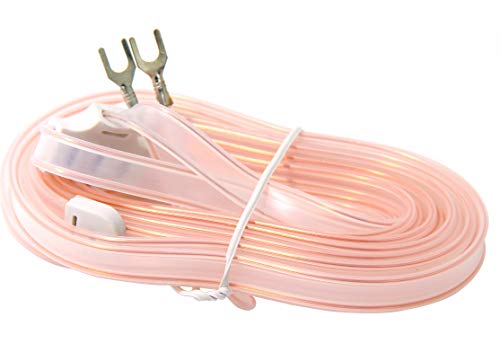
| Best for Vintage | Impedance: 300 Ohm | Antenna Type: T-Shape FM Dipole | Cable Length: 5.9 feet | VIEW LATEST PRICE | Read Our Analysis |
| FM Radio Dipole Antenna for Stereo Receiver |

| Most Versatile | Impedance: 75 Ohm | Antenna Type: FM Dipole (adhesive mount) | Cable Length: 3 meters (10 feet) | VIEW LATEST PRICE | Read Our Analysis |
| Bingfu FM Dipole Antenna 300 Ohm Twin Lead |
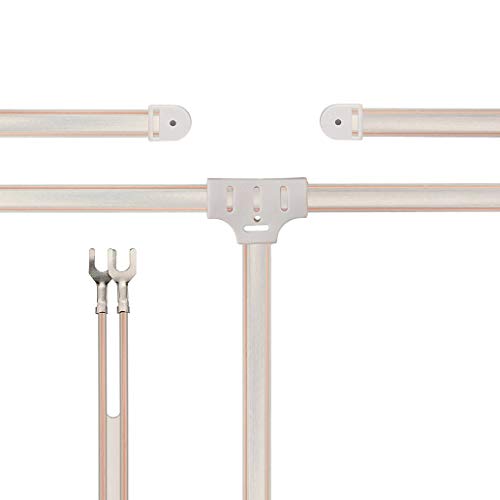
| Best Overall | Impedance: 300 Ohm | Antenna Type: T-Shape FM Dipole | Cable Length: 1.6 meters | VIEW LATEST PRICE | Read Our Analysis |
| Bingfu FM Radio Dipole Antenna 75 Ohm Indoor |
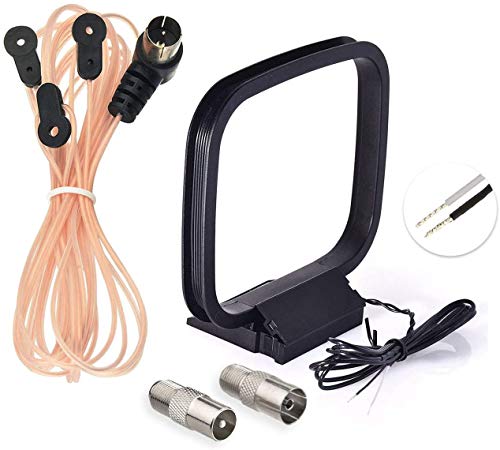
| Best Value | Impedance: 75 Ohm | Antenna Type: FM Dipole + AM Loop | Cable Length: Not specified | VIEW LATEST PRICE | Read Our Analysis |
| FM Antenna for Stereo Receiver with Retractable Cable |

| Best for Portability | Impedance: 75 Ohm | Antenna Type: FM Dipole (retractable) | Cable Length: 5 meters | VIEW LATEST PRICE | Read Our Analysis |
| Ancable Indoor FM Telescopic Antenna with F Type Connector |

| Professional Grade | Impedance: 75 Ohm | Antenna Type: FM Telescopic | Cable Length: Not specified | VIEW LATEST PRICE | Read Our Analysis |
| FM Dipole Antenna with 3 Connector Adapters |
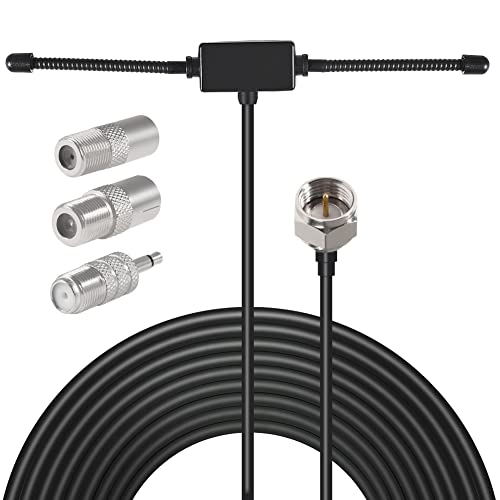
| Budget-Friendly Pick | Impedance: 75 Ohm | Antenna Type: FM Dipole (adhesive mount) | Cable Length: Not specified | VIEW LATEST PRICE | Read Our Analysis |
More Details on Our Top Picks
Ancable 300 Ohm FM Antenna T Shape Dipole Radio
If you’re looking to upgrade FM reception on your vintage stereo receiver or modern tuner without complicated installation, the Ancable 300 Ohm FM Antenna offers a straightforward solution. This T-shaped dipole antenna features a spade terminal that connects directly to compatible FM sockets on receivers from Yamaha, Sharp, JVC, Denon, and Marantz. Installation takes minutes: insert the spade terminal into your receiver’s FM socket and stretch the antenna arms outward for optimal signal strength. The 5.9-foot coax cable provides flexibility in positioning. This setup works well for tabletops, home offices, garages, and basements where FM reception needs improvement. Verify your receiver’s socket type matches before ordering to ensure compatibility.
- Impedance:300 Ohm
- Antenna Type:T-Shape FM Dipole
- Cable Length:5.9 feet
- Connector Type:Spade terminal
- Installation Method:Plug and play (clip/terminal socket)
- Brand Compatibility:Yamaha, Sharp, JVC, Denon, Marantz
- Additional Feature:5.9 feet coax cable
- Additional Feature:Spade terminal connector
- Additional Feature:Plug and play installation
FM Radio Dipole Antenna for Stereo Receiver
The FM Radio Dipole Antenna for Stereo Receiver works best for you if you’re looking to improve FM reception on your existing home audio system without complex installation. This 75-ohm antenna features a 3-meter coaxial cable and F-type connector that plugs directly into most stereo receivers. You’ll mount it on your wall using the included adhesive backing, requiring no tools or drilling. The package provides three adapters—TV female socket, 3.5mm audio plug, and TV male plug—ensuring compatibility with various audio equipment. Simply peel and stick the antenna, connect the cable to your receiver’s FM input, and adjust its position for optimal signal strength.
- Impedance:75 Ohm
- Antenna Type:FM Dipole (adhesive mount)
- Cable Length:3 meters (10 feet)
- Connector Type:F-type plug
- Installation Method:Adhesive wall mounting
- Brand Compatibility:Most stereo receivers (universal)
- Additional Feature:Adhesive wall mounting design
- Additional Feature:Universal connector adapter set
- Additional Feature:3 meter coaxial extension
Bingfu FM Dipole Antenna 300 Ohm Twin Lead
You’ll want to consider the Bingfu FM Dipole Antenna if you’re setting up a stereo receiver or radio in your home, office, or garage and need reliable indoor FM reception without complicated installation. This T-shaped antenna features 300 Ohm impedance and connects via 2-pin bare wire terminals, making it compatible with Yamaha, Pioneer, Panasonic, Onkyo, and Sony receivers. The 1.6-meter cable and 75-centimeter dipole arms provide adequate reach for most indoor spaces. Before ordering, verify that your FM socket matches the 2-pin bare wire configuration. Simply position the antenna horizontally or vertically depending on signal strength, then adjust the dipole arms to optimize reception quality for your location.
- Impedance:300 Ohm
- Antenna Type:T-Shape FM Dipole
- Cable Length:1.6 meters
- Connector Type:2-pin bare wire
- Installation Method:Plug and play (2-pin bare wire)
- Brand Compatibility:Yamaha, Pioneer, Panasonic, Onkyo, Sony, Sherwood
- Additional Feature:2-pin bare wire connector
- Additional Feature:1.6 meter cable length
- Additional Feature:75 cm dipole per side
Bingfu FM Radio Dipole Antenna 75 Ohm Indoor
Want a straightforward antenna solution that works with most home stereo systems? The Bingfu FM Radio Dipole Antenna 75 Ohm Indoor gives you two antennas in one package: an FM dipole antenna and an AM loop antenna. You’ll plug them into the F-type female socket on your stereo receiver’s back panel. Installation takes minutes. This 75-ohm impedance antenna fits Pioneer, Onkyo, Yamaha, Marantz, and other major brands. It’s compatible with HD Radio Bluetooth receivers and AV audio systems. The FM dipole improves FM signal reception while the AM loop antenna handles AM frequencies. You get a 12-month warranty plus a 100% guarantee. Contact the seller if you encounter problems. The compact design measures 4.3 by 6.7 by 1.2 inches and weighs just 2.4 ounces, making it easy to position near your receiver.
- Impedance:75 Ohm
- Antenna Type:FM Dipole + AM Loop
- Cable Length:Not specified
- Connector Type:F-type female socket
- Installation Method:Plug into antenna port
- Brand Compatibility:Pioneer, Onkyo, Yamaha, Marantz, Panasonic, Sangean, Sherwood
- Additional Feature:Dual FM/AM antenna
- Additional Feature:12-month warranty included
- Additional Feature:Easy plug installation
FM Antenna for Stereo Receiver with Retractable Cable
If you’re setting up a home stereo system in an urban apartment or want to improve FM reception without installing outdoor equipment, this retractable antenna delivers crystal-clear audio directly to your receiver. The 5-meter coaxial cable allows flexible placement throughout your room, eliminating the need for permanent installation. Mount the magnetic base on any metal surface for stable positioning that maintains consistent signal strength. This antenna works with Pioneer, Onkyo, Yamaha, Marantz, and Sherwood receivers. The compact, retractable design lets you adjust the antenna height to optimize reception based on your location and local FM station strength. Simply connect the cable to your receiver’s antenna input and extend or retract the antenna until you achieve clear audio without static or interference.
- Impedance:75 Ohm
- Antenna Type:FM Dipole (retractable)
- Cable Length:5 meters
- Connector Type:F-type connector
- Installation Method:Magnetic base mounting
- Brand Compatibility:Pioneer, Onkyo, Yamaha, Marantz, Sherwood
- Additional Feature:Retractable antenna design
- Additional Feature:Strong magnetic base
- Additional Feature:5-meter coaxial cable
Ancable Indoor FM Telescopic Antenna with F Type Connector
The Ancable Indoor FM Telescopic Antenna excels for anyone whose stereo receiver, tabletop radio, or hi-fi system struggles with weak FM signals in challenging reception areas. This 75-ohm antenna features ten brass copper extension sections you’ll screw or plug directly into your device’s antenna socket. It includes three adapters—PAL male, PAL female, and 3.5mm—ensuring compatibility with most brands like Yamaha, Sony, and Pioneer. The telescopic design lets you adjust height and angle for optimal signal capture without draping wires across walls. Simply extend the sections until reception improves, then lock them in place. Installation takes minutes and requires no special tools or technical knowledge.
- Impedance:75 Ohm
- Antenna Type:FM Telescopic
- Cable Length:Not specified
- Connector Type:F-type male plug with adapters
- Installation Method:Screw or plug into socket
- Brand Compatibility:Bose, Sangean, Cambridge, Pure, Tivoli, Demon, Roberts, Sony, Marantz, Yamaha, Hitachi, JVC, Sherwood, Pioneer, Denon, Panasonic, Onkyo
- Additional Feature:10 extension sections
- Additional Feature:Brass copper construction
- Additional Feature:Three adapter connectors included
FM Dipole Antenna with 3 Connector Adapters
For those who need flexible connectivity across multiple audio and video devices, this FM dipole antenna with three connector adapters delivers straightforward compatibility without requiring separate purchases. The antenna features an F-type plug that connects to your FM tuner, while the included adapters accommodate TV female sockets, 3.5mm audio plugs, and TV male plugs. This design works with major brands like Sony, Pioneer, Onkyo, and Bose. Installation uses adhesive wall mounting for quick setup in any indoor location. Position the antenna on a window or wall to optimize FM stereo reception. The three adapters eliminate the need for purchasing additional connectors separately, making this solution practical for households with varied equipment.
- Impedance:75 Ohm
- Antenna Type:FM Dipole (adhesive mount)
- Cable Length:Not specified
- Connector Type:F-type plug
- Installation Method:Adhesive wall mounting
- Brand Compatibility:JVC, Sherwood, Pioneer, Panasonic, Onkyo, Sony, Bose
- Additional Feature:Three connector adapters
- Additional Feature:Adhesive wall mount
- Additional Feature:F-type plug interface
Factors to Consider When Choosing a Dipole Antenna for FM Radio
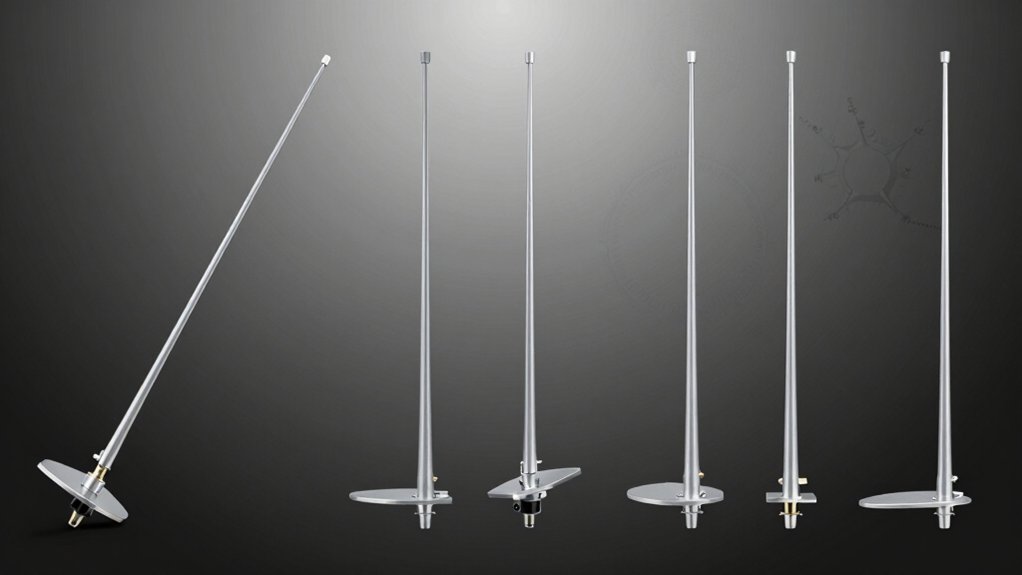
When you’re selecting a dipole antenna for FM radio, you’ll need to evaluate several key factors: impedance matching (typically 50 or 75 ohms), the connector type your receiver uses (such as IEC, F-type, or 3.5mm), and whether you’ll install it indoors on a shelf or outdoors on a roof. Consider your cable length requirements based on the distance between your antenna and receiver, as longer cables may require impedance compensation. Finally, determine whether an indoor antenna fits your space and signal needs or if an outdoor antenna will give you the reception quality you’re seeking.
Impedance Matching Requirements
How’s your receiver’s antenna input configured—with an F-type connector or twin-lead terminals? This matters because you need to match the antenna’s impedance to your receiver’s input impedance, either 75 Ω or 300 Ω. A mismatch causes signal loss, FM stereo distortion, and reduced bandwidth. Select an antenna with the correct impedance specification for your receiver type. If you’re using adapters or multiple connectors, verify they preserve impedance throughout the entire connection chain. Install your antenna securely indoors or outdoors, ensuring cable length and temperature conditions don’t degrade the impedance match. Test signal strength after setup to confirm proper matching. Poor impedance alignment noticeably weakens reception quality, so prioritize this step during antenna selection and installation.
Connector Type Compatibility
Once you’ve confirmed your receiver’s impedance requirement, you’ll need to match the antenna’s connector type to your device’s FM socket. Two primary connector styles exist: 2-pin bare wire connectors for 300 Ohm antennas and F-type plugs for 75 Ohm systems. Examine your receiver’s antenna port carefully to identify which type it accepts. If your antenna’s connector doesn’t match your device’s socket, you’ll need an adapter. Common adapters convert between F-type plugs, TV connectors, and 3.5 mm audio jacks. Some antenna packages include these adapters, so check the product contents before purchasing. Verify compatibility by comparing your antenna’s connector configuration directly against your receiver’s FM socket specifications to ensure proper signal transfer.
Installation Method Preferences
Which installation method you’ll choose depends on your receiver’s location, your room layout, and whether you prefer permanent or temporary setup options. Adhesive mounting works best for walls or glass surfaces when you want tool-free installation and quick repositioning without damage. This method suits renters or anyone testing antenna placement before committing to permanent installation. For fixed setups, wall or ceiling mounting with brackets provides stable, long-term positioning. Consider cable routing carefully—longer cables up to 3 meters give you flexibility to place the antenna away from your receiver while maintaining signal quality. Verify your receiver’s connector type before installing. Measure your space to ensure the antenna’s length fits your intended location comfortably.
Cable Length Considerations
Why does cable length matter for your FM antenna setup? Your cable length directly affects signal quality and receiver placement flexibility. Longer cables, such as 3 meters or 10 feet, allow you to position your antenna away from your receiver, improving line-of-sight reception and reducing interference from household electronics. However, longer runs introduce potential signal loss unless properly designed for FM frequencies. Match your cable length to your receiver’s antenna input, avoiding unnecessary excess that causes reflections and impedance mismatches. Choose higher-quality shielding for longer cables to maintain signal integrity. Position your antenna away from metal surfaces and heat sources. Consider a retractable or extendable cable design to optimize placement while minimizing signal degradation.
Indoor Versus Outdoor Use
Because your living environment and reception goals differ, you’ll need to choose between indoor and outdoor dipole antennas based on where you plan to install your setup. Indoor dipoles mount inside your home using adhesive or magnetic bases, positioning near walls and windows to capture signals while avoiding weather exposure. They connect via shorter coax cables (typically 3 meters) with F-type or bare-wire connectors, integrating directly into stereo receivers or home theater systems. Outdoor dipoles require rugged, weatherproof construction and longer cable runs, mounted externally to maximize line-of-sight access to FM transmitters with minimal obstruction. Evaluate your location’s signal strength, available mounting surfaces, and whether you need portability or permanent installation. Choose indoor models for apartments and temporary setups; select outdoor antennas when indoor reception proves inadequate or you need superior performance.
Brand Compatibility Standards
When you’re selecting a dipole antenna for your FM receiver, matching the antenna’s connector type to your receiver’s FM socket is your first critical step. Common connector types include F-type, 2-pin bare wire, and spade terminals. Next, verify impedance alignment—receivers typically require either 75 Ohm or 300 Ohm input. Check your receiver’s specifications to ensure the antenna matches this requirement. Many antennas specify compatibility with multiple brands like Yamaha, Pioneer, Onkyo, and Marantz, indicating broad receptivity. Consider your installation method: adhesive-mount designs suit walls, while traditional stands work elsewhere. Review cable length and adapter sets included with the antenna to confirm they accommodate your specific brand ecosystem and ensure a proper signal path to your receiver.
Reception Quality Performance
How you’ll achieve the best FM reception depends on three interconnected factors: impedance matching, cable extension, and physical positioning.
First, match your antenna’s impedance to your receiver. A 300 Ohm dipole works better with older radios, while 75 Ohm designs suit modern tuners. Check your receiver’s FM socket specifications before purchasing.
Second, use a 1.6 m to 5 m coax extension to place your antenna away from interference sources. This flexibility lets you position the antenna for optimal signal capture indoors.
Third, mount your antenna using adhesive wall brackets to achieve clear line-of-sight toward FM transmitters. This placement reduces multipath distortion and background noise.
Performance gains come from these three practical adjustments, not from exaggerated marketing claims. Test different positions to find what works best with your specific receiver.
Mounting Stability Options
What’s the best way to keep your dipole antenna stable? You’ve got several mounting options to consider. Adhesive wall mounting lets you place your antenna on vertical surfaces without needing a stand, providing reliable indoor stability. Magnetic bases work well on metal surfaces and prevent slipping while maintaining proper signal orientation. Telescopic or retractable designs give you adjustable extension, reducing unwanted movement and improving reception quality. Your cable type matters too—300 Ohm twin-lead or 75 Ohm coax configurations affect how securely the antenna connects to your receiver’s socket. Finally, use multiple adapters like F-type or TV/3.5mm connectors to ensure snug, vibration-free connections. These adapters maintain stable signal transfer across different mounting setups and equipment combinations.
Final Thoughts
You’ll choose your dipole antenna based on your receiver’s impedance: 300 Ohm models work with older equipment, while 75 Ohm versions suit modern systems. Check your receiver’s connection type—spade terminals, 2-pin connectors, or F-type plugs—before purchasing. Consider your space: wall-mounted options need flat surfaces, while retractable models offer flexibility. Match the antenna’s specifications to your receiver’s requirements for optimal FM reception.

Meet Ry, “TechGuru,” a 36-year-old technology enthusiast with a deep passion for tech innovations. With extensive experience, he specializes in gaming hardware and software, and has expertise in gadgets, custom PCs, and audio.
Besides writing about tech and reviewing new products, he enjoys traveling, hiking, and photography. Committed to keeping up with the latest industry trends, he aims to guide readers in making informed tech decisions.