
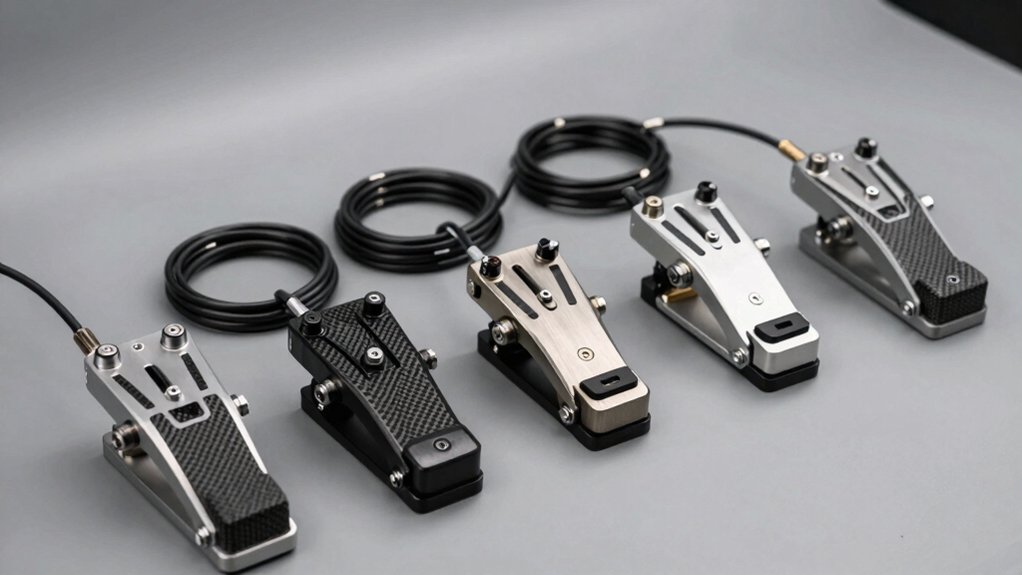

If you’re serious about flight simulation, you’ll need rudder pedals that match your setup’s precision and durability. You’ve got several solid options to evaluate: Thrustmaster’s TFRP with Smart rail technology, Logitech’s G Pro Flight with adjustable damping, Turtle Beach’s VelocityOne with Hall sensors, and Saitek’s Pro Flight with three-axis control. But before you commit, you should understand what factors actually separate the best from the rest.
| Thrustmaster TFRP Flight Rudder Pedals for PS5 Xbox & PC |

| Best Cross-Platform | Rudder Axis Technology: Self-centering with long travel via S.M.A.R.T. Rail Sliding System | Platform Compatibility: PS5, Xbox Series X|S, and PC | Adjustability: Ergonomic design with secure mounting | VIEW LATEST PRICE | Read Our Analysis |
| Logitech G Pro Flight Rudder Pedals |
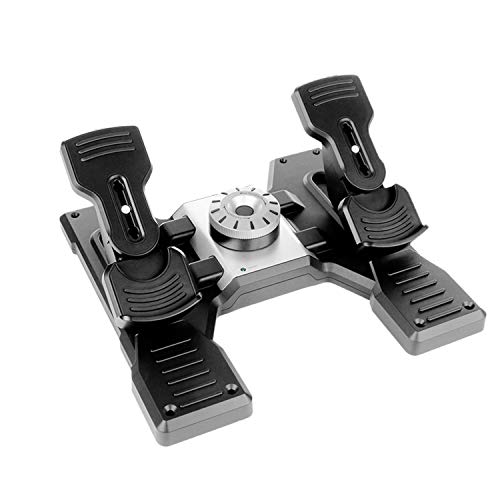
| Most Adjustable | Rudder Axis Technology: 9-bit self-centering rudder axis | Platform Compatibility: Windows 7, 8, 8.1, 10 | Adjustability: Adjustable tension dial; adjustable foot rests for various sizes | VIEW LATEST PRICE | Read Our Analysis |
| Turtle Beach VelocityOne Universal Rudder Pedals |
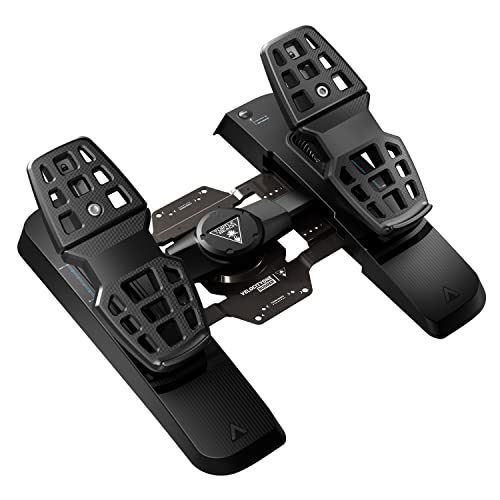
| Best For Xbox | Rudder Axis Technology: Ultra-smooth return-to-center with hall-effect sensors (10-bit) | Platform Compatibility: Windows 10 & 11, Xbox Series X|S, Xbox One | Adjustability: Adjustable pedal width; two sets of swappable springs and pedals | VIEW LATEST PRICE | Read Our Analysis |
| Thrustmaster TPR Pendular Rudder Pedals for PC Flight Simulation |

| Professional Grade | Rudder Axis Technology: Pendular suspended mechanism with H.E.A.R.T Hall Effect magnetic sensors | Platform Compatibility: PC only | Adjustability: Adjustable spring system with multiple positioning options | VIEW LATEST PRICE | Read Our Analysis |
| Spring Mount Toe Gear Replacement Rudder Pedals (2-Pack) |

| Budget Replacement | Rudder Axis Technology: Spring mount replacement for brake pedal system (replacement part) | Platform Compatibility: Saitek Pro Flight Rudder Pedals (replacement component) | Adjustability: Fixed replacement component (not adjustable) | VIEW LATEST PRICE | Read Our Analysis |
| Saitek Pro Flight Rudder Pedals |
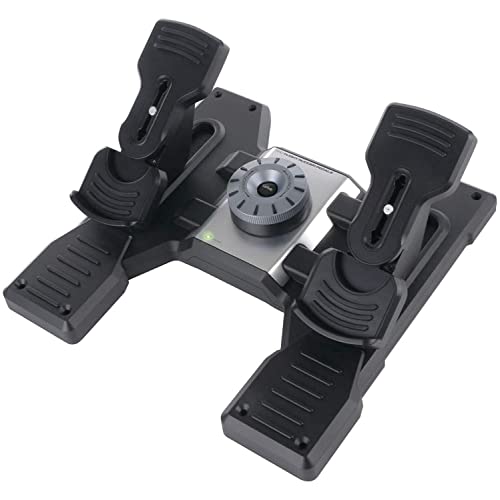
| Best Overall | Rudder Axis Technology: Three-axis self-centering with fully adjustable rudder control | Platform Compatibility: Windows PC | Adjustability: Fully adjustable rudder; tension adjustment; adjustable foot rests | VIEW LATEST PRICE | Read Our Analysis |
| Logitech G Pro Flight Yoke System + Pro Flight Rudder Pedals Bundle |

| Complete Setup | Rudder Axis Technology: Self-centering rudder with differential toe brakes | Platform Compatibility: Windows PC | Adjustability: Adjustable damping; adjustable foot rests for wide size range | VIEW LATEST PRICE | Read Our Analysis |
More Details on Our Top Picks
Thrustmaster TFRP Flight Rudder Pedals for PS5 Xbox & PC
Are you flying on PS5, Xbox Series X|S, or PC and want rudder pedals that won’t hold you back? The Thrustmaster TFRP delivers precision control with extended rudder travel for smooth, coordinated turns. Its S.M.A.R.T. Rail Sliding System uses four aluminum rails to eliminate friction while maintaining rigidity. The self-centering rudder axis provides authentic resistance and balanced feel. Secure mounting keeps the pedals stable during intense maneuvers. Built for Microsoft Flight Simulator and comparable flight sims, these pedals suit serious enthusiasts who demand reliable, immediate control inputs across platforms.
- Rudder Axis Technology:Self-centering with long travel via S.M.A.R.T. Rail Sliding System
- Platform Compatibility:PS5, Xbox Series X|S, and PC
- Adjustability:Ergonomic design with secure mounting
- Brake Control:Self-centering rudder axis (no separate brake specification)
- Build Quality & Stability:Advanced aluminum rails with friction-free motion and enhanced rigidity
- Connectivity:Multi-platform wireless/wired compatibility (PS5, Xbox, PC)
- Additional Feature:Advanced S.M.A.R.T. Rail System
- Additional Feature:Long rudder travel distance
- Additional Feature:Multi-platform cross-compatibility
Logitech G Pro Flight Rudder Pedals
Looking for rudder pedals that deliver authentic aircraft control without breaking your setup? The Logitech G Pro Flight Rudder Pedals offer self-centering mechanisms with adjustable damping via a tension dial. You’ll control rudder and differential toe brakes independently using your feet, mimicking real pilot movements. The pedals feature adjustable foot rests that accommodate various sizes and non-slip surfaces for stability. Connect via USB 2.0 to Windows 7, 8, 8.1, or 10 systems. With 9-bit rudder axis and 7-bit toe brake axis precision, you’ll execute fluid, accurate aircraft commands. These pedals pair well with the Saitek Pro Flight Yoke for comprehensive cockpit control, weighing 2.3 kg with dimensions of 31 x 41 x 17 cm.
- Rudder Axis Technology:9-bit self-centering rudder axis
- Platform Compatibility:Windows 7, 8, 8.1, 10
- Adjustability:Adjustable tension dial; adjustable foot rests for various sizes
- Brake Control:Differential toe brakes with 7-bit axis for independent left/right
- Build Quality & Stability:Non-slip foot surfaces; sturdy construction for desktop use
- Connectivity:USB 2.0 connection
- Additional Feature:Adjustable tension dial system
- Additional Feature:Wide foot rest adjustment
- Additional Feature:Desktop ergonomic design
Turtle Beach VelocityOne Universal Rudder Pedals
If you’re setting up a flight sim setup that works across both PC and Xbox without buying separate rudder systems for each platform, the Turtle Beach VelocityOne Universal Rudder Pedals deliver cross-platform compatibility in a single package. You’ll connect directly to your PC or use the pass-through cable with your VelocityOne Flight system on Xbox. The pedals feature hall-effect sensors instead of potentiometers, eliminating maintenance while providing 10-bit axis data for precision. Two swappable spring sets and pedal configurations let you customize for different aircraft types. Adjustable pedal width accommodates various users, and the contracting footprint saves storage space when you’re not flying.
- Rudder Axis Technology:Ultra-smooth return-to-center with hall-effect sensors (10-bit)
- Platform Compatibility:Windows 10 & 11, Xbox Series X|S, Xbox One
- Adjustability:Adjustable pedal width; two sets of swappable springs and pedals
- Brake Control:Differential spring-loaded brakes for precise braking/steering
- Build Quality & Stability:Stable metal base with rubber pads and carpet spikes; hall-effect sensors (maintenance-free)
- Connectivity:USB-C to USB-A cable; USB-C pass-through option for Xbox
- Additional Feature:Non-contact hall-effect sensors
- Additional Feature:Swappable springs and pedals
- Additional Feature:Adjustable pedal width
Thrustmaster TPR Pendular Rudder Pedals for PC Flight Simulation
Precision in yaw control—the ability to make subtle, accurate rudder adjustments—separates casual flight sim users from serious pilots, and the Thrustmaster TPR Pendular Rudder Pedals deliver this capability through their H.E.A.R.T Hall Effect magnetic sensor technology and suspended pendular mechanism. You’ll adjust the two-spring system to match your flying style, whether you’re piloting commercial airliners or military aircraft. The magnetic sensors eliminate mechanical wear while maintaining accuracy during coordinated turns. USB connectivity on your PC provides immediate responsiveness. The pendular design handles extended sessions without fatigue, making these pedals suitable for demanding flight scenarios requiring sustained precision control.
- Rudder Axis Technology:Pendular suspended mechanism with H.E.A.R.T Hall Effect magnetic sensors
- Platform Compatibility:PC only
- Adjustability:Adjustable spring system with multiple positioning options
- Brake Control:Pendular rudder with no brake specifications detailed
- Build Quality & Stability:Professional-grade durability with frictionless H.E.A.R.T magnetic sensors
- Connectivity:USB connectivity
- Additional Feature:Pendular suspended rudder mechanism
- Additional Feature:H.E.A.R.T magnetic sensor technology
- Additional Feature:Adjustable spring positioning options
Spring Mount Toe Gear Replacement Rudder Pedals (2-Pack)
Your Saitek Pro Flight Rudder Pedals‘ll eventually need replacement spring mounts—worn brake pedal spring retainers are one of the first components to fail with regular use. This 2-pack includes two 3D-printed spring seats designed for durability and wear resistance. Installation takes minutes: power off your equipment, remove the old spring seat, and position the new one in its original location. Each piece weighs just 0.317 ounces and fits within compact package dimensions of 2.36 x 1.89 x 0.63 inches. The manufacturer backs this product with a 90-day warranty, ensuring reliable performance for extended flight simulation sessions.
- Rudder Axis Technology:Spring mount replacement for brake pedal system (replacement part)
- Platform Compatibility:Saitek Pro Flight Rudder Pedals (replacement component)
- Adjustability:Fixed replacement component (not adjustable)
- Brake Control:Spring mount replacement for brake pedal retention
- Build Quality & Stability:3D-printed wear-resistant, pressure-resistant material
- Connectivity:Component replacement (connectivity via original Saitek pedals)
- Additional Feature:3D-printed wear-resistant material
- Additional Feature:Two spring seats included
- Additional Feature:Direct Saitek compatibility
Saitek Pro Flight Rudder Pedals
Mad Catz’s Saitek Pro Flight Rudder Pedals deliver three-axis control with self-centering mechanics, making them well-suited for flight sim enthusiasts who want realistic rudder responsiveness without breaking the bank. You’ll appreciate the adjustable tension feature, which lets you customize resistance to match your preference. The toe brakes provide separate control inputs for precision landings. Non-slip foot rests accommodate various sizes, ensuring stable positioning during extended sessions. USB connectivity integrates directly with your PC without additional drivers. The pedals weigh 7.9 pounds and measure 17.6 by 14.4 by 9.1 inches, fitting most setup spaces. Advanced SST programming enables complex control configurations for compatible flight simulators.
- Rudder Axis Technology:Three-axis self-centering with fully adjustable rudder control
- Platform Compatibility:Windows PC
- Adjustability:Fully adjustable rudder; tension adjustment; adjustable foot rests
- Brake Control:Toe brakes included
- Build Quality & Stability:Adjustable foot rests; non-slip materials
- Connectivity:USB interface
- Additional Feature:Three-axis pedal configuration
- Additional Feature:Advanced SST Programming capability
- Additional Feature:Fully adjustable rudder control
Logitech G Pro Flight Yoke System + Pro Flight Rudder Pedals Bundle
If you’re building a complete flight simulation setup that covers both aircraft control and runway handling, the Logitech G Pro Flight Yoke System paired with its Pro Flight Rudder Pedals bundle delivers the core components you’ll need. The yoke features 75 programmable controls across five axes and three operational modes, while the pedals provide differential toe brakes for independent left and right control. You’ll configure the throttle knobs to match your aircraft type, then adjust the pedals’ damping to suit your preference. The self-centering rudder pedals maintain precise ground handling during takeoffs and landings. Connect both devices via USB to your Windows PC and assign controls through Logitech’s software, supporting varied aircraft types across flight simulation platforms.
- Rudder Axis Technology:Self-centering rudder with differential toe brakes
- Platform Compatibility:Windows PC
- Adjustability:Adjustable damping; adjustable foot rests for wide size range
- Brake Control:Differential toe brakes with independent left/right control
- Build Quality & Stability:Steel shaft yoke with non-slip pedal surfaces
- Connectivity:USB connectivity via yoke system
- Additional Feature:54 programmable control options
- Additional Feature:Modular interchangeable equipment system
- Additional Feature:Three operational modes available
Factors to Consider When Choosing Flight Sim Rudder Pedals
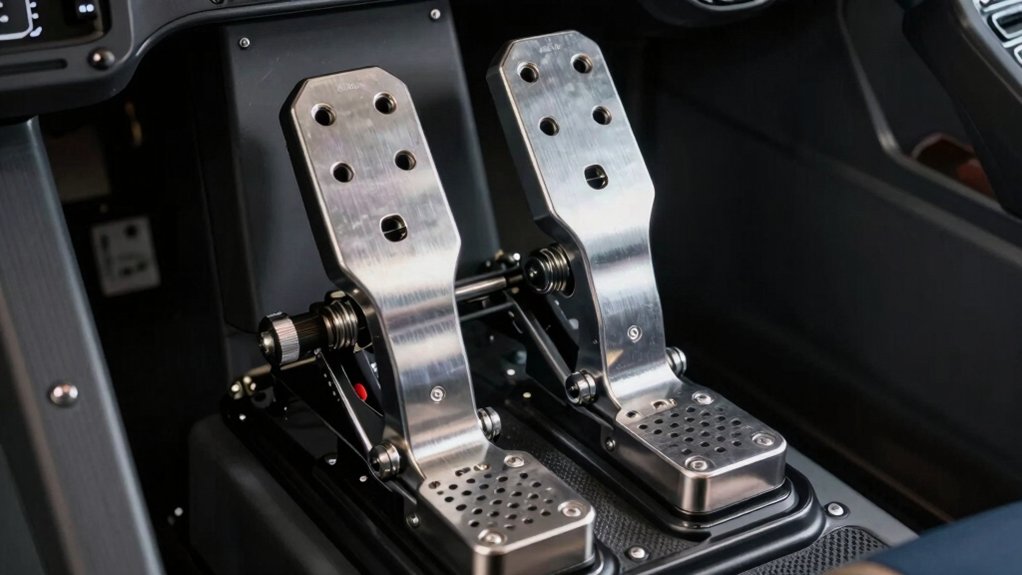
When you’re selecting flight sim rudder pedals, you’ll need to verify compatibility with your PC, console, or both, check the sensor technology for precision during realistic maneuvers, and examine build quality to ensure the pedals withstand extended use. Consider adjustability features like pedal spacing and resistance settings, which let you customize the setup to match your physical setup and flying style. Finally, test comfort during long sessions by reviewing how the pedals support your feet and whether they reduce fatigue during multi-hour flights.
Compatibility Across Platforms
How do you know which rudder pedals’ll work with your setup? First, identify your platform—PC only, or PC plus consoles like PS5 or Xbox Series X|S. Check the pedal manufacturer’s specifications for native compatibility or bundled flight system support. Next, verify USB connectivity options, confirming whether the pedals use standard USB 2.0 or USB-C without requiring special adapters. Third, determine if your pedals support mode switching or pass-through functionality when paired with other flight peripherals across multiple platforms. Fourth, confirm compatibility with your flight sim software, such as Microsoft Flight Simulator, noting whether console versions exist. Finally, review official documentation to ensure the pedals maintain full control fidelity across all your intended systems without performance reduction.
Sensor Technology And Precision
What separates responsive rudder pedals from sluggish ones comes down to the sensors inside them. Hall-effect sensors provide non-contact feedback without mechanical wear, eliminating drift over time. You’ll want to check the axis resolution—10-bit systems deliver finer input granularity than lower resolutions, enabling more precise yaw control during subtle corrections. Consider the mechanical design: pendulum or dual-spring setups affect resistance and smoothness differently. Some premium pedals integrate differential toe brakes, giving you independent braking data for coordinated turns. Self-centering mechanisms return your rudder to neutral consistently, maintaining reliable steering feel. Evaluate these sensor and mechanical components together—they determine how accurately your inputs translate to aircraft response, directly affecting your control precision during flight operations.
Build Quality And Durability
You’ll find that build quality directly impacts how long your rudder pedals last and how consistently they perform. Start by examining the frame material—metal bases provide superior stability compared to plastic alternatives. Check for non-slip surfaces or carpet spikes that prevent unwanted movement during intense flying sessions. Next, inspect the mounting hardware included with your pedals; durable options ensure secure, long-term installation without degradation. Look for models offering swappable springs or adjustable tension settings, allowing you to maintain consistent performance across different aircraft types. Finally, verify that the pedal design supports straightforward maintenance and replacement of wear components. These structural elements work together to protect your investment and deliver reliable performance over years of regular use.
Adjustability And Customization Options
When selecting rudder pedals, why settle for a one-size-fits-all setup when you can tailor the system to your specific needs? Check whether the pedals offer adjustable spacing to fit your foot size and seated position comfortably. Look for customizable tension or damping controls that let you modify resistance and braking response to match your flying style. Examine if the system includes swappable springs or pendular mechanisms for fine-tuning dead zones and steering response precisely. Verify that pedal height adjusts to maintain proper ergonomics during extended sessions, reducing fatigue and strain. Confirm that toe brakes function independently with differential adjustment, giving you separate left and right braking control. These features ensure your pedals adapt to you, not the reverse.
Comfort During Extended Sessions
While customization options let you fine-tune your pedals to match your flying style, comfort during long sessions requires attention to design features that reduce physical strain. Look for pedals with ergonomic designs that include adjustable footrests to fit your body size and prevent fatigue. Smooth, low-resistance movement is essential—you’ll want pedals that return to center easily without requiring excessive muscle effort. Check that your chosen model has stable mounting hardware and non-slip surfaces to prevent shifting during use. Additionally, select pedals with customizable tension or spring settings so you can reduce the force needed for inputs. Finally, verify the pedals use durable sensors like magnetic Hall sensors that maintain consistent feel over thousands of flight hours without degradation.
Mounting And Stability Features
How stable are your rudder pedals during intense flight maneuvers? You’ll want to prioritize mounting options that firmly secure your pedals to your cockpit setup. Look for models with pre-drilled holes or clamp systems designed for desks, floors, or dedicated cockpit frames. Check that your pedals have non-slip foot surfaces or carpet and spike compatibility to prevent unwanted movement during use. Verify your chosen pedals fit your available mounting space before purchasing. Select pedals with rigid metal frames or multi-rail construction to minimize flex under pressure and maintain precise control inputs. Finally, choose adjustable-width pedals with secure attachment points. This approach accommodates different user sizes and aircraft types while ensuring stability throughout your flight sessions.
Budget And Value Proposition
You’ve secured a stable, high-quality pedal setup, but you’ll also need to evaluate what you’re actually paying for your investment. Compare upfront costs across models while factoring in expected lifespan and durability. Higher-end hall-effect or pendular designs typically cost more but last longer. Next, assess build quality—stainless steel bases, multiple rails, and magnetic sensors justify premium pricing. Check what features you’re getting: differential toe brakes, damping adjustments, or swappable pedal sets add value. Verify platform compatibility with your PC, PlayStation, or Xbox to avoid buying additional adapters. Review warranty length and return policies carefully, as comprehensive coverage reduces future service costs. Finally, consider bundle deals pairing pedals with yokes or other controls, since combined purchases often deliver better overall value than standalone items.
Final Thoughts
You’ll find your ideal rudder pedals by comparing three key factors: sensor technology (Hall effect, magnetic, or potentiometer), mounting stability, and compatibility with your platform. Test the pedal responsiveness and damping adjustment options before purchasing. Budget $150–$300 for quality options. Prioritize build durability and customer reviews confirming long-term reliability. Match your choice to your flight sim setup for optimal control precision.

Meet Ry, “TechGuru,” a 36-year-old technology enthusiast with a deep passion for tech innovations. With extensive experience, he specializes in gaming hardware and software, and has expertise in gadgets, custom PCs, and audio.
Besides writing about tech and reviewing new products, he enjoys traveling, hiking, and photography. Committed to keeping up with the latest industry trends, he aims to guide readers in making informed tech decisions.