

When you’re setting up a home Linux server, you’ll need reliable storage that handles Docker containers, virtual machines, and media files. You can choose from several proven NAS options, each with different capabilities and price points. Understanding what separates a basic 2-bay unit from a more advanced 6-bay system matters for your specific needs. Let’s examine which models deliver the performance and features your setup requires.
| UGREEN NAS DH2300 2-Bay Desktop Network Storage |

| Budget-Friendly Pick | Maximum Storage Capacity: Up to 64TB | Network Port Speed: 1 Gigabit Ethernet | RAM Memory: 4GB LPDDR4X | VIEW LATEST PRICE | Read Our Analysis |
| UGREEN NAS DXP2800 2-Bay Network Attached Storage |

| Best For Content Creators | Maximum Storage Capacity: Up to 80TB | Network Port Speed: 2.5GbE | RAM Memory: 8GB DDR5 | VIEW LATEST PRICE | Read Our Analysis |
| UGREEN NAS DH4300 Plus 4-Bay Desktop Storage |

| Best Overall | Maximum Storage Capacity: Up to 128TB | Network Port Speed: 2.5GbE | RAM Memory: 8GB LPDDR4X | VIEW LATEST PRICE | Read Our Analysis |
| Synology 2-Bay DiskStation DS223j (Diskless) |
| Most Popular | Maximum Storage Capacity: Depends on drive selection | Network Port Speed: Not specified | RAM Memory: Not specified | VIEW LATEST PRICE | Read Our Analysis |
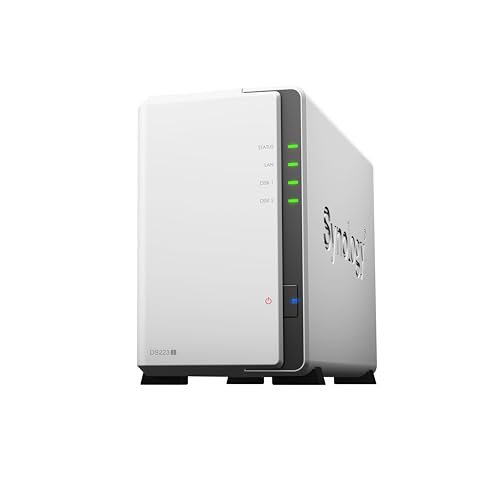
| Synology 2-Bay NAS DS223 (Diskless) |

| Editor’s Choice | Maximum Storage Capacity: Depends on drive selection | Network Port Speed: Not specified | RAM Memory: Not specified | VIEW LATEST PRICE | Read Our Analysis |
| QNAP TR-004 4 Bay USB-C Direct Attached Storage |
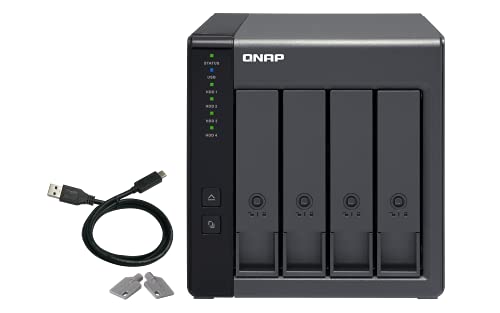
| Best For Expansion | Maximum Storage Capacity: Depends on drive selection | Network Port Speed: USB Type-C (DAS only) | RAM Memory: Not specified | VIEW LATEST PRICE | Read Our Analysis |
| LincStation N2 6-Bay NAS Storage with Intel N100 |

| Professional Grade | Maximum Storage Capacity: Flexible (6-bay with mixed storage) | Network Port Speed: 10GbE | RAM Memory: 16GB LPDDR5 | VIEW LATEST PRICE | Read Our Analysis |
More Details on Our Top Picks
UGREEN NAS DH2300 2-Bay Desktop Network Storage
If you’re setting up a home server for personal file storage, photo organization, and private cloud backups—but you don’t need Docker, virtual machines, or complex business features—the UGREEN NAS DH2300 works well for individuals and small teams. This 2-bay diskless unit supports up to 64TB capacity when you add compatible HDDs or SSDs from Western Digital, Seagate, or Toshiba. You’ll get 4GB RAM, a 1GbE port, and transfer speeds up to 125MB/s. The device includes AI tagging for photos, automatic duplicate detection, and RAID configuration options. Connect via wired Ethernet—Wi-Fi requires a separate USB adapter. Set up remote access through the NAS app across Windows, iOS, Android, and macOS devices. Purchase drives separately and enable two-factor authentication for security.
- Maximum Storage Capacity:Up to 64TB
- Network Port Speed:1 Gigabit Ethernet
- RAM Memory:4GB LPDDR4X
- Drive Bays:2 bays
- Warranty Coverage:2-year warranty
- AI Organization/Features:AI tagging (faces, locations, texts, objects)
- Additional Feature:Auto-find duplicate photos
- Additional Feature:Two-factor authentication security
- Additional Feature:Cross-device backup support
UGREEN NAS DXP2800 2-Bay Network Attached Storage
Content creators and enthusiasts who want a centralized storage solution without monthly cloud subscription costs will find the UGREEN NAS DXP2800 2-Bay Desktop especially useful. This device features an Intel N100 quad-core CPU and 8GB DDR5 RAM, enabling you to run multiple applications simultaneously. The 2.5GbE network port transfers 1GB files in three seconds. You’ll access your data from Windows, macOS, Android, iOS, and web browsers. The unit supports up to 80TB storage capacity across two M.2 NVMe slots and accommodates drives from Western Digital, Seagate, and Toshiba. Advanced encryption protects your files, while AI-powered features organize photos automatically. Purchase storage drives separately, and you’ll receive a two-year warranty with 24/7 support.
- Maximum Storage Capacity:Up to 80TB
- Network Port Speed:2.5GbE
- RAM Memory:8GB DDR5
- Drive Bays:2 bays
- Warranty Coverage:2-year warranty with 24/7 support
- AI Organization/Features:AI-powered photo album with duplicate removal
- Additional Feature:Intel N100 quad-core CPU
- Additional Feature:4K HDMI video output
- Additional Feature:M.2 NVMe expansion slots
UGREEN NAS DH4300 Plus 4-Bay Desktop Storage
The UGREEN NAS DH4300 Plus works best for you if you’re setting up a home media server and want local data storage without relying on cloud services. This 4-bay desktop unit supports up to 128TB capacity and includes 8GB RAM with a 2.5GbE network port for fast file transfers—moving a 1GB file takes roughly three seconds. You’ll appreciate the AI Album Recognition feature, which automatically organizes photos by people, objects, and pets. Access your files across Windows, macOS, Android, iOS, and smart TVs. Note that drives aren’t included, and you’ll need wired Ethernet connectivity rather than Wi-Fi for optimal performance.
- Maximum Storage Capacity:Up to 128TB
- Network Port Speed:2.5GbE
- RAM Memory:8GB LPDDR4X
- Drive Bays:4 bays
- Warranty Coverage:2-year warranty
- AI Organization/Features:AI album recognition with semantic search
- Additional Feature:Docker application support
- Additional Feature:NFC quick connect feature
- Additional Feature:Real-time automatic backups
Synology 2-Bay DiskStation DS223j (Diskless)
Looking for a compact NAS that won’t drain your electric bill or consume valuable desk space? The Synology DS223j delivers efficient storage in a small footprint. This diskless 2-bay unit includes DiskStation Manager (DSM) software pre-installed, so you’re ready to add drives and start building your private cloud immediately. You’ll access files from Android, iPhone, laptops, and desktops anywhere. The plastic and tempered glass enclosure weighs just 0.87 kg, fitting easily on any desk. Assembly takes minutes using the provided guide. Synology backs this unit with a 2-year warranty and maintains a comprehensive knowledge center plus YouTube tutorials for setup guidance and troubleshooting support.
- Maximum Storage Capacity:Depends on drive selection
- Network Port Speed:Not specified
- RAM Memory:Not specified
- Drive Bays:2 bays
- Warranty Coverage:2-year warranty
- AI Organization/Features:Not specified
- Additional Feature:Intelligent video surveillance tools
- Additional Feature:DiskStation Manager onboard software
- Additional Feature:Tempered glass enclosure design
Synology 2-Bay NAS DS223 (Diskless)
If you’re building a home server setup and need flexible storage that works across multiple devices without locking you into proprietary ecosystems, the DS223 delivers a practical solution. This 2-bay enclosure supports desktops, laptops, servers, and smartphones through its built-in DSM operating system. You’ll install two drives to enable data redundancy and protection across multiple backup destinations. The compact tabletop design fits most workspace configurations. Synology’s license-free software lets you create a private cloud, access files remotely, and collaborate on projects efficiently. Its 2-year warranty covers hardware failures, making it a reliable foundation for home server operations.
- Maximum Storage Capacity:Depends on drive selection
- Network Port Speed:Not specified
- RAM Memory:Not specified
- Drive Bays:2 bays
- Warranty Coverage:2-year warranty
- AI Organization/Features:Not specified
- Additional Feature:License-free DSM solutions
- Additional Feature:Flexible surveillance monitoring tools
- Additional Feature:Metal tabletop enclosure design
QNAP TR-004 4 Bay USB-C Direct Attached Storage
Need extra storage capacity for your existing QNAP NAS without expanding your network footprint? The TR-004 connects directly to your NAS via USB Type-C, adding four 3.5-inch SATA drive bays. You’ll configure storage using hardware RAID options including RAID 0, 1, 5, or JBOD. The TR-004 functions as an independent storage pool—you can’t merge it with your NAS’s existing storage. Check compatibility first; older QNAP models and those unable to update to QTS 4.3.6 won’t support it. Remember that moving drives between devices results in data loss since files won’t transfer. This diskless unit requires you to purchase drives separately.
- Maximum Storage Capacity:Depends on drive selection
- Network Port Speed:USB Type-C (DAS only)
- RAM Memory:Not specified
- Drive Bays:4 bays
- Warranty Coverage:Not specified
- AI Organization/Features:Not specified
- Additional Feature:Hardware RAID support options
- Additional Feature:Lockable drive bays included
- Additional Feature:External NAS expansion capability
LincStation N2 6-Bay NAS Storage with Intel N100
The LincStation N2 works best for users who need both high-speed storage and flexible expansion without replacing their entire setup each time capacity demands grow. You’ll get six bays combining two SATA slots and four M.2 NVMe slots, letting you mix storage types based on your needs. The Intel N100 processor handles 4 cores at 3.4GHz, while 16GB LPDDR5 memory supports multiple tasks simultaneously. A 10GbE port delivers fast file transfers for media servers, Docker containers, and backups. Unraid OS Starter License provides drive compatibility and parity protection across different storage sizes, ensuring efficient operation and data redundancy for your home server environment.
- Maximum Storage Capacity:Flexible (6-bay with mixed storage)
- Network Port Speed:10GbE
- RAM Memory:16GB LPDDR5
- Drive Bays:6 bays (2 SATA + 4 M.2 NVMe)
- Warranty Coverage:2-year warranty with 24/7 support
- AI Organization/Features:Not specified
- Additional Feature:Unraid OS Starter included
- Additional Feature:10GbE ultra-fast connectivity
- Additional Feature:30-day money-back guarantee
Factors to Consider When Choosing a NAS for Linux
You’ll need to evaluate several key factors before selecting a NAS for your Linux setup, starting with operating system compatibility to ensure the device supports your preferred Linux distribution, followed by assessing CPU performance requirements based on your workload intensity and number of simultaneous users. Next, you should examine the memory and RAM capacity available on the unit, verify that network speed standards (such as Gigabit or 10GbE) match your infrastructure, and confirm the storage expansion options so you can add drives as your needs grow.
Operating System Compatibility
What should you verify before committing to a NAS for your Linux setup? Check that the NAS’s operating system supports Linux-compatible file systems like ext4 or Btrfs. These file systems integrate properly with Linux kernels and ensure stable performance. Next, confirm the NAS provides SSH access and a command-line interface (CLI) or API for scripting automation tasks. Review whether the vendor offers official Docker or virtualization support if you plan to run containerized Linux workloads. Finally, examine the firmware update schedule and available documentation. Look for Linux-specific troubleshooting guides and community resources. Vendors with strong Linux support typically publish detailed compatibility notes and regularly release updates that address Linux user needs.
CPU Performance Requirements
Once you’ve confirmed Linux compatibility and OS support, evaluating the CPU becomes your next priority because processor power directly affects how smoothly your NAS handles multiple tasks and workloads. Choose quad-core or better CPUs to support multi-app and multi-user operation without bottlenecks. Faster clock speeds improve encryption performance and enable AI-backed features like real-time tagging and backups. Pair 8GB or more RAM with faster processors like 12th Gen N-series chips to sustain multiple containers alongside disk I/O demands. Consider 2.5GbE or faster networking to reduce CPU strain during large data transfers. Verify the CPU architecture supports Docker, VMs, or media applications you’ll run, ensuring sufficient processing headroom for virtualization workloads.
Memory and RAM Capacity
How much RAM your NAS needs depends directly on the number of Linux tasks and services you plan to run simultaneously. Start with 4GB if you’re running basic file storage and one or two lightweight applications. Move to 8GB when you add Docker containers, backups, or file indexing services that demand sustained memory. Choose 16GB or higher if you’re deploying multiple containers, virtual machines, or running resource-intensive tasks concurrently. Larger RAM allocations enable bigger in-memory caches, which accelerates file system operations and directory listings significantly. Consider RAM type carefully: LPDDR4X saves power and space in compact enclosures, while DDR4 or DDR5 options offer better performance in larger units. Match your RAM choice to your workload requirements to prevent system slowdowns from excessive swapping.
Network Speed Standards
While sufficient RAM keeps your NAS running smoothly, your network connection determines how fast you can actually move data to and from your system. You’ll typically encounter 1 GbE on basic models, but 2.5 GbE, 5 GbE, and 10 GbE options exist for faster transfers. Don’t rely on theoretical speeds—real-world performance drops significantly due to drive limitations and RAID configurations. Instead, check sustained MB/s benchmarks, which reflect actual transfer rates. A 1 GB file transfers in roughly 3–8 seconds on 2.5 GbE or 10 GbE under optimal conditions. For Linux systems, verify your NAS supports your desired speed standard and that Linux kernel drivers are available. Consider link aggregation if your switch supports it for increased throughput and redundancy.
Storage Expansion Options
Since your NAS’s storage needs will likely grow over time, you’ll want to understand how to expand capacity before you buy. Check how many drive bays your unit offers—2-bay, 4-bay, or 6-bay models let you add larger drives or extra HDDs. Some NAS devices support NVMe SSD slots for caching without filling HDD bays. Your RAID configuration determines usable space and protection: RAID 5 offers redundancy, while RAID 0 maximizes capacity. Verify drive compatibility on your NAS’s approved list—ensure you’re buying the correct size (2.5″ or 3.5″). Consider upgrading network interfaces like 2.5GbE or 10GbE to handle faster data transfer with expanded storage. External DAS units provide additional expansion if internal bays reach capacity limits.
Docker and Virtualization Support
Do you plan to run containerized applications or virtual machines on your NAS? You’ll need to verify Docker support explicitly in the operating system’s features list or apps catalog before purchasing. Many entry-level two-bay models don’t support Docker, which limits containerized workloads notably. Check whether your NAS OS offers official Docker packages or compatible container management interfaces. If you’re running multiple containers or VMs concurrently, confirm the CPU is multi-core and RAM is at least 8GB to handle the workload. Don’t assume general-purpose hardware capabilities apply to containerized applications. Review the manufacturer’s specifications for I/O headroom and documented Docker support. This verification step prevents purchasing a NAS that won’t meet your virtualization requirements.
Data Security Protocols
After you’ve confirmed your NAS can handle Docker and virtualization workloads, you’ll need to examine its data security protocols before making your final purchase decision. Check whether the system offers encrypted transfers and at-rest encryption to protect data both moving across your network and sitting on disks. Verify that RAID configurations and access controls like permissions and two-factor authentication are available to limit exposure from failed drives or unauthorized users. Look for NAS platforms with TRUSTe or TÜV SÜD ETSI EN 303 645 compliance certifications, which validate security practices and privacy protections. Confirm the device supports local-only storage without mandatory cloud integration, maximizing your data control. Finally, ensure it provides secure remote access through SSH or HTTPS alongside regular firmware updates to address Linux vulnerabilities.
Final Thoughts
You’ll find the right NAS by matching your needs to the options presented. Start by determining your storage capacity and budget. Next, evaluate CPU performance for Docker and VM workloads. Then, check network connectivity—10GbE for heavy transfers, 2.5GbE for standard use. Finally, confirm Linux compatibility and expansion capabilities. Synology offers reliability; UGREEN provides affordability; QNAP delivers flexibility. Select based on your specific requirements.

Meet Ry, “TechGuru,” a 36-year-old technology enthusiast with a deep passion for tech innovations. With extensive experience, he specializes in gaming hardware and software, and has expertise in gadgets, custom PCs, and audio.
Besides writing about tech and reviewing new products, he enjoys traveling, hiking, and photography. Committed to keeping up with the latest industry trends, he aims to guide readers in making informed tech decisions.