
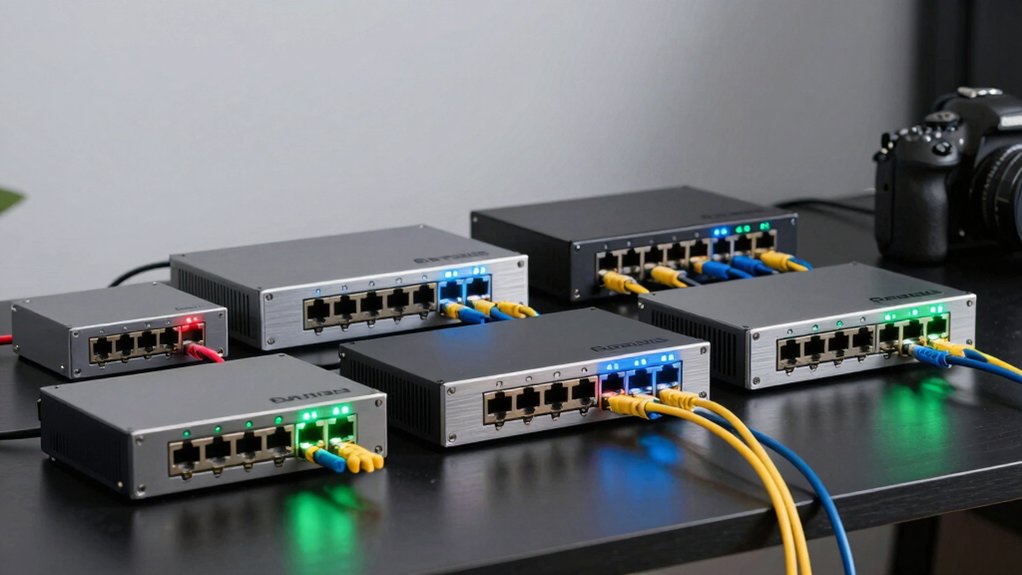

When you’ve invested in Google Fiber’s high-speed connection, you need a network switch that won’t bottleneck your speeds. You’ll want to consider unmanaged switches for simplicity, PoE capabilities for powering devices, and sufficient uplink capacity for your network demands. The right switch depends on your specific setup—whether you’re running a small home office or managing a demanding environment. Understanding your options matters before you decide.
| TP-Link TL-SG105 5 Port Gigabit Ethernet Switch |

| Best For Basics | Port Count: 5 ports | Maximum Speed: 1 Gbps | Installation Type: Desktop/wall-mount | VIEW LATEST PRICE | Read Our Analysis |
| NETGEAR 5-Port Gigabit Ethernet Switch (GS305) |

| Best Value | Port Count: 5 ports | Maximum Speed: 1 Gbps | Installation Type: Desktop/wall-mount | VIEW LATEST PRICE | Read Our Analysis |
| TRENDnet 6-Port Multi-Gig Ethernet Switch (TEG-S562) |

| Best For Performance | Port Count: 6 ports | Maximum Speed: 10 Gbps (SFP+) | Installation Type: Desktop/wall-mount | VIEW LATEST PRICE | Read Our Analysis |
| UGREEN 2.5Gb Ethernet Switch with 10Gb SFP |

| Best For Advanced Users | Port Count: 6 ports | Maximum Speed: 10 Gbps (SFP+) | Installation Type: Desktop/wall-mount | VIEW LATEST PRICE | Read Our Analysis |
| 6-Port Hardened Industrial Gigabit PoE+ Network Switch |
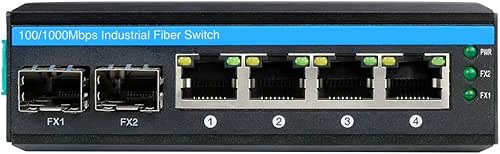
| Professional Grade | Port Count: 6 ports | Maximum Speed: 1 Gbps | Installation Type: DIN-rail/wall-mount | VIEW LATEST PRICE | Read Our Analysis |
| TRENDnet 5-Port 2.5Gb Ethernet Switch (TEG-S351) |

| Best Balanced Option | Port Count: 5 ports | Maximum Speed: 2.5 Gbps | Installation Type: Wall-mount | VIEW LATEST PRICE | Read Our Analysis |
| 10Gbe Ethernet Switch Unmanaged 6 Port Network Switch |

| Best For Speed | Port Count: 6 ports | Maximum Speed: 10 Gbps | Installation Type: Desktop/wall-mount | VIEW LATEST PRICE | Read Our Analysis |
More Details on Our Top Picks
TP-Link TL-SG105 5 Port Gigabit Ethernet Switch
If you’re looking for a no-fuss network switch that handles Google Fiber speeds without requiring setup or configuration, the TP-Link TL-SG105 delivers straightforward connectivity right out of the box. This unmanaged five-port gigabit switch connects directly to your modem and expands your wired network to multiple devices like computers, gaming consoles, printers, and televisions. Each port supports speeds up to 1000 Mbps, so you’ll experience full Google Fiber performance. The switch automatically negotiates port speeds and adjusts cable connections without manual intervention. Its metal chassis stays cool without a fan, operating silently in your home or office. The compact design fits easily on desks or wall mounts. TP-Link backs the TL-SG105 with a three-year warranty and weekday technical support, ensuring reliable long-term connectivity.
- Port Count:5 ports
- Maximum Speed:1 Gbps
- Installation Type:Desktop/wall-mount
- Cooling System:Fanless
- Setup & Configuration:Plug & Play, no software needed
- Warranty:3-year warranty
- Additional Feature:Auto-MDI/MDIX on all ports
- Additional Feature:Port-based QoS prioritization
- Additional Feature:Energy-efficient technology
NETGEAR 5-Port Gigabit Ethernet Switch (GS305)
The NETGEAR GS305 works best for you if you’re setting up a home network or small office and need straightforward connectivity without technical complexity. This unmanaged switch features five Gigabit Ethernet ports that connect directly to your Google Fiber modem without requiring software installation or configuration. You’ll experience silent operation and energy-efficient performance that meets IEEE 802.3az standards. Simply plug in your devices and the switch handles traffic automatically. The desktop or wall-mount design fits various spaces. NETGEAR backs this switch with a three-year limited hardware warranty, making it a reliable choice for basic network expansion needs.
- Port Count:5 ports
- Maximum Speed:1 Gbps
- Installation Type:Desktop/wall-mount
- Cooling System:Silent operation (fanless)
- Setup & Configuration:Plug & Play, no drivers required
- Warranty:3-year limited hardware warranty
- Additional Feature:IEEE 802.3az compliant
- Additional Feature:Silent noise-free operation
- Additional Feature:U.S. & CA regional support
TRENDnet 6-Port Multi-Gig Ethernet Switch (TEG-S562)
Need to expand your network bandwidth without replacing your entire infrastructure? The TRENDnet TEG-S562 gives you six ports across two port types. You get four 2.5GBASE-T ports that work with your existing Cat5e cabling, plus two 10G SFP+ ports for fiber connections. The switch handles 60Gbps total capacity and supports speeds up to 2.5Gbps on copper and 10Gbps on fiber. It’s fanless, compact, and wall-mountable for flexible placement. The device’s unmanaged design means zero configuration—plug cables in and it works immediately. This switch suits small-to-medium businesses needing multi-gig speeds without full network upgrades.
- Port Count:6 ports
- Maximum Speed:10 Gbps (SFP+)
- Installation Type:Desktop/wall-mount
- Cooling System:Fanless
- Setup & Configuration:Unmanaged, plug-and-play
- Warranty:Lifetime warranty
- Additional Feature:60Gbps switching capacity
- Additional Feature:10G SFP+ ports included
- Additional Feature:NDAA + TAA compliant
UGREEN 2.5Gb Ethernet Switch with 10Gb SFP
Want a network switch that handles both current high-speed connections and future upgrades without replacing hardware? The UGREEN 2.5Gb switch gives you five 2.5Gb ports plus one 10Gb SFP+ port for flexible expansion. You can operate it in Standard mode for basic connectivity, use Link Aggregation to combine ports 4 and 5 for 5Gbps bandwidth to your NAS, or activate VLAN mode to isolate specific ports while keeping others connected. The metal case includes 4KV lightning protection and supports both desktop and wall mounting. Setup takes minutes—just plug in cables and select your operational mode via the one-touch system.
- Port Count:6 ports
- Maximum Speed:10 Gbps (SFP+)
- Installation Type:Desktop/wall-mount
- Cooling System:Passive cooling (grille vents)
- Setup & Configuration:Plug-and-play
- Warranty:Not specified
- Additional Feature:Link aggregation mode support
- Additional Feature:12K jumbo frame support
- Additional Feature:4KV lightning protection
6-Port Hardened Industrial Gigabit PoE+ Network Switch
If you’re running Google Fiber in an outdoor or harsh environment, you’ll need a switch that can withstand extreme conditions while delivering reliable power to connected devices. The OLYCOM IM-FP244-GE provides exactly this capability with its 4 Gigabit PoE+ ports delivering 30W each and 2 SFP fiber uplink ports. Its IP40-rated metal enclosure handles temperatures from -40 to 75°C and resists vibration, shock, and electrical surges. Install it using DIN-rail or wall mounting. The 120W total power output, combined with dual redundant power inputs, ensures continuous operation. You’ll receive the switch, manual, and lifetime technical support.
- Port Count:6 ports
- Maximum Speed:1 Gbps
- Installation Type:DIN-rail/wall-mount
- Cooling System:Not specified
- Setup & Configuration:Unmanaged
- Warranty:Lifetime technical support
- Additional Feature:PoE+ power delivery (30W)
- Additional Feature:IP40 rated enclosure
- Additional Feature:Dual redundant power inputs
TRENDnet 5-Port 2.5Gb Ethernet Switch (TEG-S351)
The TRENDnet TEG-S351 works best for users who need to connect multiple high-bandwidth devices—like gaming consoles, network-attached storage (NAS), and desktop computers—without experiencing speed slowdowns from a single connection point. This 5-port switch delivers 2.5Gbps speeds over standard Cat5e cabling, eliminating bottlenecks across your network. Its 25Gbps switching capacity handles simultaneous data transfers efficiently. The fanless design operates silently while consuming only 4.5 watts, making it ideal for permanent installation. Mount it on a wall or desk using its compact dimensions. The lifetime warranty and NDAA/TAA compliance provide long-term protection for your investment.
- Port Count:5 ports
- Maximum Speed:2.5 Gbps
- Installation Type:Wall-mount
- Cooling System:Fanless
- Setup & Configuration:Unmanaged, plug-and-play
- Warranty:Lifetime warranty
- Additional Feature:25Gbps switching capacity
- Additional Feature:Works with Cat5e cabling
- Additional Feature:NDAA + TAA compliant
10Gbe Ethernet Switch Unmanaged 6 Port Network Switch
Looking to maximize your Google Fiber connection without dealing with complicated setup processes? This 6-port unmanaged switch offers straightforward connectivity with minimal effort. You get four 2.5Gb ports and two 10Gb ports, delivering switching capacity up to 60Gbps. The auto MDI/MDIX feature means you won’t worry about cable types—just plug in your devices. Setup requires no configuration; it’s truly plug-and-play. The fanless design keeps your setup silent, while the metal case and 6KV lightning protection ensure durability. Built-in LED indicators show network status at a glance. You’ll achieve 2.5x faster performance than traditional gigabit switches, making it suitable for 10G NAS systems, WiFi7 routers, servers, and gaming PCs.
- Port Count:6 ports
- Maximum Speed:10 Gbps
- Installation Type:Desktop/wall-mount
- Cooling System:Fanless
- Setup & Configuration:Plug & Play, no configuration required
- Warranty:1-year warranty
- Additional Feature:60Gbps switching capacity
- Additional Feature:6KV lightning protection
- Additional Feature:Double-sided cooling holes
Factors to Consider When Choosing a Network Switch for Google Fiber
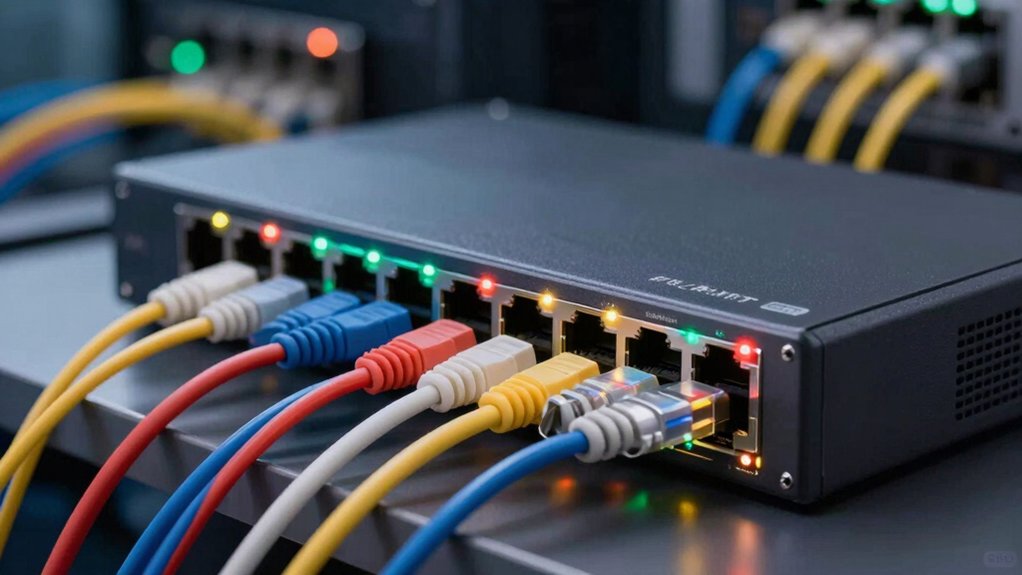
When selecting a network switch for Google Fiber, you’ll need to evaluate several key factors: the number of ports your devices require, the switch’s speed and bandwidth capacity to match your fiber connection, whether you need Power over Ethernet for devices like cameras or access points, and the physical installation options available in your space. You should also consider energy efficiency and heat management, since switches running continuously can generate significant power costs and heat over time. By examining each of these elements against your specific setup, you can identify the switch that delivers the performance and reliability your high-speed internet demands.
Port Count And Configuration
How many devices do you need to connect directly to your switch? Count your Google Fiber equipment: the ONT, router, NAS, and any other wired devices. This determines your minimum port requirement.
A 5-port switch handles basic setups with three to four devices. A 6-port or 8-port switch gives you more flexibility and room to add devices later. If you plan to expand significantly, choose a switch with 16 or more ports.
Look for dedicated uplink ports if you want to cascade switches together. Some switches include multi-gig ports (2.5G or 10G) alongside standard gigabit ports, letting you connect high-speed equipment without bottlenecks.
Match your port configuration to your current needs plus anticipated growth within the next two years.
Speed And Bandwidth Capacity
The maximum per-port data rate is your primary speed metric, and it directly impacts how fast your connected devices can use Google Fiber’s bandwidth. Choose from options ranging from 1 Gbps to 10 Gbps depending on your needs. Multi-gig switches supporting 2.5G, 5G, or 10G ports enable higher sustained speeds on existing Cat5e and Cat6 cabling, reducing bottlenecks for local devices. Additionally, verify the switch’s total switching capacity—measured in Gbps—to ensure it handles aggregate traffic across all ports without congestion. Look for 2.5G or 10G uplink ports and SFP+ options to improve backhaul performance to network-attached storage, servers, and multi-device setups. Full-duplex operation, auto-MDI/MDIX support, and low-latency QoS features optimize performance for video conferencing and large file transfers across your Google Fiber connection.
Power Over Ethernet Requirements
Most Google Fiber setups that include wireless access points or IP cameras need a switch with Power over Ethernet (PoE) support to deliver power and data through a single Ethernet cable. Verify that your switch has PoE+ ports capable of delivering up to 30W per port, which covers most standard devices. Check the switch’s total PoE budget—ensure it’s sufficient for all devices you’re powering simultaneously. For example, if you’re powering three access points requiring 15W each, you’ll need at least 45W of total budget. Count your PoE devices and match the number of PoE ports available. If reliability matters in your deployment, consider industrial-rated or redundant switches. Verify that PoE ports exist on the same VLAN and confirm your uplink speed handles aggregated traffic.
Installation And Mounting Options
Once you’ve confirmed your PoE requirements and power delivery capacity, you’ll need to contemplate where and how you’ll physically place your switch in your network setup. Evaluate your installation space first. Desktop models work well for open areas near your router, while wall-mount options fit tight spaces and reduce clutter. If you’re using equipment racks, verify DIN-rail compatibility for secure mounting. Choose switches with metal enclosures for durability across different environments. Fanless designs eliminate noise in home or office settings. Check port labeling and layout to ensure straightforward cable routing. Position your switch strategically to minimize cable runs and maintain organized connections around your Google Fiber equipment. These decisions directly impact your network’s functionality and long-term reliability.
Energy Efficiency And Heat Management
How much power will your network switch actually consume, and where will that heat go? Look for switches with IEEE 802.3az compliance to reduce idle power consumption on your Google Fiber connection. Choose fanless or passive cooling designs if you’re placing the switch in your living area or home office, as these eliminate noise and minimize heat generation. Calculate your actual port needs—selecting only necessary ports lowers overall power usage. Check the switch’s metal chassis and ventilation design to ensure proper heat dissipation during high-speed data transfers. For non-climate-controlled spaces, verify the switch’s operating temperature range. Match the cooling method to your installation location: fanless designs for quiet environments, active cooling for high-traffic deployments requiring sustained performance.
Durability And Environmental Protection
Beyond managing power consumption and heat, you’ll need to protect your switch from physical damage and environmental stress. Select switches with rugged metal enclosures and robust ingress protection ratings suitable for your installation location. For outdoor or industrial deployments, choose models rated for wide temperature ranges, typically -40°C to 75°C. Verify that your switch includes vibration and shock resistance if you’re mounting it on DIN rails or in confined spaces. Confirm built-in protection against electrical disturbances by checking for 4KV lightning protection and EMI/ESD shielding. These features guard against surges common near Fiber/Gigabit deployments. Prioritize weather-resistant construction with side vents or solid metal chassis designs that dissipate heat effectively while blocking moisture and contaminants from entering internal components.
Warranty And Technical Support
What’s covered under your switch’s warranty, and for how long, directly affects your long-term costs and downtime risk. Look for switches offering 3-year or lifetime warranties with clear hardware coverage details. Verify what’s included—manufacturing defects and power surges—versus what’s excluded, like shipping or accidental damage. Check regional eligibility, as some models limit service to U.S. and Canada only, which impacts your ability to claim support.
Beyond warranty length, confirm the supplier provides ongoing technical support with defined hours and contact methods. Document the RMA process and typical response times before purchasing. Ask whether replacement units ship immediately or require inspection first. These details determine how quickly you’ll restore service if problems arise, minimizing Google Fiber downtime.
Budget And Cost Considerations
When you’re evaluating network switches for Google Fiber, your budget directly ties to three core factors: the number of ports you need, the speed capabilities of each port, and the switch’s build quality. Basic Gigabit switches cost less but won’t maximize your fiber speeds. Multi-gig and 10G switches cost significantly more but future-proof your investment. Unmanaged switches minimize expenses by eliminating software and installation requirements. However, managed switches with advanced features justify higher costs for complex network demands. Consider warranty length—three-year or lifetime coverage reduces long-term ownership costs through protection against failures. Industrial-grade switches with PoE and rugged construction command premium prices for demanding environments. Calculate total cost of ownership, not just purchase price, to determine actual value.
Final Thoughts
To maximize your Google Fiber connection, you’ll need a switch that handles high speeds reliably. Pick an unmanaged model like the TP-Link TL-SG105 for basic setups, or choose the UGREEN 2.5Gb switch if you need future-proofing. Consider PoE capability if you’re connecting powered devices. Install your selected switch between your fiber modem and devices, then connect cables. Verify all connections work at expected speeds using your device settings.

Meet Ry, “TechGuru,” a 36-year-old technology enthusiast with a deep passion for tech innovations. With extensive experience, he specializes in gaming hardware and software, and has expertise in gadgets, custom PCs, and audio.
Besides writing about tech and reviewing new products, he enjoys traveling, hiking, and photography. Committed to keeping up with the latest industry trends, he aims to guide readers in making informed tech decisions.