

When you connect multiple devices to your Xfinity network, a standard router might bottleneck your gigabit speeds. You’ll need a dedicated network switch to distribute that bandwidth efficiently across your home. This guide walks you through five reliable switches designed to maximize your Xfinity performance, plus the key factors that determine which one fits your setup—but first, you need to understand what separates the best performers from the rest.
| TP-Link TL-SG105 5-Port Gigabit Ethernet Switch |

| Budget-Friendly Pick | Port Count: 5 Gigabit ports | Setup & Configuration: Plug & Play, no software installation | Mounting Options: Desktop/wall-mounting | VIEW LATEST PRICE | Read Our Analysis |
| NETGEAR 8-Port Gigabit Ethernet Unmanaged Switch (GS308) |
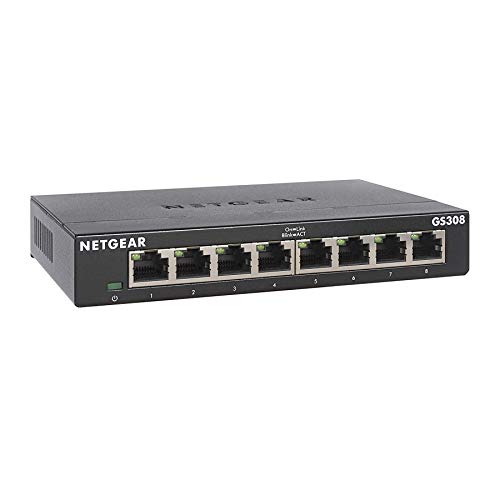
| Best Value | Port Count: 8 Gigabit ports | Setup & Configuration: Plug & Play, no software or configuration required | Mounting Options: Desktop or wall-mountable | VIEW LATEST PRICE | Read Our Analysis |
| UGREEN 5 Port Gigabit Ethernet Network Switch Hub |

| Most Versatile | Port Count: 5 Gigabit ports | Setup & Configuration: Plug & Play, no driver required | Mounting Options: Desktop or wall mounting | VIEW LATEST PRICE | Read Our Analysis |
| NETGEAR 24-Port Gigabit Ethernet Unmanaged Switch (GS324) |
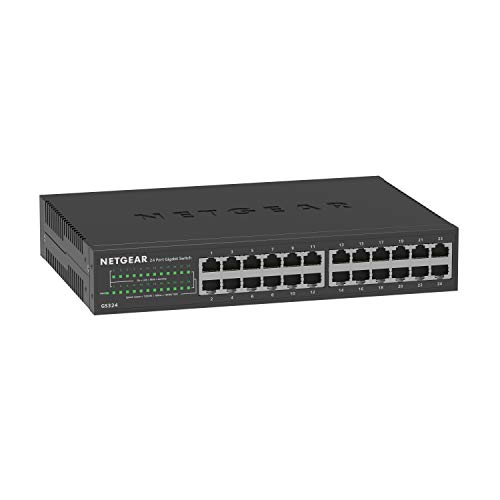
| Best for Large Networks | Port Count: 24 Gigabit ports | Setup & Configuration: Plug & Play, no software installation required | Mounting Options: Desktop, wall, or rackmount installation | VIEW LATEST PRICE | Read Our Analysis |
| TP-Link 5-Port Gigabit Ethernet Smart Switch (TL-SG105E) |

| Best Overall | Port Count: 5 Gigabit ports | Setup & Configuration: Plug & Play with optional web interface/software management | Mounting Options: Desktop or wall-mountable | VIEW LATEST PRICE | Read Our Analysis |
More Details on Our Top Picks
TP-Link TL-SG105 5-Port Gigabit Ethernet Switch
Why would you choose an unmanaged switch over a managed one? You don’t need complex configuration. The TL-SG105 requires no software installation—just plug it in and connect your devices. This 5-port switch handles computers, gaming consoles, printers, and televisions simultaneously at gigabit speeds up to 1000 Mbps. Auto-negotiation adjusts connection speed automatically, while auto-MDI/MDIX eliminates cable concerns. The metal chassis resists interference, and fanless design keeps operation silent. Flow control ensures reliable data transfer, while IGMP snooping prioritizes video and voice traffic. Its compact desktop or wall-mounted form fits any setup. Energy-efficient technology reduces power consumption. TP-Link backs this switch with three-year warranty coverage and weekday technical support, making it a straightforward networking solution for expanding your Xfinity connection.
- Port Count:5 Gigabit ports
- Setup & Configuration:Plug & Play, no software installation
- Mounting Options:Desktop/wall-mounting
- Noise Level:Fanless, quiet operation
- Warranty:3-year warranty
- Energy Efficiency:Energy-efficient technology, lower power consumption
- Additional Feature:Auto-MDI/MDIX on all ports
- Additional Feature:Port-based 802.1p/DSCP QoS
- Additional Feature:IEEE 802.3X flow control
NETGEAR 8-Port Gigabit Ethernet Unmanaged Switch (GS308)
If you’re setting up a home network or office space where you need to connect multiple devices to your Xfinity modem without complexity, the NETGEAR GS308 delivers straightforward functionality through its eight Gigabit Ethernet ports and plug-and-play design. You won’t need to install software or configure settings—just connect your modem to one port and attach your devices to the remaining seven ports. The switch supports both desktop and wall-mounted placement, giving you flexibility in positioning. Its energy-efficient design complies with IEEE 802.3az standards, reducing power consumption. Silent operation makes it suitable for quiet environments. NETGEAR backs the unit with a three-year limited hardware warranty, providing reliable coverage for your network expansion needs.
- Port Count:8 Gigabit ports
- Setup & Configuration:Plug & Play, no software or configuration required
- Mounting Options:Desktop or wall-mountable
- Noise Level:Silent operation
- Warranty:3-year limited hardware warranty
- Energy Efficiency:Energy efficient, IEEE 802.3az compliant
- Additional Feature:8 Gigabit Ethernet ports
- Additional Feature:IEEE 802.3az compliant
- Additional Feature:Desktop or wall-mountable
UGREEN 5 Port Gigabit Ethernet Network Switch Hub
Looking for a straightforward way to connect multiple devices to your Xfinity modem without complicated setup? The UGREEN 5 Port Gigabit Ethernet Switch delivers exactly that. You plug it in, and it works immediately—no drivers or configuration needed. Each of its five RJ45 ports auto-negotiates speeds up to 1000 Mbps, supporting both full and half duplex connections. The fanless design runs silently while consuming minimal power. Mount it on your desk or wall using the included holes. LED indicators show you which ports are active. This switch handles Windows, macOS, Linux, and mobile devices, making it ideal for home networks, offices, or security systems. Note that it doesn’t support Power over Ethernet.
- Port Count:5 Gigabit ports
- Setup & Configuration:Plug & Play, no driver required
- Mounting Options:Desktop or wall mounting
- Noise Level:Fanless, silent operation
- Warranty:Not specified
- Energy Efficiency:Energy-saving, environmentally conscious
- Additional Feature:Auto MDI/MDIX crossover
- Additional Feature:Multi-OS compatibility support
- Additional Feature:LED indicator lights
NETGEAR 24-Port Gigabit Ethernet Unmanaged Switch (GS324)
The NETGEAR GS324 is an excellent choice if you’re running a small office or home network where you need to connect multiple devices simultaneously without managing complex settings. This 24-port switch uses auto-negotiation and auto-MDI/MDIX to detect connection types automatically, so you won’t adjust settings manually. Simply plug devices directly into any port—TVs, computers, gaming consoles, and printers all work immediately. The fanless design operates silently, making it suitable for noise-sensitive spaces. Its non-blocking architecture ensures consistent performance across all ports. Installation takes minutes with included mounting hardware for desktop, wall, or rack placement.
- Port Count:24 Gigabit ports
- Setup & Configuration:Plug & Play, no software installation required
- Mounting Options:Desktop, wall, or rackmount installation
- Noise Level:Fanless, silent operation
- Warranty:3-year limited hardware warranty
- Energy Efficiency:Energy-efficient, IEEE 802.3az compliant, short cable power reduction
- Additional Feature:Non-blocking switching architecture
- Additional Feature:Jumbo packet support
- Additional Feature:Rackmount installation option
TP-Link 5-Port Gigabit Ethernet Smart Switch (TL-SG105E)
Want a straightforward way to expand your Xfinity network without complicated setup? The TP-Link TL-SG105E gives you five Gigabit ports in a compact design you can place on your desk or mount on a wall. You’ll access configuration through a web interface or free software to manage VLANs, set up link aggregation, and monitor port activity. The switch supports QoS to prioritize your traffic and includes loop prevention to protect your network. Installation requires no special skills—you plug it in and connect your devices. The 3-year warranty with weekday technical support covers your investment, making this switch a practical choice for expanding your Xfinity connection.
- Port Count:5 Gigabit ports
- Setup & Configuration:Plug & Play with optional web interface/software management
- Mounting Options:Desktop or wall-mountable
- Noise Level:Fanless design (silent operation)
- Warranty:3-year warranty
- Energy Efficiency:Not explicitly specified
- Additional Feature:VLAN support up to 32
- Additional Feature:Port Mirroring and Loop Prevention
- Additional Feature:Web interface management software
Factors to Consider When Choosing a Network Switch for Xfinity
When you choose a network switch for Xfinity, you need to evaluate five key factors: port count requirements (how many devices you’ll connect), speed and performance (gigabit capability to match your internet plan), and whether you want a managed switch with advanced controls or an unmanaged switch for simple plug-and-play operation. You should also assess installation and setup complexity—some switches require technical configuration while others work immediately—and consider energy efficiency to reduce your electricity costs over time. Each factor directly affects how well the switch performs, how easy it is to use, and how much you’ll spend both upfront and monthly.
Port Count Requirements
Before you purchase a network switch for your Xfinity setup, you’ll need to count how many devices require a wired connection to your network. List your computers, TVs, game consoles, and printers that’ll connect directly. Count each device and add two to three extra ports for future expansion. This prevents buying an undersized switch that forces upgrades later. If you’re using multiple network segments or VLANs, ensure your switch supports the total device count across all segments. Consider whether devices will connect through your modem/router combo or through the switch itself. Choose a switch with slightly more ports than you currently need. An 8-port switch for five devices today protects against immediate replacement when you add more equipment.
Speed And Performance
How do you make sure your network switch won’t bottleneck your Xfinity speeds? You need Gigabit Ethernet on all ports, meaning 1000 Mbps per connection. This matches high-speed internet plans and prevents slow data transfer within your home network.
Look for auto-negotiation and auto-MDI/MDIX features. These allow devices to connect without manual setup, automatically adjusting speed and cable orientation for compatibility.
For networks handling multiple devices simultaneously, prioritize QoS (Quality of Service) and IGMP Snooping. QoS manages traffic priority, ensuring video and voice calls stay smooth. IGMP Snooping handles multicast streams efficiently.
Consider IEEE 802.3az energy efficiency if your switch runs constantly. You’ll reduce power consumption without compromising performance.
Choose unmanaged switches for simple plug-and-play setup, or smart switches for detailed speed and priority controls.
Managed Vs Unmanaged
What’s the difference between managed and unmanaged switches, and which one fits your Xfinity setup?
Unmanaged switches require no configuration—you plug them in and they work immediately. They’re cheaper and simpler but offer no traffic control or security settings.
Managed switches let you configure features through web interfaces or software. You’ll gain access to VLANs, QoS, port mirroring, and IGMP Snooping to optimize performance across your devices.
Choose an unmanaged switch if you have a small household with basic connectivity needs and minimal administrative requirements. Select a managed switch if you run multiple devices needing traffic prioritization, such as gaming and streaming systems, or if you require remote access and centralized management for network monitoring and control.
Installation And Setup
When you’re ready to install your network switch, the easiest path is selecting a plug-and-play model that requires no driver installation or configuration—you’ll simply connect power and ethernet cables, then it’s operational. Choose a compact, fanless design for silent operation in your home or office space. Decide whether you need desktop placement or wall-mount capability based on your installation site. Verify that all ports support auto-negotiation and auto-MDI/MDIX; these features automatically adjust connection settings for different devices, eliminating manual configuration. Before purchasing, confirm the switch matches your region’s power requirements—230V operation if you’re in Europe or similar regions. Check that mounting options align with your space. These installation considerations ensure quick deployment without technical complications.
Energy Efficiency Matters
Why you’re paying more than necessary for your home network comes down to switch selection—most standard models consume power continuously, even when ports sit idle. You’ll reduce electricity costs by choosing switches with IEEE 802.3az (Energy Efficient Ethernet) support, which cuts power during low-traffic periods without affecting performance. Look for models featuring auto power-down for unused ports. Compare power consumption specifications across switches before purchasing; manufacturers list wattage requirements clearly. Fanless designs paired with energy-saving certifications help you lower operating costs while minimizing heat output. Check for Energy Star ratings or similar certifications when evaluating options. This approach keeps your Xfinity network running efficiently year-round while decreasing monthly utility bills.
Durability And Build Quality
How you’ll ensure your switch survives years of daily use depends on examining its physical construction before you buy. Check for a sturdy metal chassis or reinforced plastic that resists impacts and wear. Prioritize fanless designs, which reduce dust intrusion and noise for longer reliability. If you’re mounting your switch on a desk or wall, verify it includes secure mounting options that prevent accidental disconnection. Inspect the ports and connectors—shielded ports and durable connectors protect against signal degradation and physical damage. Finally, compare warranty lengths. A multi-year warranty, such as three years, signals the manufacturer’s confidence in build quality and extends your protection period. These durability factors directly affect how long your switch performs at peak efficiency.
Warranty And Support Coverage
Your switch’s warranty and support coverage directly impact your total cost of ownership and how quickly you’ll resolve issues if problems arise. Review warranty length first—most quality switches offer 3-year coverage, which reduces replacement costs if failure occurs. Check whether the manufacturer provides 24/7 technical support or limited hours, since faster assistance minimizes your downtime during setup or troubleshooting. Examine what the warranty includes: standard coverage replaces the unit, while premium options add onsite support or expedited shipping. Verify regional restrictions, as some warranties apply only to U.S. and Canadian customers. Consider lifetime replacement guarantees if available—they extend your protection beyond standard terms. Compare total support packages across models to determine which switch delivers the best protection for your investment and operational needs.
Network Traffic Prioritization Features
When you’re setting up a network switch for Xfinity, traffic prioritization determines which data packets get sent first, directly affecting your connection’s performance for different activities. Look for switches supporting 802.1p/DSCP QoS, which automatically prioritizes high-priority packets like video conferencing or gaming traffic. IGMP Snooping restricts multicast streams to interested receivers only, reducing unnecessary bandwidth consumption. VLAN support lets you segregate traffic into separate networks, preventing congestion on critical services. Link Aggregation combines multiple connections for increased throughput, while traffic shaping manages bandwidth distribution across devices. When selecting your switch, verify it supports these features aligned with your usage patterns. Prioritization ensures latency-sensitive applications receive adequate resources while protecting overall network stability.
Final Thoughts
You’ll maximize your Xfinity speed by selecting a switch that matches your needs. For basic setups, choose the TP-Link TL-SG105 or NETGEAR GS308. If you need advanced features like QoS or VLAN support for multiple devices, pick the TP-Link TL-SG105E. Verify gigabit ports, auto-MDI/MDIX capability, and energy efficiency before purchasing. Install your chosen switch between your modem and devices to immediately improve network performance.

Meet Ry, “TechGuru,” a 36-year-old technology enthusiast with a deep passion for tech innovations. With extensive experience, he specializes in gaming hardware and software, and has expertise in gadgets, custom PCs, and audio.
Besides writing about tech and reviewing new products, he enjoys traveling, hiking, and photography. Committed to keeping up with the latest industry trends, he aims to guide readers in making informed tech decisions.