


When you’re traveling in your RV, propane leaks pose a serious safety risk that requires reliable detection. You’ll need to understand the key differences between detector types—plug-in models, portable units, and dual-gas alarms that monitor both propane and carbon monoxide. Each option offers distinct advantages depending on your RV setup and monitoring needs. To choose the right detector, you must first evaluate what specific features matter most for your situation.
| Natural Gas Leak Detector with LED Digital Display |

| Best Overall | Detection Type: Multi-gas (natural gas, propane, LPG, LNG) | Form Factor: Plug-in wall-mounted detector | Power Source: AC plug (110V–220V) | VIEW LATEST PRICE | Read Our Analysis |
| PT199 Natural Gas Leak Detector with Audible Alarm |
| Most Portable | Detection Type: Multi-gas (natural gas, methane, propane, butane, LPG) | Form Factor: Portable handheld sniffer | Power Source: 2x AAA batteries | VIEW LATEST PRICE | Read Our Analysis |
| RV Propane Gas Detector Digital Alarm (R501) |

| Best RV Installation | Detection Type: Propane/LP gas only | Form Factor: Fixed hardwired RV detector | Power Source: 12V DC hardwired | VIEW LATEST PRICE | Read Our Analysis |
| VITITE Portable Gas Leak Detector for Home and RV |

| Best Pocket-Sized | Detection Type: Multi-gas (methane, natural gas, propane, butane, LPG, LNG, gasoline, sewer gas) | Form Factor: Portable handheld sniffer | Power Source: 2x AAA batteries | VIEW LATEST PRICE | Read Our Analysis |
| Nuleto RV Dual LP/CO Gas Alarm Detector with LED |

| Best Dual Protection | Detection Type: Dual detection (propane and carbon monoxide) | Form Factor: Fixed hardwired RV detector | Power Source: 12V DC hardwired | VIEW LATEST PRICE | Read Our Analysis |
| RV Dual LP/CO Alarm Carbon Monoxide & Propane Detector (R502) |

| Best Hardwired Dual | Detection Type: Dual detection (propane and carbon monoxide) | Form Factor: Fixed hardwired RV detector | Power Source: 12V DC hardwired | VIEW LATEST PRICE | Read Our Analysis |
| TopTes PT299 Natural Gas Leak Detector with Extendable Rod |

| Best Extendable Reach | Detection Type: Multi-gas (propane, methane, natural gas, LPG, gasoline, butane) | Form Factor: Portable handheld with extendable rod | Power Source: 2x AAA batteries | VIEW LATEST PRICE | Read Our Analysis |
| Tadeto RV Carbon Monoxide and Propane Gas Alarm |

| Best RV-Specific | Detection Type: Dual detection (carbon monoxide and propane) | Form Factor: Fixed hardwired RV detector | Power Source: 12V DC hardwired | VIEW LATEST PRICE | Read Our Analysis |
| Gas Leak Detector with Audible/Visual Alarm |
| Best Multi-Stage Alert | Detection Type: Multi-gas (natural gas, propane, methane) | Form Factor: Portable handheld wand | Power Source: 2x AA batteries | VIEW LATEST PRICE | Read Our Analysis |
| Safe T Alert 20 Series Mini LP Gas Alarm |

| Most Rugged Design | Detection Type: Propane/methane only | Form Factor: Fixed hardwired RV detector | Power Source: 12V DC hardwired | VIEW LATEST PRICE | Read Our Analysis |
More Details on Our Top Picks
Natural Gas Leak Detector with LED Digital Display
Why should you consider a plug-in gas leak detector for your RV? This device detects natural gas, propane, LPG, and LNG continuously through 24/7 monitoring. You’ll plug it into any standard US outlet supporting 110V–220V AC power. After a 2–3 minute warm-up period, the detector monitors your space automatically. When gas concentration exceeds 3% LEL, an 85 dB alarm sounds while red lights flash simultaneously. The alarm intensity adjusts as concentrations change. To test functionality, slowly release test gas near the detector; it’ll alarm at threshold and stop when levels return to normal. Install the flame-retardant device in clean, dry kitchens, bedrooms, basements, or RVs for optimal performance and family safety.
- Detection Type:Multi-gas (natural gas, propane, LPG, LNG)
- Form Factor:Plug-in wall-mounted detector
- Power Source:AC plug (110V–220V)
- Alarm Response Time:Threshold-based (>3% LEL)
- Alarm Type:85 dB audible + red flashing lights
- Warm-up Time:2–3 minutes
- Additional Feature:Adjustable alarm intensity levels
- Additional Feature:Multi-gas detection capability
- Additional Feature:Flame-retardant PC housing
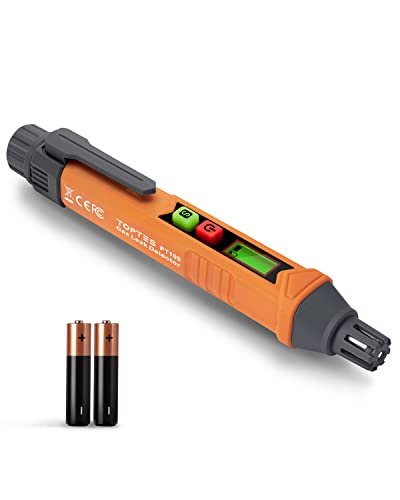
PT199 Natural Gas Leak Detector with Audible Alarm
The TOPTES PT199 works best for RV owners and homeowners who need a portable, battery-powered detector they can carry from one location to another without installation hassle. Insert two AAA batteries and wait thirty seconds for warm-up. Hold the sensor tip one to five centimeters from suspected leak sources like appliance connections and gas lines. The audible alarm and red LCD screen activate within half a second when combustible gases reach detectable levels between fifty and one thousand ppm. The alarm intensity increases with gas concentration, helping you identify leak severity. Auto power-off activates after five minutes of inactivity, conserving battery life. A low-battery indicator appears below 2.4 volts, signaling replacement time.
- Detection Type:Multi-gas (natural gas, methane, propane, butane, LPG)
- Form Factor:Portable handheld sniffer
- Power Source:2x AAA batteries
- Alarm Response Time:0.5 seconds
- Alarm Type:Audible and visual (LCD turns red)
- Warm-up Time:30 seconds
- Additional Feature:Auto power-off after inactivity
- Additional Feature:Pocket-sized portable design
- Additional Feature:Detection range: 50-1,000 ppm
RV Propane Gas Detector Digital Alarm (R501)
If you’re looking for straightforward propane detection without unnecessary complexity, the R501 offers real-time digital monitoring and an 85 dB alarm that alerts you to leaks before they become dangerous. This 12V DC detector uses a high-quality semiconductor sensor for quick, accurate detection of combustible propane and LP gas. Installation requires minimal wiring thanks to the included lever-nut connector. The package contains mounting brackets for flush or surface installation, matching standard screw hole spacing with other brands. Dimensions of 3.78″ D x 2.72″ W x 0.79″ H fit most RV locations. You’ll receive a user manual, six screws, and lifetime warranty coverage with technical support from industry engineers.
- Detection Type:Propane/LP gas only
- Form Factor:Fixed hardwired RV detector
- Power Source:12V DC hardwired
- Alarm Response Time:Quick response (semiconductor sensor)
- Alarm Type:85 dB audible alarm
- Warm-up Time:Not specified
- Additional Feature:Lifetime warranty and support
- Additional Feature:Lever-nut connector installation
- Additional Feature:Real-time digital concentration display
VITITE Portable Gas Leak Detector for Home and RV
For RV owners who need a compact, dependable device that fits in your pocket or clips to your collar, this mini portable gas detector offers quick detection of propane, natural gas, and other combustible gases in just 0.5 seconds. Press the red button and wait 20 seconds for warm-up. The LCD display shows leak concentration levels, and you can adjust sensitivity using the green button to catch smaller leaks. An 85 dB alarm alerts you immediately when combustible gases are present. The detector runs on two included AAA batteries for over 140 minutes and automatically shuts off after 20 minutes of inactivity. A low battery indicator appears on the display when power runs low. The sensor lasts beyond five years, and you’ll receive 36 months of service plus lifelong technical support from professional engineers.
- Detection Type:Multi-gas (methane, natural gas, propane, butane, LPG, LNG, gasoline, sewer gas)
- Form Factor:Portable handheld sniffer
- Power Source:2x AAA batteries
- Alarm Response Time:0.5 seconds
- Alarm Type:85 dB audible alarm
- Warm-up Time:20 seconds
- Additional Feature:Adjustable sensitivity via button
- Additional Feature:Over 140 minutes battery runtime
- Additional Feature:Sensor lifespan exceeds 5 years
Nuleto RV Dual LP/CO Gas Alarm Detector with LED
Dual-gas detection in a single unit makes the Nuleto RV Dual LP/CO Gas Alarm Detector an ideal choice if you’re looking for all-encompassing propane and carbon monoxide protection without installing separate devices. Installation requires no tape or wiring—you’ll connect the lever nut connectors and mount the unit directly or flush against your RV panel. The detector warms up for three minutes before operating. Once active, it displays leak concentration on a digital screen and triggers alarms when carbon monoxide reaches 150 PPM or propane hits 5 LEL%. Independent LED indicators signal which gas is detected, giving you immediate clarity during emergencies.
- Detection Type:Dual detection (propane and carbon monoxide)
- Form Factor:Fixed hardwired RV detector
- Power Source:12V DC hardwired
- Alarm Response Time:0.5–2 seconds
- Alarm Type:LED indicators + 85 dB alarm
- Warm-up Time:3 minutes
- Additional Feature:Independent detection probes
- Additional Feature:UL Listed high-sensitivity sensors
- Additional Feature:Flush mounting or direct mounting
RV Dual LP/CO Alarm Carbon Monoxide & Propane Detector (R502)
The R502 detector works best for RV owners who need reliable detection of both carbon monoxide and propane gas in a single unit. This 2-in-1 device features independent sensors for each gas type and operates on 12V DC power. Installation is straightforward: use the included lever-nut connector to reduce wiring time, then select from three bracket options to mount the detector in your RV. The digital LED display shows real-time gas levels, while an 85-decibel alarm alerts you to danger. The R502 replaces older models and fits most RV detector mounting patterns. You’ll receive a lifetime warranty and 60-month replacement coverage.
- Detection Type:Dual detection (propane and carbon monoxide)
- Form Factor:Fixed hardwired RV detector
- Power Source:12V DC hardwired
- Alarm Response Time:Not specified
- Alarm Type:85 dB audible + digital LED display
- Warm-up Time:Not specified
- Additional Feature:Lifetime warranty and support
- Additional Feature:Three different bracket options
- Additional Feature:Compatible with other brand models
TopTes PT299 Natural Gas Leak Detector with Extendable Rod
Want to inspect propane lines in tight spaces without contorting your body or risking missed leaks? The TopTes PT299 extends from 2.20 to 6.30 inches, letting you reach pipelines, storage tanks, and RV compartments easily. The detector identifies combustible gases within 0.5 seconds and alerts you with a 75 dB buzzer and red screen display. You’ll see nine analog bars indicating leak severity. Insert two AAA batteries, wait 30 seconds for warm-up, then position the sensor near suspected leak areas. The unit automatically shuts off after five minutes of inactivity.
- Detection Type:Multi-gas (propane, methane, natural gas, LPG, gasoline, butane)
- Form Factor:Portable handheld with extendable rod
- Power Source:2x AAA batteries
- Alarm Response Time:0.5 seconds
- Alarm Type:75 dB buzzer + 9 analog bars + red screen
- Warm-up Time:30 seconds
- Additional Feature:Telescoping pole extension capability
- Additional Feature:Nine analog bar display
- Additional Feature:Detection range: 1-10% LEL
Tadeto RV Carbon Monoxide and Propane Gas Alarm
If you’re looking for all-encompassing gas detection in a single unit, this 2-in-1 alarm monitors both carbon monoxide and propane simultaneously using independent sensors—eliminating the need for separate detectors. The device operates on 12V DC hardwired power and features high-sensitivity semiconductors and electrochemical probes that detect colorless, odorless gases before they accumulate to dangerous levels. When gas concentrations exceed safe limits, an 85-decibel alarm sounds while a red indicator flashes. A bright backlight and large on-screen numbers display real-time readings so you can track concentration changes instantly. Install the unit using either nut-based mounting or included Velcro strips. The package provides an instruction manual, connector, expansion screws, tubes, and mounting hardware for straightforward setup.
- Detection Type:Dual detection (carbon monoxide and propane)
- Form Factor:Fixed hardwired RV detector
- Power Source:12V DC hardwired
- Alarm Response Time:Quick response (high-sensitivity sensors)
- Alarm Type:85 dB audible + flashing red LED + backlight display
- Warm-up Time:Not specified
- Additional Feature:Large-screen backlit display
- Additional Feature:Velcro strip mounting option
- Additional Feature:Mute button for temporary silence
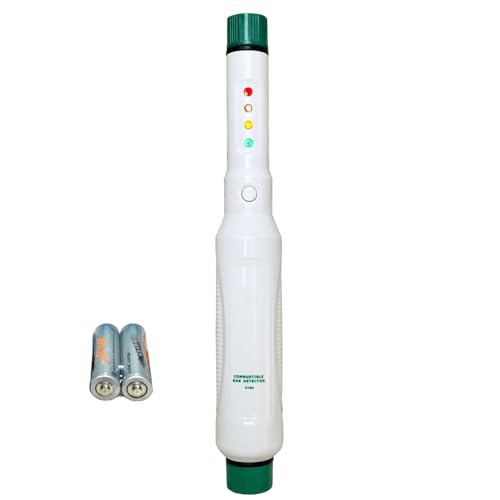
Gas Leak Detector with Audible/Visual Alarm
Portable gas leak detectors with audible and visual alarms work well for RV owners who need quick, reliable propane detection while traveling. This lightweight wand-style detector identifies natural gas, propane, and methane leaks instantly using a color-coded alert system: green indicates safe conditions, yellow signals small leaks, orange shows medium leaks, and red warns of significant leaks. Each level pairs with escalating audible alarms. The device features a 25-second self-test function, automatic shutdown, and sensor failure alerts. It operates on two AA batteries lasting approximately 16 hours. Replace the sensor cartridge annually for optimal performance, and avoid use in high humidity or temperatures exceeding 110°F.
- Detection Type:Multi-gas (natural gas, propane, methane)
- Form Factor:Portable handheld wand
- Power Source:2x AA batteries
- Alarm Response Time:Instant with multi-stage alerts
- Alarm Type:Escalating audible alarms + color-coded display (green/yellow/orange/red)
- Warm-up Time:25 seconds
- Additional Feature:Multi-stage color-coded alerts
- Additional Feature:Sensor failure self-testing alert
- Additional Feature:Annual sensor cartridge replacement
Safe T Alert 20 Series Mini LP Gas Alarm
The Safe T Alert 20 Series Mini LP Gas Alarm works best for RV owners who need dependable propane detection in travel trailers, fifth wheels, truck campers, and folding campers. This compact detector measures 3.5″W x 2.5″H x 1.25″D, fitting easily into tight spaces. It operates on 12V DC power without requiring batteries, drawing only 75mA for efficient long-term use. The alarm activates when propane or methane reaches below 25% LEL, triggering immediate alerts. Its mute button lets you safely ventilate your RV while the rapid recovery sensor reactivates if dangerous levels persist. Built for harsh conditions, it functions from -40°F to +158°F. Mount it using the included bracket on any interior surface.
- Detection Type:Propane/methane only
- Form Factor:Fixed hardwired RV detector
- Power Source:12V DC hardwired
- Alarm Response Time:<25% LEL activation
- Alarm Type:Audible alarm + mute button
- Warm-up Time:Not specified
- Additional Feature:Operates -40°F to +158°F
- Additional Feature:Alarm mute for ventilation
- Additional Feature:Rapid recovery sensor technology
Factors to Consider When Choosing RV Propane Leak Detectors
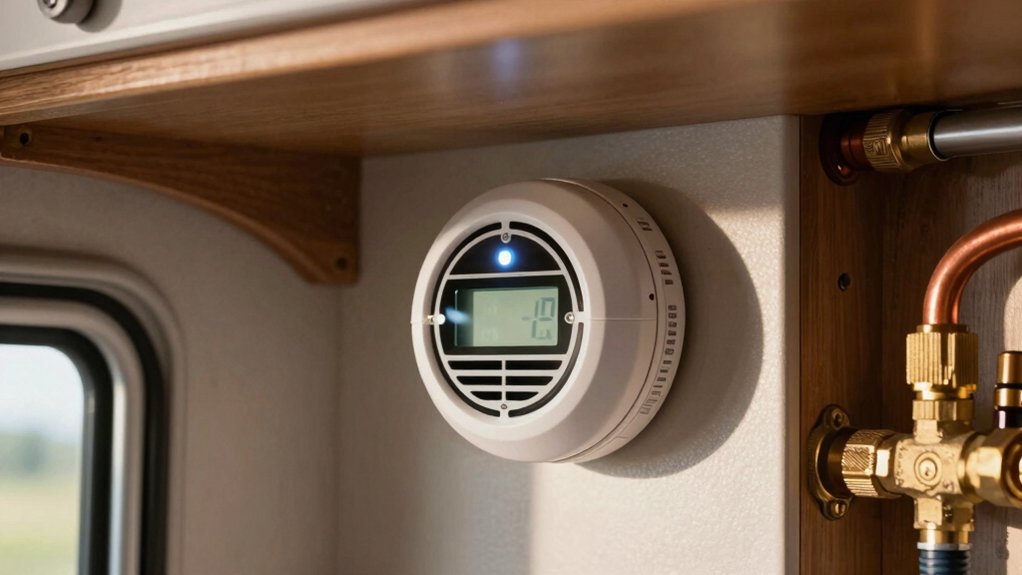
When you’re selecting an RV propane leak detector, you’ll need to evaluate five critical factors that directly affect your safety and the detector’s reliability. First, examine the detection range and sensitivity to ensure it covers your RV’s layout, then check the power source and installation requirements to confirm you can set it up properly in your vehicle. Next, consider whether you need dual gas detection capability for both propane and carbon monoxide, assess how quickly the alarm responds to leaks, and review the display and indicator features to make sure you’ll notice alerts immediately while driving or sleeping.
Detection Range And Sensitivity
How do you know if a propane leak detector will actually catch the small leaks before they become dangerous? You need to examine the detection range and sensitivity specifications. Most detectors operate between 50–1,000 ppm based on methane, or 1–10% LEL for proportional readings. These ranges tell you the minimum leak size the device can identify. Choose a detector with a range matching your safety needs. Additionally, check the response time—quality models react in 0.5 to a few seconds, allowing you to locate leaks quickly. A digital LCD or LED display showing real-time concentration readings helps you gauge leak intensity. For difficult-to-access areas in your RV, select units with adjustable sensitivity or extendable probes to maintain detection performance throughout your vehicle.
Power Source And Installation
Your RV propane leak detector’s power source and installation method directly affect its reliability and ease of use. Most detectors run on 12V DC, connecting directly to your RV’s electrical system. Battery-powered models offer portability and don’t require wiring, though you’ll need to replace AAA or AA batteries periodically. Allow 30 seconds to 3 minutes for warm-up before detection begins.
Installation varies by model. Plug-and-play connectors simplify wiring and eliminate tape wrapping. Lever-nut terminals also reduce complexity. Mount your detector flush or surface-mounted using brackets that fit standard screw hole spacings, making replacement straightforward.
Choose detectors with auto-shutoff features and low-battery indicators. These prevent false readings and alert you when power’s depleted, ensuring continuous protection throughout your travels.
Dual Gas Detection Capability
Combining propane and carbon monoxide detection into one unit simplifies your RV’s safety system and reduces the need for multiple devices. You’ll monitor both gases simultaneously without cross-interference between the independent sensing probes. Each gas receives its own dedicated detection mechanism, allowing separate readouts and alerts to trigger independently.
Look for detectors that display real-time measurements on a digital screen with escalating audible and visual alarms. Alarm thresholds typically activate around 5% LEL for propane and specified ppm levels for carbon monoxide, alerting you when concentrations reach critical points.
When evaluating dual detectors, verify that both sensors function simultaneously without compromising detection accuracy. This dual capability provides comprehensive protection against multiple leak sources in your RV while maintaining a streamlined monitoring setup.
Alarm Response Time
When you’re selecting an RV propane leak detector, the speed at which it alerts you matters critically—every second counts when hazardous gas is present. Look for models that offer response times of 0.5 to 2 seconds from gas detection to alarm activation. Many detectors include a 30-second warm-up period before they become fully operational, so account for this delay. Prioritize units with 85-decibel alarms combined with visual indicators like LCD displays or red LEDs that show real-time gas concentration changes. These visual signals let you monitor dangerous levels instantly. Check whether the detector features automatic recovery capabilities that re-alert you if gas levels spike again after initial detection. Faster response combined with visual confirmation gives you maximum warning time to evacuate safely.
Display And Indicator Features
How can you quickly identify dangerous gas levels in your RV when visibility is poor or you’re distracted? Look for detectors with digital displays showing real-time gas concentration readings, paired with color-coded alerts that transition from green to yellow to red as levels increase. Many models feature backlit LCD screens that remain visible in darkness, essential for nighttime safety checks. Dual-probe detectors provide separate LED indicators for carbon monoxide and propane, allowing you to immediately recognize which gas poses a threat. Combine visual indicators with 85 dB audible alarms that demand attention regardless of conditions. Select units with clear labeling and intuitive display layouts so you can interpret readings without confusion during emergencies.
Temperature Operating Conditions
Why does temperature matter for your RV propane detector’s performance? Operating conditions directly affect sensor accuracy and response time. Most detectors function between -40°F and 158°F, covering extreme travel scenarios. Check your unit’s temperature range before purchasing, especially if you camp in hot deserts or cold mountains. Some models require 20–30 second warm-up periods in cold conditions before detecting leaks reliably. Verify detection response time across the full temperature range, as certain devices offer rapid 0.5–2 second responses. Prolonged exposure to temperature extremes degrades sensors over time, so plan regular maintenance and sensor cartridge replacements. Select detectors rated for your typical travel destinations’ climate conditions to ensure consistent, dependable protection year-round.
Sensor Lifespan And Maintenance
Beyond managing your detector’s performance across temperature swings, you’ll also need to track sensor longevity and upkeep schedules. Most propane detectors offer sensor lifespans exceeding 5 years, though some rely on replaceable cartridges requiring annual replacement to maintain accuracy. Check your detector’s warranty period—many manufacturers cover replacements up to 60 months, ensuring continued reliability without extra cost.
Plan regular maintenance by scheduling sensor cartridge changes yearly. Before each trip, run the 25- to 30-second startup self-test to verify functionality. If your detector combines semiconductor and electrochemical sensors, note that different sensor types drift at varying rates, affecting your replacement timeline. Review your specific model’s maintenance intervals in the manual and set reminders to replace components on schedule.
Mounting Flexibility And Compatibility
Installation flexibility matters because your RV’s layout and existing detector setup won’t match every unit you consider. You’ll find multiple mounting options: flush-mount brackets, surface-mount brackets (both long and short versions), and compatibility with standard screw hole spacings. Check your RV’s panel to determine which option works best for your space.
Many detectors fit directly into RV panels or 0.3-inch recesses for flush installation. Compare the hole spacing and panel design of your current detector with replacement models you’re evaluating. Manufacturers include mounting hardware—brackets, screws, and connectors—to support both flush and surface mounting.
Lever-nut connectors simplify wiring by eliminating tape, enabling quick installation. Verify that your chosen detector matches your RV’s existing footprint before purchasing.
Final Thoughts
You’ll protect your RV by selecting a detector matching your specific needs. Choose between plug-in models for permanent installation or portable units for flexibility. Install your detector near propane appliances and test it monthly using the self-test function. Replace batteries annually and check warranty coverage. Review manufacturer instructions before travel to ensure you’re operating the alarm correctly and can respond quickly if it activates.

Meet Ry, “TechGuru,” a 36-year-old technology enthusiast with a deep passion for tech innovations. With extensive experience, he specializes in gaming hardware and software, and has expertise in gadgets, custom PCs, and audio.
Besides writing about tech and reviewing new products, he enjoys traveling, hiking, and photography. Committed to keeping up with the latest industry trends, he aims to guide readers in making informed tech decisions.