
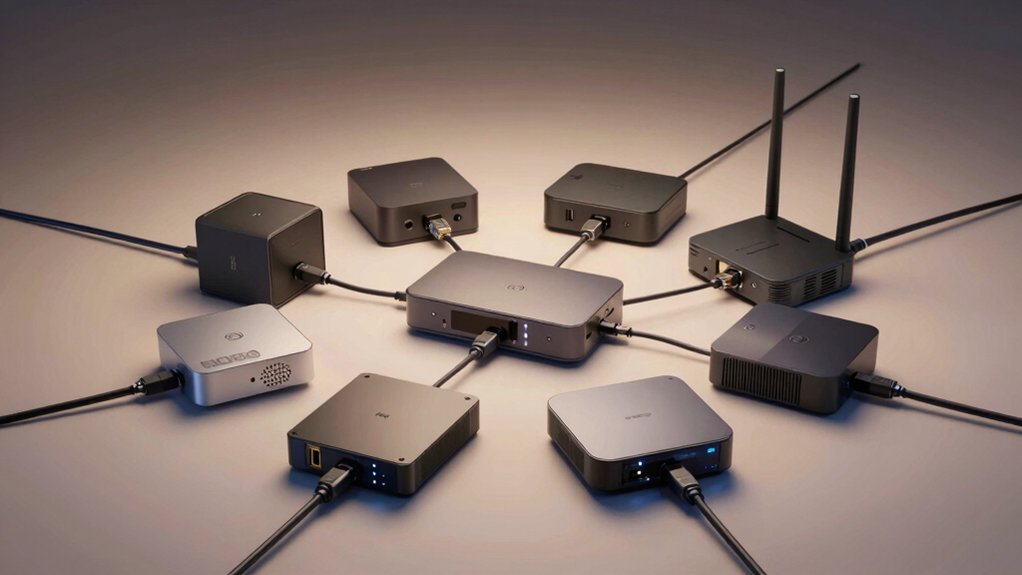

You need a WiFi extender with an Ethernet port when your current router doesn’t reach all corners of your home or office. These devices amplify your signal and provide wired connections for devices that demand stable speeds. TP-Link models dominate the market with reliable options at various price points. However, choosing the right extender depends on specific features you shouldn’t overlook—and we’ll break down exactly what matters next.
| TP-Link AC1200 WiFi Extender (RE315) |

| Best Budget Pick | Total Bandwidth: 1.2 Gbps | Coverage Area: Up to 1,500 sq ft | Maximum Devices Supported: Up to 30 devices | VIEW LATEST PRICE | Read Our Analysis |
| TP-Link AC1900 WiFi Range Extender RE550 |

| Best Coverage | Total Bandwidth: 1.9 Gbps | Coverage Area: Up to 2,100 sq ft | Maximum Devices Supported: Up to 32 devices | VIEW LATEST PRICE | Read Our Analysis |
| 2026 WiFi Extender Signal Booster 300Mbps |

| Most Affordable | Total Bandwidth: 300 Mbps | Coverage Area: Up to 9,999 sq ft | Maximum Devices Supported: 60+ devices | VIEW LATEST PRICE | Read Our Analysis |
| TP-Link WiFi Extender Dual Band (RE220) |
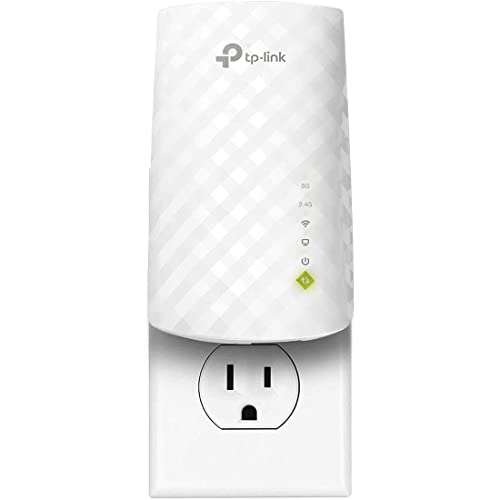
| Best For Small Spaces | Total Bandwidth: 733 Mbps | Coverage Area: Up to 1,200 sq ft | Maximum Devices Supported: Up to 30 devices | VIEW LATEST PRICE | Read Our Analysis |
| TP-Link BE3200 Wi-Fi 7 Range Extender (RE223BE) |
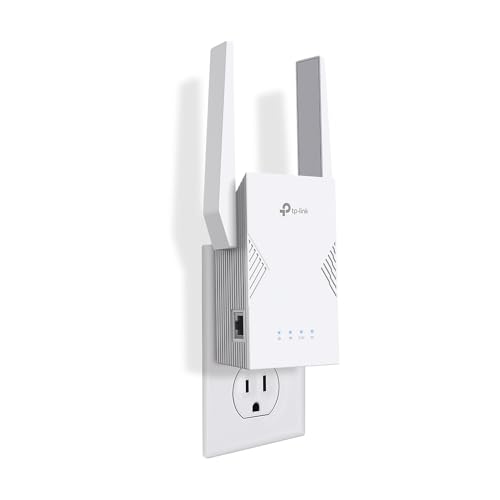
| Best Wi-Fi 7 | Total Bandwidth: 3.2 Gbps | Coverage Area: Up to 2,400 sq ft | Maximum Devices Supported: Up to 64 devices | VIEW LATEST PRICE | Read Our Analysis |
| 1200Mbps WiFi Extender Signal Booster Dual Band |

| Best Multi-Device | Total Bandwidth: 1.2 Gbps | Coverage Area: Up to 3,600 sq ft | Maximum Devices Supported: Up to 80 devices | VIEW LATEST PRICE | Read Our Analysis |
| 2026 AX3000 WiFi 6 Range Extender with Gigabit Ethernet |

| Best Performance | Total Bandwidth: 3 Gbps | Coverage Area: Up to 13,888 sq ft | Maximum Devices Supported: 100+ devices | VIEW LATEST PRICE | Read Our Analysis |
| TP-Link AX1500 WiFi 6 Range Extender |

| Best Reliable Choice | Total Bandwidth: 1.5 Gbps | Coverage Area: Coverage to eliminate dead zones | Maximum Devices Supported: Not specified | VIEW LATEST PRICE | Read Our Analysis |
| 2026 Fastest WiFi Extender & Signal Booster |

| Best Setup Speed | Total Bandwidth: Not specified | Coverage Area: Up to 10,000 sq ft | Maximum Devices Supported: Up to 80 devices | VIEW LATEST PRICE | Read Our Analysis |
| TP-Link N300 WiFi Extender (RE105) |
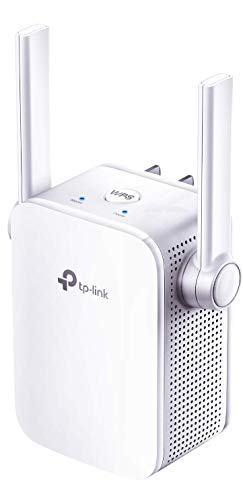
| Best Compact Design | Total Bandwidth: 300 Mbps | Coverage Area: Improved range via external antennas | Maximum Devices Supported: Not specified | VIEW LATEST PRICE | Read Our Analysis |
More Details on Our Top Picks
TP-Link AC1200 WiFi Extender (RE315)
If you’re looking for affordable coverage expansion without breaking your budget, the TP-Link RE315 delivers solid performance at a modest price point. This dual-band extender covers up to 1500 square feet and supports 30 devices simultaneously. It features one Ethernet port for wired connections, external antennas for improved signal strength, and One-Touch setup via the TP-Link Tether app. The RE315 offers 1.2 Gbps total bandwidth across 5 GHz and 2.4 GHz bands. It’s compatible with most routers and access points, though not with certain mesh systems like Deco. Use Adaptive Path Selection to automatically connect to your strongest signal. Installation takes minutes through the mobile app or manual setup.
- Total Bandwidth:1.2 Gbps
- Coverage Area:Up to 1,500 sq ft
- Maximum Devices Supported:Up to 30 devices
- Band Configuration:Dual-band (5 GHz, 2.4 GHz)
- WiFi Standard:802.11ac (WiFi 5)
- Ethernet Port:100 Mbps Ethernet port
- Additional Feature:Adaptive Path Selection technology
- Additional Feature:One-Touch Connection setup
- Additional Feature:EasyMesh-compatible mesh expansion
TP-Link AC1900 WiFi Range Extender RE550
The TP-Link RE550 delivers expansive coverage across up to 2,100 square feet. You’ll get dual-band performance with speeds up to 1,300 Mbps on 5 GHz and 600 Mbps on 2.4 GHz. The three adjustable external antennas let you optimize placement for your space. You can connect up to 32 devices simultaneously. Setup happens through the Tether app, which also manages firmware updates. The Gigabit Ethernet port connects wired devices for stable speeds, or you can use Access Point mode. Smart adaptive roaming automatically switches your connection to the strongest signal for seamless coverage throughout your area.
- Total Bandwidth:1.9 Gbps
- Coverage Area:Up to 2,100 sq ft
- Maximum Devices Supported:Up to 32 devices
- Band Configuration:Dual-band (5 GHz, 2.4 GHz)
- WiFi Standard:802.11ac (WiFi 5)
- Ethernet Port:Gigabit Ethernet port
- Additional Feature:Three adjustable external antennas
- Additional Feature:Smart adaptive roaming feature
- Additional Feature:Access Point mode capability
2026 WiFi Extender Signal Booster 300Mbps
JoyLantern’s most affordable 300Mbps extender works best for budget-conscious users seeking reliable coverage without premium pricing. The device extends WiFi across 9,999 square feet and supports 60+ devices simultaneously. You’ll appreciate the built-in Ethernet port for wired connections and the included access point mode. Setup takes minutes using the 1-tap feature. The extender broadcasts on the 2.4GHz band with WEP/WPA/WPA2 security protocols protecting your network. With 541 customer reviews averaging 4.6 stars, it delivers reliable performance for homes and small offices. The 30-day return policy and three-month warranty provide basic coverage.
- Total Bandwidth:300 Mbps
- Coverage Area:Up to 9,999 sq ft
- Maximum Devices Supported:60+ devices
- Band Configuration:Single-band (2.4 GHz)
- WiFi Standard:Not specified
- Ethernet Port:Ethernet port included
- Additional Feature:360-degree coverage design
- Additional Feature:Supports 60+ connected devices
- Additional Feature:Built-in Access Point mode
TP-Link WiFi Extender Dual Band (RE220)
TP-Link’s RE220 extender works well for compact living areas where you’re running out of router reach. This dual-band model covers up to 1200 square feet and connects 30 devices simultaneously using 802.11ac wireless standards. The Ethernet port lets you connect wired devices directly, eliminating WiFi dependency. Setup requires plugging the extender into a standard outlet near your router, then accessing the configuration menu through your browser or mobile app. The adaptive path selection automatically routes your connection through the strongest available band—2.4GHz or 5GHz—maintaining consistent performance. TP-Link backs this unit with a two-year manufacturer warranty and 24/7 technical support.
- Total Bandwidth:733 Mbps
- Coverage Area:Up to 1,200 sq ft
- Maximum Devices Supported:Up to 30 devices
- Band Configuration:Dual-band (5 GHz, 2.4 GHz)
- WiFi Standard:802.11ac (WiFi 5)
- Ethernet Port:Ethernet port with wired connection support
- Additional Feature:44% more bandwidth technology
- Additional Feature:Adaptive Path Selection (APS)
- Additional Feature:Tri-band backhaul options
TP-Link BE3200 Wi-Fi 7 Range Extender (RE223BE)
If you’re gaming, streaming, or managing a busy household that demands reliable whole-home coverage, consider the TP-Link RE223BE for its Wi-Fi 7 performance capabilities. This dual-band extender delivers 3.2 Gbps total bandwidth across 2.4 GHz and 5 GHz bands, covering up to 2,400 square feet and supporting 64 devices simultaneously. The built-in 1 Gbps Ethernet port connects directly to TVs, PCs, or gaming consoles for stable wired connections. Setup uses the Tether app, which includes a signal indicator to find optimal placement. EasyMesh compatibility allows seamless network expansion with compatible routers, while WPA3 security and two-factor authentication protect your network from unauthorized access.
- Total Bandwidth:3.2 Gbps
- Coverage Area:Up to 2,400 sq ft
- Maximum Devices Supported:Up to 64 devices
- Band Configuration:Dual-band (5 GHz, 2.4 GHz)
- WiFi Standard:WiFi 7
- Ethernet Port:1 Gbps Ethernet port
- Additional Feature:Wi-Fi 7 Multi-Link Operation
- Additional Feature:Four beamforming antennas
- Additional Feature:Supports up to 64 devices
1200Mbps WiFi Extender Signal Booster Dual Band
The Gorzhesua 1200Mbps WiFi Extender handles multiple devices simultaneously without sacrificing performance. You’ll receive 867Mbps on the 5GHz band and 300Mbps on the 2.4GHz band combined. Set it up using WPS one-button connection or manual configuration. Choose Repeater mode to expand your existing network wirelessly, or select AP mode to connect via the built-in Ethernet port for a dedicated hotspot. The four external antennas cover up to 3600 square feet and support 80 devices—smartphones, laptops, cameras, and gaming consoles. Security uses WPA/WPA2-PSK encryption. The extender works with virtually all routers using 802.11ac/a/b/g/n standards.
- Total Bandwidth:1.2 Gbps
- Coverage Area:Up to 3,600 sq ft
- Maximum Devices Supported:Up to 80 devices
- Band Configuration:Dual-band (5 GHz, 2.4 GHz)
- WiFi Standard:802.11ac (WiFi 5)
- Ethernet Port:100 Mbps Ethernet port
- Additional Feature:Four high-gain external antennas
- Additional Feature:Supports 80 simultaneous devices
- Additional Feature:Quick WPS one-button setup
2026 AX3000 WiFi 6 Range Extender with Gigabit Ethernet
Looking for superior performance that covers your entire home? The 2026 AX3000 WiFi 6 Range Extender delivers dual-band speeds of 600 Mbps on 2.4GHz and 2400 Mbps on 5GHz, supporting 8K streaming and high-speed gaming. Its four antennas expand coverage to 13,888 square feet while reducing dead zones. You’ll connect over 100 devices simultaneously using IEEE 802.11 standards compatible with smartphones, smart TVs, Fire Sticks, and Alexa devices. The gigabit Ethernet port provides wired connections up to 10x faster than standard options. Setup takes roughly three minutes via smartphone or browser—no app required. WEP/WPA/WPA2 security protocols protect your network.
- Total Bandwidth:3 Gbps
- Coverage Area:Up to 13,888 sq ft
- Maximum Devices Supported:100+ devices
- Band Configuration:Dual-band (5 GHz, 2.4 GHz)
- WiFi Standard:WiFi 6 (AX3000)
- Ethernet Port:Gigabit Ethernet port
- Additional Feature:8K streaming support capability
- Additional Feature:Gigabit Ethernet (10x faster)
- Additional Feature:Supports 100+ connected devices
TP-Link AX1500 WiFi 6 Range Extender
Want reliable coverage without sacrificing your wired connection speed? The TP-Link AX1500 WiFi 6 Range Extender (RE500X) delivers dual-band performance with a Gigabit Ethernet port for stable wired connections. This extender operates on 2.4 GHz and 5 GHz bands, reaching total bandwidth of 1.5 Gbps. Compatible with all WiFi-enabled devices and OneMesh systems, it connects to your existing router in minutes using the TP-Link Tether app. The intelligent signal indicator helps you position it optimally. Note that speeds may drop to 50% or less of your router’s speed, but improved reliability enhances overall performance in dead zones. The device includes security features as a CISA Secure-by-Design pledge signatory.
- Total Bandwidth:1.5 Gbps
- Coverage Area:Coverage to eliminate dead zones
- Maximum Devices Supported:Not specified
- Band Configuration:Dual-band (5 GHz, 2.4 GHz)
- WiFi Standard:WiFi 6 (AX1500)
- Ethernet Port:Gigabit Ethernet port
- Additional Feature:OneMesh compatible pairing
- Additional Feature:Intelligent signal placement indicator
- Additional Feature:CISA Secure-by-Design pledge
2026 Fastest WiFi Extender & Signal Booster
For households juggling multiple devices and tight installation schedules, this WiFi extender dominates with its rapid deployment capability. You’ll set it up in eight seconds by plugging it into an outlet, pressing WPS on both your router and extender, then repositioning it to your desired location. The device covers 10,000 square feet and connects eighty devices simultaneously using two high-gain antennas. An Ethernet port lets you hardwire additional equipment. Smart signal lights guide you toward optimal placement, while smartphone setup offers an alternative to WPS pairing. This straightforward approach eliminates WiFi dead zones without requiring complex configuration.
- Total Bandwidth:Not specified
- Coverage Area:Up to 10,000 sq ft
- Maximum Devices Supported:Up to 80 devices
- Band Configuration:Dual-band (5 GHz, 2.4 GHz)
- WiFi Standard:Not specified
- Ethernet Port:Ethernet port included
- Additional Feature:WPS one-touch pairing
- Additional Feature:8-second quick setup window
- Additional Feature:Smart indicator light system
TP-Link N300 WiFi Extender (RE105)
The TP-Link N300 WiFi Extender (RE105) delivers a compact wall-plug design that fits seamlessly into tight spaces where you need coverage expanded. This single-band 2.4 GHz extender works with any router, gateway, or access point. You’ll find setup straightforward using the TP-Link Tether app on Android or iOS. The device includes two external antennas with MIMO technology to improve range and reliability. An Ethernet port lets you connect wired devices for stable connections. Use the app’s signal indicator to locate the most suitable placement spot. TP-Link provides a 2-year warranty and round-the-clock technical support for assistance.
- Total Bandwidth:300 Mbps
- Coverage Area:Improved range via external antennas
- Maximum Devices Supported:Not specified
- Band Configuration:Single-band (2.4 GHz)
- WiFi Standard:802.11n (WiFi 4)
- Ethernet Port:Fast Ethernet port
- Additional Feature:Wall plug design format
- Additional Feature:MIMO antenna technology
- Additional Feature:2-year manufacturer warranty included
Factors to Consider When Choosing a WiFi Extender With an Ethernet Port
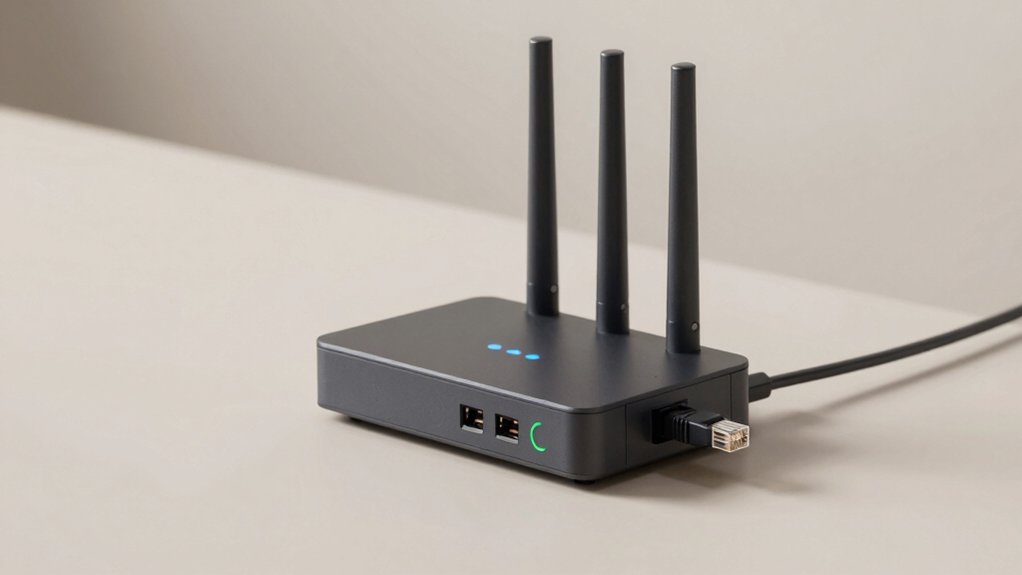
You’ll need to assess your coverage area to determine the extender’s range requirements, evaluate how many devices you plan to connect simultaneously, and confirm the unit supports your router’s WiFi standard. Next, match the extender’s speed and bandwidth capabilities to your internet plan, verify it’s compatible with your current router model, and check that it includes modern security standards like WPA3 encryption. These five factors—coverage, device capacity, speed, compatibility, and security—form the foundation for selecting an extender that’ll actually meet your household’s needs.
Coverage Area Requirements
How do you know whether one WiFi extender will work for your space, or whether you’ll need multiple units? Start by measuring your area in square feet. Most extenders cover between 1,200 and 13,888 square feet, so compare your home’s size to these ranges. If your space falls within a single extender’s coverage area, one unit typically suffices. However, if you have multiple dead zones separated by walls or distance, you’ll need several extenders placed strategically. Consider real-world conditions too—actual coverage often drops to 50% or less of advertised ranges due to obstacles and interference. This means a 13,888 square foot extender might effectively cover significantly less space. Map your problem areas first, then choose your extender quantity accordingly.
Device Capacity And Support
What matters most when selecting a WiFi extender—its ability to handle your devices or its connection quality? You need both. First, check the maximum device capacity listed in specifications, typically ranging from 30 to 64 devices. Count your household’s wired and wireless connections to match this limit. Next, verify dual-band support to prevent bottlenecks when multiple devices connect simultaneously across both frequencies. Look for extenders featuring EasyMesh or OneMesh compatibility, which expand capacity when paired with compatible routers. Finally, confirm the model supports Smart Adaptive Roaming or APS technology to maintain stable connections as your device count increases. This combination ensures your extender won’t become a performance limitation as your household grows.
Speed And Bandwidth Needs
Most WiFi extenders won’t deliver their advertised speeds in real-world conditions, so it’s critical to understand what bandwidth actually matters for your setup. Check the extender’s total PHY rate—this combined wireless speed indicates overall throughput potential. Look for Gigabit Ethernet ports (1000 Mbps), not 100 Mbps models, to maximize wired device speeds. If you’re connecting many 5 GHz devices, prioritize extenders offering 1200 Mbps or higher on that band to prevent contention with wired connections. For homes with numerous wired devices, select extenders supporting robust backhaul options like AP mode or dedicated wired backhaul. This setup maintains stable wired speeds across your network. Remember that placement and network conditions affect actual performance—advertised speeds reflect wireless capability only.
Compatibility With Your Router
Before you buy a WiFi extender, you’ll need to verify that it’ll work seamlessly with your existing router. Check your router’s wireless standard—802.11ac or 802.11ax—and confirm the extender matches it. If you’re building a mesh network, ensure the extender supports EasyMesh or OneMesh compatibility.
Next, verify that both devices use standard wireless bands: 2.4 GHz, 5 GHz, or both. Confirm the extender has a Gigabit Ethernet port for wired connections.
Then check security protocol compatibility. Your extender must support WPA, WPA2, or WPA3 encryption to match your router’s settings and protect your network.
Finally, review setup requirements. Look for one-tap pairing, WPS support, or a companion app that works with your router’s ecosystem. Universal compatibility claims indicate broader device support, though some mesh systems may remain incompatible.
Security Features And Standards
Prioritize extenders that support WPA3 encryption, the latest wireless security protocol that protects your network from unauthorized access and data interception. WPA2-PSK offers backward compatibility if your older devices don’t support WPA3 yet.
Next, verify the extender carries security certifications like FCC or RoHS compliance, which confirm safe operation and regular firmware updates. Check whether the manufacturer provides security pledges—such as TP-Link’s CISA Secure-by-Design commitment—indicating ongoing protection focus.
Review advanced security features the extender offers. Look for IP/MAC filtering to control which devices connect, two-factor authentication for account protection, and VPN compatibility for wired connections. These features add layers of defense against unauthorized network access and strengthen your overall security posture.
Ethernet Port Specifications
What speed do your wired devices need—100 Mbps or Gigabit? First, identify which devices you’ll connect via Ethernet: TVs, PCs, or gaming consoles. Next, check their speed requirements. Devices like standard streaming setups work fine with 10/100 Mbps ports. However, if you’re transferring large files or gaming competitively, you’ll need Gigabit (1 Gbps) ports. Third, examine the extender’s specs carefully. Manufacturers list this clearly—some offer standard Ethernet while others advertise Gigabit capability. Match the port speed to your fastest device’s needs. Remember, the Ethernet port won’t increase WiFi speeds between the extender and router, but it ensures stable wired connections. This separation matters: WiFi performance stays independent while your wired devices get dedicated bandwidth.
Setup Ease And Management
Since you’ll want your extender running quickly without technical hassles, setup ease and management features deserve careful attention. Many extenders offer mobile app setup through options like TP-Link Tether or one-touch WPS pairing with your router. Check whether your model supports EasyMesh or OneMesh, which simplify network expansion with compatible devices, or if it requires manual pairing instead. App-based management typically provides firmware updates, signal indicators for optimal placement, and device discovery features. A wired Ethernet port enables quick configuration and connects devices directly without wireless dependency. Some extenders include AP mode for wired-to-wireless bridging, eliminating the need for wireless pairing entirely. Evaluate these management tools based on your technical comfort level and network complexity before purchasing.
Budget And Warranty Options
Once you’ve settled on the setup and management features that match your technical skill level, you’ll need to evaluate the price tag and protection plan that fit your needs. Budget extenders typically cost under $40, while advanced Wi-Fi 7 or AXE models exceed $150. Compare each model’s features against its price to determine value. Check warranty length—most models offer 1 to 2 years of coverage, with some including extended protection or 24/7 technical support. Longer warranties often signal manufacturer confidence in reliability. Review the retailer’s return policy alongside the warranty terms. Calculate your total protection by combining both the manufacturer’s warranty and the store’s return window to ensure adequate coverage for your investment.
Final Thoughts
You’ll want to prioritize gigabit Ethernet ports, dual-band performance, and WPA3 security when selecting your extender. Check your home’s layout to determine coverage needs, then match that with models like the TP-Link RE550 or BE3200 for stronger performance. Verify compatibility with your router, confirm app availability, and ensure the placement location won’t create dead zones. Test your connection speed after installation to confirm it meets your requirements.

Meet Ry, “TechGuru,” a 36-year-old technology enthusiast with a deep passion for tech innovations. With extensive experience, he specializes in gaming hardware and software, and has expertise in gadgets, custom PCs, and audio.
Besides writing about tech and reviewing new products, he enjoys traveling, hiking, and photography. Committed to keeping up with the latest industry trends, he aims to guide readers in making informed tech decisions.