
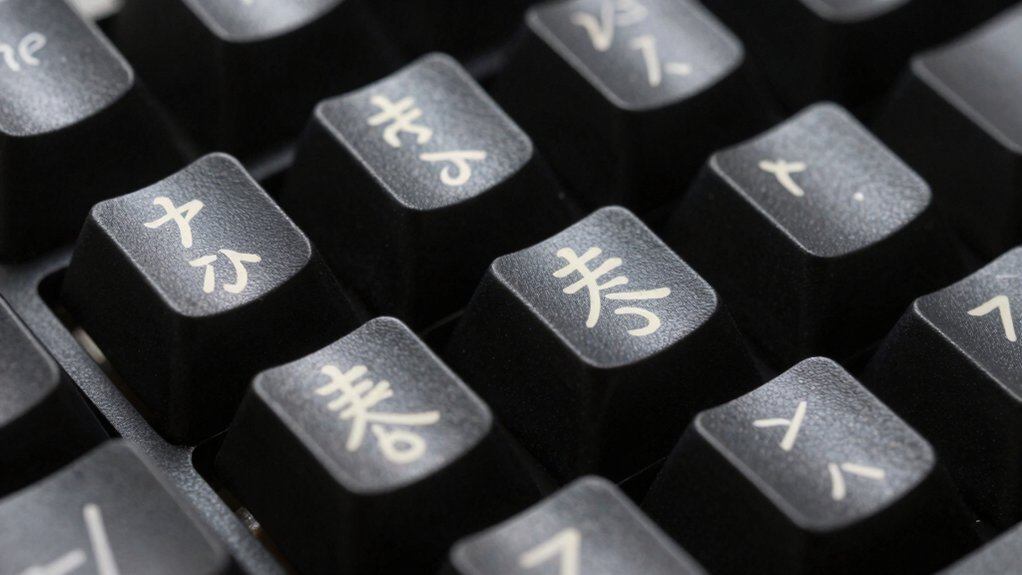

To pick the best Japanese Hiragana keycaps, start with durable PBT and clear dye-sub legends. Consider these five options: XVX Black PBT 146-key set, Gliging 135-key White Minimalist, Japanese 133-key PBT, XVX White MOA 137-key, and Tsungup 134-key Cherry Profile. Check compatibility by keyboard size (60%–100%), layout (ANSI/ISO), and MX stems. Verify cross-shaped stems, stabilizers, and profile comfort. Prioritize high-contrast, white-on-black legends and cohesive accents for a Japanese aesthetic; more specifics follow.
| XVX Black PBT Keycaps 146 Cherry MX Compatible Set |

| Best Overall | Material: PBT keycaps | Profile: Cherry profile | Compatibility: MX switches; wide keyboard compatibility | VIEW LATEST PRICE | Read Our Analysis |
| Gliging 135 Keys PBT Keycaps White Minimalist |
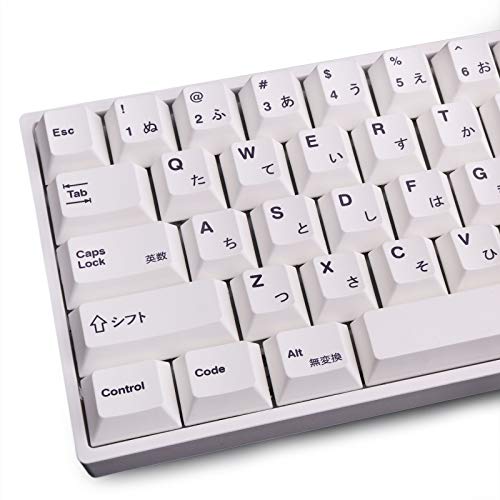
| White Minimalist | Material: PBT keycaps | Profile: Cherry profile | Compatibility: 60% to 100%, cross-stem; backlit or non-backlit | VIEW LATEST PRICE | Read Our Analysis |
| Japanese Keycaps 133 Keys PBT Cherry Profile Keyboard Compatible |
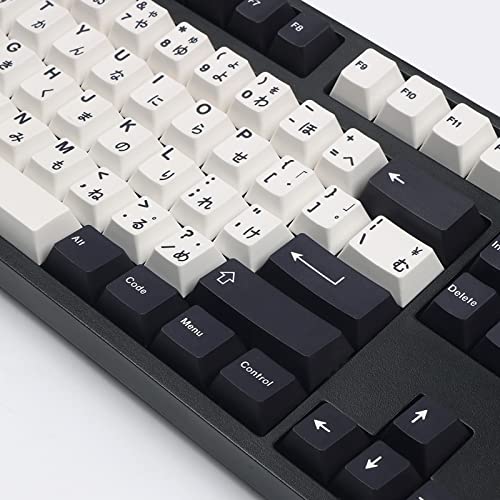
| Classic Japanese Mix | Material: PBT keycaps | Profile: Cherry profile | Compatibility: 61/87/104/108 keyboards; cross-shaped stems | VIEW LATEST PRICE | Read Our Analysis |
| XVX PBT Keycaps: White MOA Profile Keyboard Set |

| MOA Profile Focus | Material: PBT keycaps | Profile: MOA profile | Compatibility: 60%–100% keyboards; US/UK layouts | VIEW LATEST PRICE | Read Our Analysis |
| Tsungup Cherry Profile Keycaps for Cherry MX Keyboard |

| NightSakura Comfort | Material: PBT keycaps | Profile: Cherry profile | Compatibility: 60%–100% US MX keyboards | VIEW LATEST PRICE | Read Our Analysis |
More Details on Our Top Picks
XVX Black PBT Keycaps 146 Cherry MX Compatible Set
The XVX Black PBT Keycaps set is the best choice if you want a durable, low-gloss look with reliable longevity across a wide range of keyboards. You examine compatibility first: this set fits ANSI/ISO layouts and 60% to 100% keyboards with MX stems. Next, check material and durability: PBT with a matte texture and anti-grease coating resists wear and high temps. Then review the 146-key 구성: 108 standard keys plus 38 extras, plus a keycap puller. Finally, confirm packaging: blister and carton, note that a keyboard isn’t included. Choose Cherry Profile for comfort.
- Material:PBT keycaps
- Profile:Cherry profile
- Compatibility:MX switches; wide keyboard compatibility
- Number of Keys:146 keys
- Finish/Coating:Anti-grease coating; double-shot legends
- Aesthetic Theme:Black with white accents
- Additional Feature:Anti-grease coating
- Additional Feature:Double Shot legends
- Additional Feature:Includes keycap puller
Gliging 135 Keys PBT Keycaps White Minimalist
If you’re building a minimalist, white-on-white aesthetic for a larger keyboard, consider the Gliging 135 Keys PBT Keycaps in White Minimalist for compatibility and a clean look. You choose 135 keys: 108 keys plus 27 modifiers. The keycaps use dye-sub PBT with an anti-grease coating for durability and smooth typing. They fit 60%, 65%, 75%, 100% keyboards and about 90% of 61/87/104/108 layouts. Use cross-shaped stabilizers for most switches, and install easily. The set supports backlit or non-backlit keyboards, with a white cherry profile for a clean, minimalist result.
- Material:PBT keycaps
- Profile:Cherry profile
- Compatibility:60% to 100%, cross-stem; backlit or non-backlit
- Number of Keys:135 keys
- Finish/Coating:Anti-grease coating; dye-sub legends
- Aesthetic Theme:White minimalist
- Additional Feature:Dye-sub PBT durability
- Additional Feature:Backlit or non-backlit compatible
- Additional Feature:135-key family (108 + 27 modifiers)
Japanese Keycaps 133 Keys PBT Cherry Profile Keyboard Compatible
Looking for a compatible, ready-to-use set? You will find the Japanese Keycaps 133 Keys PBT Cherry Profile ideal for many boards. It uses dye-sub PBT with a matte anti-grease coating and five-sided sublimation to prevent fading. The 1.5mm thick Cherry profile keycaps fit 61/87/104/108 keyboards, with cross-shaped stems for compatibility. This 133-key set includes stabilizers and covers ANSI US layout, compatible with GH60, GK64, GK61, and 68/87/104 boards. Note: only keycaps are included, not a keyboard. Check dimensions (8.15 x 5.59 x 2.01 inches) and weight (12.6 oz). Warranty details are linked by the seller.
- Material:PBT keycaps
- Profile:Cherry profile
- Compatibility:61/87/104/108 keyboards; cross-shaped stems
- Number of Keys:133 keys
- Finish/Coating:Dye-sub PBT; anti-grease coating
- Aesthetic Theme:Black and white minimalist
- Additional Feature:Five-sided sublimation
- Additional Feature:1.5mm thick PBT
- Additional Feature:Stabilizers included
XVX PBT Keycaps: White MOA Profile Keyboard Set
Choose the XVX PBT Keycaps: White MOA Profile Keyboard Set when you want a durable, low-friction option that preserves a clean, classic look while supporting a wide range of layouts. This 137-key set fits 100%, 75%, 65%, and 60% boards. MOA profile provides even typing sound, with simple yet enjoyable accent keys. Enjoy durable PBT material, textured surface, and resistance to wear, friction, and solvents. Dye sublimation ensures vivid, oil-stain resistant colors and long life. Bow style offers a classic white-and-black look, and compatibility covers US/UK layouts across many keyboard sizes. Includes keycap set, key puller, 18-month warranty.
- Material:PBT keycaps
- Profile:MOA profile
- Compatibility:60%–100% keyboards; US/UK layouts
- Number of Keys:137 keys
- Finish/Coating:Dye sublimation; anti-grease textured
- Aesthetic Theme:White with black accents
- Additional Feature:MOA profile sound balance
- Additional Feature:137-key set
- Additional Feature:Bow style design
Tsungup Cherry Profile Keycaps for Cherry MX Keyboard
Tsungup Cherry Profile Keycaps are a solid choice if you want comfortable, durable typing on Cherry MX keyboards while exploring a Japanese Hiragana set. You will find 134 keys, including a 7U spacebar, compatible with 60% to 100% MX layouts. Use PBT material for durability, anti-grease, and heat resistance, with dye sublimation for long-lasting graphics. Install the keycap set on your MX switches, verify fit, and test each row for alignment. Expect higher contact surface for comfort and durable visuals. If you need support, contact the seller; warranty information is available via the product page.
- Material:PBT keycaps
- Profile:Cherry profile
- Compatibility:60%–100% US MX keyboards
- Number of Keys:134 keys
- Finish/Coating:Dye sublimation; anti-grease
- Aesthetic Theme:NightSakura themed (Japanese night)
- Additional Feature:7U spacebar compatibility
- Additional Feature:Dye sublimation graphics
- Additional Feature:134 keys total
Factors to Consider When Choosing Japanese (Hiragana) Keycaps
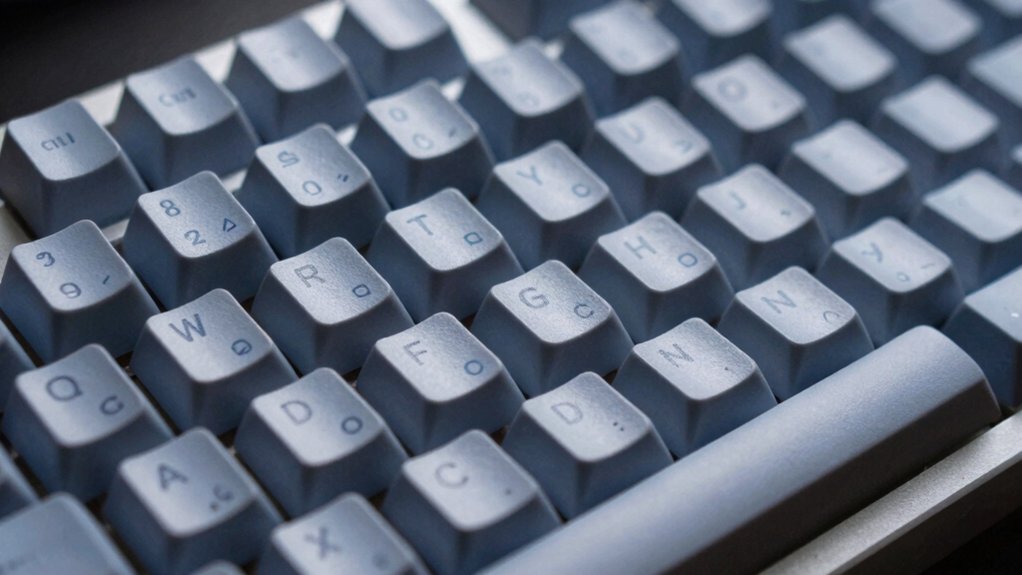
Consider material durability, compatibility with your layout, and the keycap profile that fits your typing style, then choose a option that balances these factors. Assess printing method longevity by checking legends on the keycaps and, if possible, compare PBT versus ABS finishes for wear resistance and shine. Align the overall aesthetic with your keyboard’s theme and verify any required colorways or sets before purchasing, with concrete examples like standard ANSI/ISO layouts and common Hiragana printing styles.
Material Durability Considerations
Durability matters most when selecting Hiragana keycaps, so start by understanding your material options and how they perform over time. You prefer PBT for longevity, due to matte texture, anti-grease coating, and resistance to wear, heat, and solvents. Consider double-shot or dye-sub legends; both stay legible, but double-shot guarantees legends never wear off. Dye-sub boosts color longevity and reduces cracking or fading of symbols over time. Look for anti-grease coatings to minimize finger oil buildup, preserving texture and legibility. For durability, choose 1.5 mm or thicker PBT and five-sided sublimation design to further reduce wear. Evaluate total life cycle, replacement costs, and availability, then prioritize sets using robust PBT with durable legends and an anti-grease finish for long-term use.
Compatibility With Layouts
Start by confirming the layout you plan to use and then match keycap compatibility to that configuration. Japanese Hiragana keycaps are designed for ANSI/ISO layouts across 60% to 100% keyboards, so first identify your board’s layout. Check if your keyboard uses MX-stem (Cherry MX-compatible) switches, as most sets specify MX-stem compatibility. Verify the keycap count—133, 135, or 146 keys—to ensure you cover all required modifiers for your layout, including US or UK variants. Assess backlight needs: if your keyboard is backlit, ensure the set supports backlighting and dye-sub legends for durability. Look for notes listing 61/87/104/108 keyboards and regional layouts, confirming the target configuration matches your device before purchase. Finally, compare compatibility notes to your specific plate and stabilizers for a secure fit.
Keycap Profile Appeal
To pick a Hiragana keycap set that fits your layout, start by selecting a profile that matches your typing feel and comfort needs. Consider Cherry profile if you want a higher top surface and a curved contour for extended sessions. This can influence how your fingers rest and slide between keys. For durability and legibility, choose dye-sub or double-shot PBT to keep legends from fading with wear, especially on frequent characters. Dye-sub PBT provides long-lasting legends with an anti-grease coating, reducing print wear and finger oil buildup. Some sets use five-sided sublimation to further prevent fading across years. A matte PBT texture reduces slip and delivers a premium, durable typing feel. Align profile with your keyboard height and personal grip.
Printing Method Longevity
Dye-sub printing embeds the Hiragana legend into the keycap surface, which makes it highly resistant to wear from finger oils and repeated presses. You should compare longevity by method: dye-sub embeds into the surface, enhancing durability; double-shot PBT uses legends formed in the inner layer, so they never wear off. Consider five-sided sublimation and dye-sub processes for better resistance to fading versus simple ink printing. Evaluate how both dye-sub and double-shot maintain legibility under long-term use, even with high-temperature exposure and solvent contact. Anti-grease coatings on PBT keycaps further protect printed legends by reducing print wear and oil buildup. Choose dye-sub for high-traffic keys, or double-shot for guaranteed legend permanence across years. Verify compatibility with your keyboard and cleaning routine.
Aesthetic Theme Alignment
Choosing the right aesthetic for Japanese Hiragana keycaps starts with matching the look to your setup. Start with a Japanese-inspired theme: opt for minimalist black-and-white schemes or subtle color accents that complement Hiragana labels. Choose Cherry profile or OEM-like heights to keep comfortable typing while preserving the theme. Select dye-sub or double-shot PBT construction to keep legends durable and legible over time. Prioritize keycap sets with clean, high-contrast legends, such as white on black, to improve readability against the base color. Use accessories or complementary keycaps, like white accents or accented modifiers, to reinforce the Japanese aesthetic without clutter. Verify compatibility with your keyboard layout and consider how the theme will align with desk art and peripherals.
Final Thoughts
To choose, compare keycap sets by compatibility, size, and profile. Start by confirming your keyboard’s switch type and layout, then verify if the set is Cherry MX compatible and matches your needed keys (e.g., 146, 133, 135). Assess material and finish (PBT, dye-sublimated Hiragana), and profile (Cherry, MOA). Decide on color and design, then check availability and price. Finally, purchase a trusted option and install step-by-step, testing each key.

Meet Ry, “TechGuru,” a 36-year-old technology enthusiast with a deep passion for tech innovations. With extensive experience, he specializes in gaming hardware and software, and has expertise in gadgets, custom PCs, and audio.
Besides writing about tech and reviewing new products, he enjoys traveling, hiking, and photography. Committed to keeping up with the latest industry trends, he aims to guide readers in making informed tech decisions.