


Here are five top pet robot dogs that feel like real pups: Robot Pet Dog with AI ChatGPT-4o Companion, Joy For All Ageless Innovation Companion Pet Dog, Dwi Dowellin Robot Dog — Interactive RC Toy, Smart Robot Dog with Voice Control and 30+ actions, and Robo Pets RC Robot Dog Toy (Blue). Compare lifelike interaction, two-way chat, heartbeat simulations, durability, kid-safe design, and charging options. Pick the model matching your needs, then explore setup steps; more details await if you keep reading.
| Robot Pet Dog with AI ChatGPT-4o Companion |

| Best Smart Companion | Remote/Control Option: Voice command and app control with auto-charging | Interactive Actions: Chasing, fetching, interactive home activities | Learning/Programming: App-based games and quizzes | VIEW LATEST PRICE | Read Our Analysis |
| Joy For All Ageless Innovation Companion Pet Dog |

| Senior Comfort Pick | Remote/Control Option: Remote-controlled/voice-responsive | Interactive Actions: Lifelike reactions (barkBack, heartbeat, motion/ touch responses) | Learning/Programming: No explicit programming; therapeutic features | VIEW LATEST PRICE | Read Our Analysis |
| Dwi Dowellin Robot Dog — Interactive RC Toy |
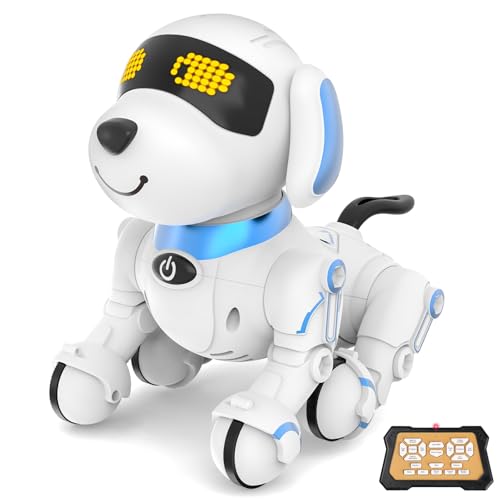
| Kids’ Interactive RC | Remote/Control Option: Remote control via dedicated controller | Interactive Actions: Tells stories, dances, sings, imitates sounds | Learning/Programming: Programmable actions via remote; sequence programming | VIEW LATEST PRICE | Read Our Analysis |
| Smart Robot Dog: Voice Control 30+ Actions App Programmable |

| STEM-Driven Play | Remote/Control Option: Voice control, app programming, or remote | Interactive Actions: 30+ actions including dances and tricks | Learning/Programming: APP programming with custom action sequences | VIEW LATEST PRICE | Read Our Analysis |
| Robo Pets RC Robot Dog Toy (Blue) |

| Easy Gestures Fun | Remote/Control Option: Remote control with gesture modes | Interactive Actions: Walking, sitting, dancing, tricks | Learning/Programming: STEM program treats to teach basic programming | VIEW LATEST PRICE | Read Our Analysis |
More Details on Our Top Picks
Robot Pet Dog with AI ChatGPT-4o Companion
The Robot Pet Dog with AI ChatGPT-4o Companion is the best choice if you want a near-real pup that can chat in real time while managing your home tasks. You’ll set it up by placing the dock in an open area, then connect to the home network. Ensure the camera surfaces stay clean and the room is well lit for best sensing. Use voice commands via Amazon Lex and ChatGPT for real-time responses, and enable daily routines with auto-charging routes. Monitor tasks remotely through the app, and keep the device updated for improved charging and reliability.
- Remote/Control Option:Voice command and app control with auto-charging
- Interactive Actions:Chasing, fetching, interactive home activities
- Learning/Programming:App-based games and quizzes
- Age/ user suitability:All ages (household companion)
- Power/Charging:Auto-charging dock; ~2.5 hours charge
- Sensory/Feedback:Built-in microphone/speaker; camera for recognition
- Additional Feature:Auto-Charging Route System
- Additional Feature:Real-time face recognition
- Additional Feature:Remote mobile hotspot
Joy For All Ageless Innovation Companion Pet Dog
Consider this option if you’re seeking a pet robot dog designed for seniors with Alzheimer’s or dementia care; Joy For All Ageless Innovation Companion Pet Dog features a lifelike heartbeat and soft-touch coat that respond to motion, touch, and voice. You’ll learn its purpose: provide comfort, companionship, and playful interaction. It uses built-in sensors and speakers to trigger lifelike reactions like head tilts, tail wags, barks, and heartbeat. Activate BarkBack by voice, and pet it to feel heartbeat. Benefits include reduced loneliness, easier mood improvement, and engagement with caregivers. Dimensions are compact, batteries included, model A9108. Consider care setting fit and warranty.
- Remote/Control Option:Remote-controlled/voice-responsive
- Interactive Actions:Lifelike reactions (barkBack, heartbeat, motion/ touch responses)
- Learning/Programming:No explicit programming; therapeutic features
- Age/ user suitability:Seniors (caregiving focus)
- Power/Charging:Battery-powered (AA/C batteries as needed for sensors); no dock
- Sensory/Feedback:Heartbeat, warmth, motion/sound responses
- Additional Feature:Heartbeat sensation on touch
- Additional Feature:BarkBack voice response
- Additional Feature:Realistic heartbeat and coat
Dwi Dowellin Robot Dog — Interactive RC Toy
This interactive RC toy stands out for kids aged 8–12 who want a robot dog that talks, dances, and teaches, all controlled by a simple remote. You use the remote to command actions, including walking, sitting, dancing, and storytelling. Program sequences by pressing the programming key and selecting actions in order. The toy responds to chin touch with different actions and sounds, and it can imitate six animal noises. It teaches English, sings nursery rhymes, and tells stories, while offering interactive movements that promote social skills. Made from safe ABS, it runs over 60 minutes per charge.
- Remote/Control Option:Remote control via dedicated controller
- Interactive Actions:Tells stories, dances, sings, imitates sounds
- Learning/Programming:Programmable actions via remote; sequence programming
- Age/ user suitability:Kids 8–12
- Power/Charging:Rechargeable battery; USB charging
- Sensory/Feedback:Touch-responsive (chin touch), sounds
- Additional Feature:Programmable action sequences
- Additional Feature:Chin touch responses
- Additional Feature:6 animal sounds imitation
Smart Robot Dog: Voice Control 30+ Actions App Programmable
A smart choice for budding technophiles is the Smart Robot Dog, which combines voice control, 30+ actions, and an app-based programming interface to teach robotics in a hands-on way. You can use English voice commands, a touchscreen app, or a physical remote to control actions. Access 30+ actions, from Kung Fu to handshakes, and design sequences in the app to build logic for robotics. The app, available on iOS and Android, supports language options and safe parental controls. The device charges via USB-C in 1.5 hours and runs about six hours on a full battery.
- Remote/Control Option:Voice control, app programming, or remote
- Interactive Actions:30+ actions including dances and tricks
- Learning/Programming:APP programming with custom action sequences
- Age/ user suitability:Kids 6+ (STEM learning)
- Power/Charging:USB-C charging; 1.5 hours charge
- Sensory/Feedback:Sound, motion responses; tactile/voice cues
- Additional Feature:STEM programming app
- Additional Feature:Language switching (CN/EN)
- Additional Feature:Auto-shutdown safety
Robo Pets RC Robot Dog Toy (Blue)
Robo Pets RC Robot Dog Toy (Blue) stands out for young builders who want interactive learning with hands-on control. You power the dog with a rechargeable battery and a USB cable, then charge for about 1.5 hours before use. Use the remote to make it walk, sit, stand, or dance, and enable Gesture Mode for simple hand motions. In Adventure Mode, let the puppy navigate the room on its own, observing LED eyes lighting up as it moves. STEM treats teach basic programming by creating move sequences when fed, while the toy’s sounds and barks add feedback during play.
- Remote/Control Option:Remote control with gesture modes
- Interactive Actions:Walking, sitting, dancing, tricks
- Learning/Programming:STEM program treats to teach basic programming
- Age/ user suitability:Kids 3+
- Power/Charging:1 x 3.7V rechargeable battery; USB charging
- Sensory/Feedback:LED eyes, motion gestures, sounds
- Additional Feature:Gesture Mode control
- Additional Feature:Adventure mode roaming
- Additional Feature:LED eyes illumination
Factors to Consider When Choosing Pet Robot Dogs
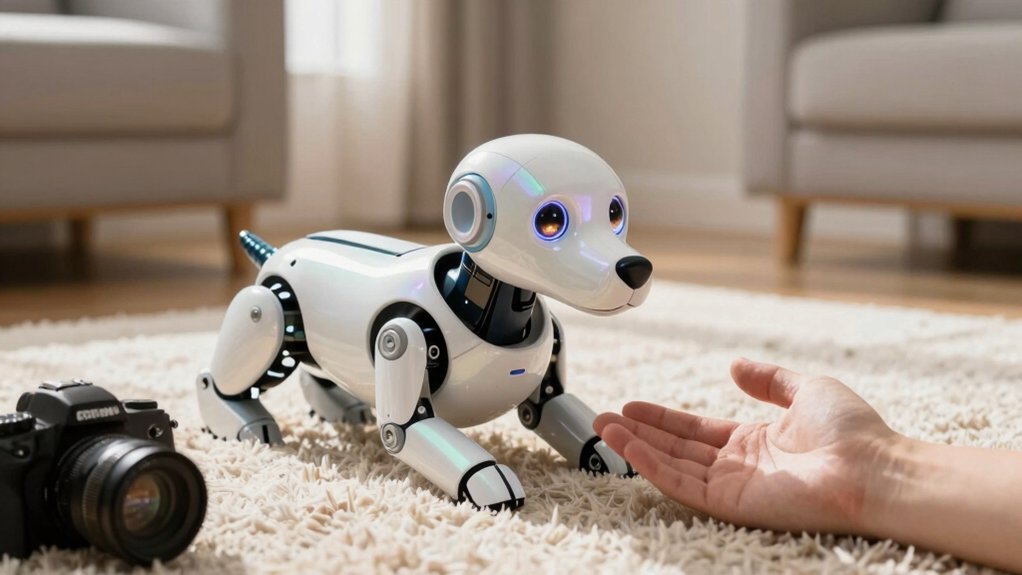
When choosing a pet robot dog, start with the Feature Set Overview to match core functions like motion, sound, and sensors to your needs. Assess Usability and Safety by checking simple setup, kid-friendly controls, and built-in safety features, then compare how easy it is to clean and store. Evaluate Interaction Capabilities, Power and Autonomy, and Learning and Programming to see how the dog responds, how long it runs between charges, and whether you can customize behaviors or routines.
Feature Set Overview
Start by identifying the core interaction options. You should look for a sound instruction set that includes voice commands, app control, and remote options to maximize how you interact with the dog. Next, check programming capabilities, such as sequence actions and app-based updates, to allow growth in your skills and features. Then assess sensing and interactivity, including motion, touch, and lifelike reactions like heartbeat or responsive cues, to ensure engaging experiences. Consider charging and battery factors, noting charging time, runtime, and auto-return to dock for convenient day-to-day use. Finally, evaluate safety and durability, focusing on non-toxic materials and auto-shutdown on impact to suit the intended age and environment.
Usability And Safety
To choose a pet robot dog that fits your needs, start by checking usability options and safety features in straightforward terms. First, review materials; ensure non-toxic, durable plastics with smooth surfaces to minimize snagging or injury during play. Next, examine safety systems; prioritize auto-shutdown on impact or collisions to protect motors and users. Then, verify controls; ensure age-appropriate design and interfaces—voice, app, or remote—that match your abilities to prevent misuse or frustration. Also assess sensor reliability; test motion, touch, and depth sensors, and clean sensor surfaces for consistent sensing in typical environments. Finally, check power behavior; review battery life, charging time, and auto-return charging to avoid interruptions or hazards during use.
Interaction Capabilities
Interaction capabilities determine how you engage with a pet robot dog and should be evaluated before purchase. Begin by assessing real-time conversation, voice command response, and the ability to recognize faces or gestures to tailor responses. Check whether the model supports heartbeat or tactile feedback to simulate lifelike interactions and comfort. Review the range of interactive actions, such as walking, dancing, head tilts, and tail wagging, and confirm they’re triggered by voice, remote, or gesture inputs. Examine multi-modal input options—voice, touch, remote, and app—for versatility in different environments. Look for learning-oriented interactions that offer programming sequences or STEM-based actions to extend engagement beyond basic responses. Prioritize stability, ease of use, and clear documentation.
Power And Autonomy
When evaluating Power and Autonomy, start by checking the battery type and capacity to estimate runtime between charges, noting typical play times in the 40–60 minute range for rechargeable packs. Next, review charging time and dock accessibility, since rapid recharging, often 1.5–2.5 hours, enables quicker return to play. Then assess autonomous features like auto-charging routing and return-to-dock behavior to maintain uptime without manual intervention. Evaluate supported power modes and efficiency, including energy-saving idle states or auto-shutdown during collisions to extend battery life. Finally, consider how many rooms or spaces the robot can operate in on a single charge, factoring in mobility routing and range capabilities. Use this to compare models directly.
Learning And Programming
You’ll want to evaluate the learning and programming capabilities alongside power and autonomy to ensure ongoing engagement. Begin by checking built-in programming interfaces, such as app-based or remote programming, to design action sequences and basic logic that support STEM learning. Verify programmable action counts and the supported languages or blocks, which show how deeply you can customize robotics concepts. Ensure there are safe, age-appropriate tools, like kid-friendly apps and guided tutorials, aligned with the learner’s age and cognitive level. Prefer systems with progression features that grow from simple commands to more complex sequences to sustain long-term skill development. Confirm USB-C charging or fast-charge options and overall hardware durability so sessions aren’t interrupted by maintenance.
Caregiver Benefits
Caregiver benefits from pet robot dogs center on reducing loneliness, easing workload, and enhancing engagement for care recipients. You assess how lifelike interactions and responsive behavior support mood and social connection, then compare models based on these features. Two-way communication and heartbeat simulations stimulate cognition and engagement, which may ease caregiver workload by encouraging participation from care recipients. Look for units with clear prompts, reliable responsiveness, and adjustable interaction levels to match needs. Built-in sensors and touch responses create calming, interactive experiences that can lower agitation and anxiety for individuals with dementia or Alzheimer’s, improving daily routines. Consider remote monitoring or caregiver-facing apps to track activity and engagement, aiding coordination of care routines. Programs for aging populations target reduced caregiver stress and lower care costs while fostering meaningful connections.
Durability And Design
Durability and design play a key role in long-term performance, so start by checking construction before purchase. Look for durable, non-toxic ABS with smooth edges to withstand frequent handling and potential drops. Verify auto-shutdown or collision protection features to protect motors during impacts. Ensure the design supports safe charging access, such as dock-friendly bases or USB-C fast charging, to prevent wear on connectors. Check for reinforced joints or metal internal frames in areas of movement, like limbs and tail, to extend lifespan. Favor kid-safe aesthetics and tactile materials to maintain grip and reduce wear from grasping or play. Assess upgrade options and warranty coverage for ongoing reliability and support.
Final Thoughts
You should evaluate each pet robot dog option by start-to-finish steps. First, define your goals: basic companionship, learning, or programming. Then compare features: AI capability, interactivity, app control, and battery life. Next, check safety, durability, and price. Decide on required actions: test voice control, try programmable commands, or simulate daily routines. Finally, choose a model, set up the device, and establish use limits. If unsure, start with a basic model and upgrade later.

Meet Ry, “TechGuru,” a 36-year-old technology enthusiast with a deep passion for tech innovations. With extensive experience, he specializes in gaming hardware and software, and has expertise in gadgets, custom PCs, and audio.
Besides writing about tech and reviewing new products, he enjoys traveling, hiking, and photography. Committed to keeping up with the latest industry trends, he aims to guide readers in making informed tech decisions.