

Here are five AI laptops with NPUs you’ll want now: choose Acer Aspire 16 AI Copilot+ PC with AI NPU for a robust all‑rounder, or Acer Aspire 14 AI Copilot+ Laptop (16GB RAM, 1TB SSD) for portability with solid memory and storage. Consider Acer Aspire 14 AI Copilot+ with ARC 130V if you need ARC use, ASUS Vivobook 16 Copilot+ for a balanced build, or HP OmniBook 5 with Ryzen AI 7 350 for strong CPU/GPU mix. You’ll learn more after this.
| Acer Aspire 16 AI Copilot+ PC with AI NPU |
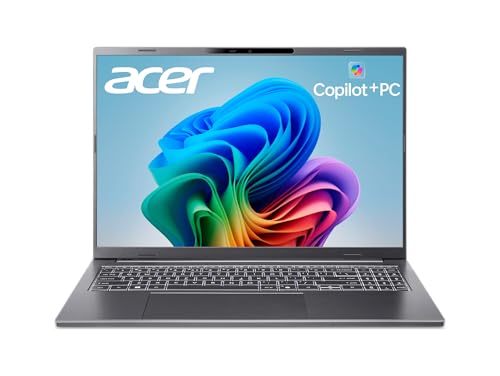
| Best Overall AI Copilot+ | AI Copilot+: Copilot+ integrated AI features with Recall, Click to Do, Windows Studio Effects | NPU/AI Engine: NPU 45 TOPs | Display Size: 16 inches | VIEW LATEST PRICE | Read Our Analysis |
| Acer Aspire 14 AI Copilot+ Laptop 16GB 1TB SSD |
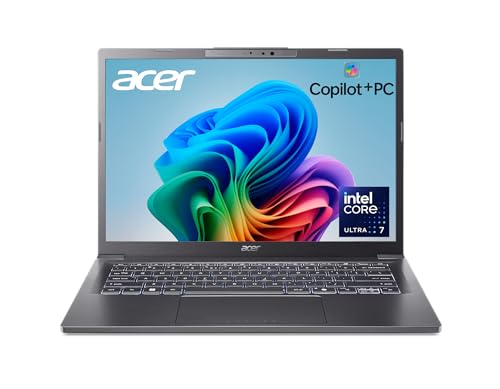
| High-Performance All‑Rounder | AI Copilot+: Copilot+ PC experiences with Recall, Click to Do, AcerSense | NPU/AI Engine: NPU up to 47 TOPs | Display Size: 14 inches | VIEW LATEST PRICE | Read Our Analysis |
| Acer Aspire 14 AI Copilot+ Laptop with ARC 130V |

| Portable Powerhouse | AI Copilot+: Copilot+ PC experiences with Recall, Click to Do, AcerSense | NPU/AI Engine: NPU up to 40 TOPs | Display Size: 14 inches | VIEW LATEST PRICE | Read Our Analysis |
| ASUS Vivobook 16 Copilot+ PC Laptop (16″) |

| Value Copa Copilot+ | AI Copilot+: Copilot+ PCs with Recall and Live Captions | NPU/AI Engine: AMD XDNA NPU up to 50 TOPS | Display Size: 16 inches | VIEW LATEST PRICE | Read Our Analysis |
| HP OmniBook 5 AI Copilot+ Laptop with Ryzen AI 7 350 |

| Creator-Centric AI Laptop | AI Copilot+: Copilot+ AI enhancements with AI acceleration and AcerSense | NPU/AI Engine: AMD XDNA NPU up to 50 TOPS | Display Size: 16 inches | VIEW LATEST PRICE | Read Our Analysis |
More Details on Our Top Picks
Acer Aspire 16 AI Copilot+ PC with AI NPU
The Acer Aspire 16 AI Copilot+ PC with AI NPU is best for users who need strong AI acceleration tied to everyday productivity. You power on the device and review its hardware: Snapdragon X1-26-100 with GPU up to 1.7 TFLOPs, a 45 TOPs NPU, 16GB LPDDR5X RAM, and a 512GB PCIe Gen 4 SSD. Use the AI Engine for tasks across CPU, GPU, and NPU. Enable Data privacy features for searches and past-content calls. Open Windows Studio Effects and Copilot+ apps, then use AcerSense to answer questions and optimize settings. Choose tasks, monitor performance, and adjust workloads for efficiency.
- AI Copilot+:Copilot+ integrated AI features with Recall, Click to Do, Windows Studio Effects
- NPU/AI Engine:NPU 45 TOPs
- Display Size:16 inches
- RAM:16GB LPDDR5X
- Storage:512GB PCIe Gen 4 SSD
- Connectivity:Wi‑Fi (unspecified) / general connectivity
- Additional Feature:Multi-touch capable display
- Additional Feature:120Hz WUXGA panel
- Additional Feature:AcerSense intelligent AI
Acer Aspire 14 AI Copilot+ Laptop 16GB 1TB SSD
If you need a capable AI laptop with strong NPUs for multitasking and AI workflows, the Acer Aspire 14 AI Copilot+ stands out with its up to 47 Tops NPU and 64 Tops GPU performance. You will set it up by confirming the 16GB RAM and 1TB SSD, then enable AI features like Recall (preview), Click to Do (preview), and Copilot+. Use AcerSense to optimize settings, improve communication, and streamline video presence. Expect all-day battery life up to 22 hours and smooth multitasking. The 14″ WUXGA display delivers vivid visuals, while the 180° hinge supports flexible usage. Connect via Wi‑Fi 6E and enjoy AI-assisted productivity.
- AI Copilot+:Copilot+ PC experiences with Recall, Click to Do, AcerSense
- NPU/AI Engine:NPU up to 47 TOPs
- Display Size:14 inches
- RAM:16GB LPDDR5X
- Storage:1TB SSD
- Connectivity:Wi‑Fi 6E
- Additional Feature:180° lie-flat hinge
- Additional Feature:Aluminum chassis design
- Additional Feature:AcerSense key access
Acer Aspire 14 AI Copilot+ Laptop with ARC 130V
Acer Aspire 14 AI Copilot+ Laptop with ARC 130V stands out for its Copilot+ integration and ARC 130V NPU, delivering AI-accelerated performance in a compact, portable form. You’ll use it for productivity, creativity, and security tasks. Check the specs: 16GB RAM, 512GB SSD, Intel ARC 130V, UP to 40 Tops NPU, 53 Tops GPU, Wi‑Fi 6E. Access Copilot+ features, Recall, and Click to Do as they roll out; expect Europe later in 2025. Enable AcerSense for quick AI settings. Rely on 14″ WUXGA display, 22-hour battery, and 180° hinge for versatile use scenarios.
- AI Copilot+:Copilot+ PC experiences with Recall, Click to Do, AcerSense
- NPU/AI Engine:NPU up to 40 TOPs
- Display Size:14 inches
- RAM:16GB LPDDR5X
- Storage:512GB SSD
- Connectivity:Wi‑Fi 6E
- Additional Feature:180° lie-flat hinge
- Additional Feature:All-day 22h battery
- Additional Feature:European rollout timing
ASUS Vivobook 16 Copilot+ PC Laptop (16″)
ASUS Vivobook 16 Copilot+ PC Laptop (16″) stands out for AI-heavy multitasking in a compact 16-inch package, thanks to its AMD Ryzen AI 5 340 processor with an integrated XDNA NPU that can reach up to 50 TOPS. You set up the device by confirming the 16GB RAM and 512GB SSD, then enable Copilot+ features for Recall and Live Captions. Use the 16-inch display for multitasking with 60Hz refresh and Radeon graphics accelerators. Connect via WiFi 6, Bluetooth 5.3, and optimize power with FastCharge. Plan up to 8 hours battery, adjust settings to balance AI workloads.
- AI Copilot+:Copilot+ PCs with Recall and Live Captions
- NPU/AI Engine:AMD XDNA NPU up to 50 TOPS
- Display Size:16 inches
- RAM:16GB RAM
- Storage:512GB PCIe 4.0 SSD
- Connectivity:WiFi 6
- Additional Feature:Quiet blue finish
- Additional Feature:60Hz 16-inch display
- Additional Feature:MIL-STD 810H tests
HP OmniBook 5 AI Copilot+ Laptop with Ryzen AI 7 350
The HP OmniBook 5 AI Copilot+ Laptop with Ryzen AI 7 350 stands out for users who need strong AI acceleration in a portable, all-around machine. You view its 16″ 2K display and 8-core Ryzen AI 7 350 processor, plus up to 50 TOPS AI on the XDNA NPU. You get discrete-level graphics for gaming and content creation, with AMD Radeon 860M. You check the 16:10, 1920×1200 IPS screen, 300 nits brightness, and FreeSync. You confirm 16 GB RAM, 1 TB SSD, and 128 GB external drive. You verify I/O: two USB-C, two USB-A, HDMI 2.1, Wi-Fi 6, Bluetooth 5.4.
- AI Copilot+:Copilot+ AI enhancements with AI acceleration and AcerSense
- NPU/AI Engine:AMD XDNA NPU up to 50 TOPS
- Display Size:16 inches
- RAM:16GB LPDDR5x
- Storage:1TB PCIe SSD
- Connectivity:Wi‑Fi 6, Bluetooth 5.4
- Additional Feature:2K 16″ display
- Additional Feature:128 GB external SSD included
- Additional Feature:Privacy camera/shutter features
Factors to Consider When Choosing AI Laptops With NPU
Focus on AI hardware balance first by matching CPU, GPU, and NPU power to your tasks, then compare NPU performance metrics like throughput and latency across models with clear benchmarks. Next, assess memory and storage by choosing ample RAM for multitasking and fast storage for quick data access, listing concrete sizes (e.g., 16GB RAM, 512GB SSD) as options. Finally, evaluate display and visuals for accuracy and comfort, plus battery life and portability to ensure you can work on the go, with steps to test real-world battery runtime and weight.
AI Hardware Balance
To balance AI performance, start by guaranteeing the laptop distributes work across CPU, GPU, and NPU so AI tasks don’t bottleneck the system. Allocate tasks so the CPU handles orchestration and light preprocessing, while the GPU handles parallel image and video work, and the NPU runs dedicated AI operations. Match NPU TOPS with memory bandwidth so real-time tasks stay smooth; for example, pair 40–50+ TOPS NPUs with high-speed memory like 16GB LPDDR5X. Assure GPUs offer parallel accelerations up to 64 TOPS for inference and model processing. Confirm memory size and speed keep models resident, reducing latency during recall and translation. Check power efficiency and cooling design align with AI loads to avoid throttling and battery drain during sustained work.
NPU Performance Metrics
When evaluating NPU performance, start by comparing peak TOPS to your real-world needs and budget. You then measure how NPU capacity stacks against combined CPU/GPU performance to gauge overall AI acceleration in tasks you run. Look for higher TOPS to enable faster inference in natural language processing, image recognition, and on-device video processing, but verify real-world use cases justify the gain. Consider architectural features like integrated memory and SIMD units, plus how software optimization through SDKs and compiler support boosts efficiency. Assess workload-specific TOPS usage, memory bandwidth, and data transfer overhead between CPU, GPU, and NPU, since these factors determine practical speedups. Use these steps to pick a laptop whose NPU aligns with your typical AI workloads and budget.
Memory And Storage
Memory and storage are key bottlenecks when using NPUs, so start by ensuring your laptop has ample RAM and fast storage. RAM is typically 16GB LPDDR5X in these AI laptops to support multitasking and NPU workloads, so verify this baseline. For storage, expect 512GB to 1TB PCIe SSD to balance speed and capacity for large models and datasets. Higher RAM and fast SSDs reduce bottlenecks when running AI acceleration alongside CPU and GPU tasks. If you need more space, look for models with 128GB external or integrated storage options to expand capacity. Check for NVMe PCIe Gen4 SSDs where listed, as they offer faster sequential read/write speeds for AI data pipelines. Ensure the configuration fits your workflow and budget.
Display And Visuals
Display quality directly affects how effectively you work with NPUs, so assess visuals as you compare models. Start with display size and shape: 14-inch or 16-inch panels are common, with 16:10 or 16:9 ratios. Look for WUXGA or 1920×1200 resolutions to maximize vertical content and sharp text for multitasking and notes. Check brightness around 300 nits for outdoor and bright-room use, and confirm color accuracy with 100% sRGB coverage for vibrant visuals. Ensure the panel supports smooth motion with 60 or 120 Hz refresh rates; higher rates improve video, gaming, and UI fluidity. Consider integrated AI display features like Live Captions, recall-enabled search, and AI-driven video presence optimization to streamline workflows.
Battery And Portability
Choose a model with solid all-day endurance that suits your daily routine. Start by evaluating battery life claims, noting models with up to 22 hours of AI Copilot+ use for long days. Check for FastCharge, such as 1 hour 20 minutes top-ups, to minimize downtime during travel. Consider portability features: 180° lie-flat hinges and a lightweight aluminum chassis improve on-the-go use and reduce fatigue. Look at display size and weight; compact 14- to 16-inch forms balance screen real estate with carry comfort. Be mindful that higher-resolution displays and AI workloads can reduce endurance, so confirm efficiency features and NPU offloads in practice. Prioritize a balanced package: battery life, portability, and practical charging options.
Software Features Access
Software features access hinges on how you use AI tools daily. You’ll see Copilot+ features like Recall (preview), improved Windows search, and Click to Do surface across NPUs to help you retrieve files and perform actions quickly. AcerSense adds AI-driven answers and setting optimization, so you access software features more smoothly on AI-enabled laptops. Access often depends on updates and regional availability, with Recall and Click to Do rollout timing noted as regional factors. Copilot+ PCs integrate AI acceleration for unified experiences across productivity, video presence, and conferencing through a common AI engine. Quick access is usually via a dedicated AcerSense key or similar hardware shortcut, so learn its location and use it for instant feature activation.
Build Quality And Thermals
When evaluating AI laptops with NPUs, start with build quality and thermals to ensure long-term reliability. Look for an aluminum chassis for durability and a slim profile suitable for on-the-go use, as seen in several Copilot+ laptops. Check sturdy hinges, often 180° lie-flat, to reduce stress on the chassis during frequent opening and closing. Assess cooling design: integrated cooling paths and heat dissipation must handle simultaneous CPU, GPU, and NPU activity to prevent throttling during AI tasks. Verify dedicated cooling solutions and EMI-conscious design that sustain heavy workloads. Note durability tests like MIL-STD-810H indicate resilience against temperature, shock, and vibration, reflecting stronger build quality expectations. Choose models that balance chassis rigidity, hinge reliability, and effective thermal management for sustained performance.
Connectivity And Ecosystem
A strong AI laptop with an NPU benefits from Wi‑Fi 6E or newer for low‑latency AI workloads and faster data transfer, essential for cloud-assisted analytics and model updates. Ensure your network supports stable, high‑throughput connections in real time. Check ecosystem compatibility: devices with integrated Copilot+ or AcerSense‑style AI hubs rely on coordinated software updates across CPU, GPU, and NPU for features like Recall and Click to Do. Pair the NPU with sufficient memory, ideally 16GB LPDDR5X, to prevent bottlenecks during multitasking. Look for centralized software ecosystems and AI acceleration at the app level, such as Windows Studio Effects and AI‑accelerated apps. Verify connectivity options: USB‑C with DP, HDMI, Bluetooth, and 2.5/10 Gbps USB for external peripherals.
Final Thoughts
Here’s how to choose quickly. Start by listing the five models you’re considering, then note each device’s AI NPU capabilities, RAM, storage, and battery life. Compare price, warranty, and upgrade options. Identify your use case: content creation, coding, or multitasking, and map it to a model with ample RAM and a proven AI accelerator. Check ports and cooling, then read user reviews for real-world performance. Finally, pick the balance of performance, price, and reliability that fits your needs.

Meet Ry, “TechGuru,” a 36-year-old technology enthusiast with a deep passion for tech innovations. With extensive experience, he specializes in gaming hardware and software, and has expertise in gadgets, custom PCs, and audio.
Besides writing about tech and reviewing new products, he enjoys traveling, hiking, and photography. Committed to keeping up with the latest industry trends, he aims to guide readers in making informed tech decisions.