
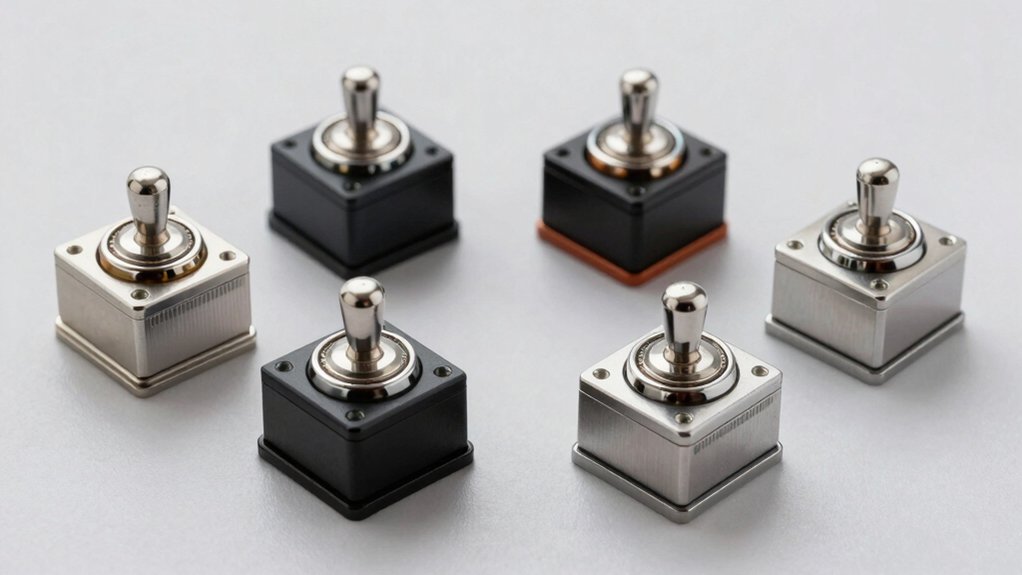

You’ll compare six inline power toggle options by type, rating, and build, then pick the right one for your project. Start with 12V DC or 125–250V AC needs, check DPST or SPST, and note LED indicators or inline cords (3–6 ft, 14–12 AWG). Verify IP/UL ratings, heat tolerance, and a 6A, 16A, or 25A current rating. Consider housing, warranty, and plug‑and‑play ease, then choose the model that best fits your setup—and keep going to see concrete examples and steps.
2pcs LED Strip Inline On/Off Switch Cable (12V)
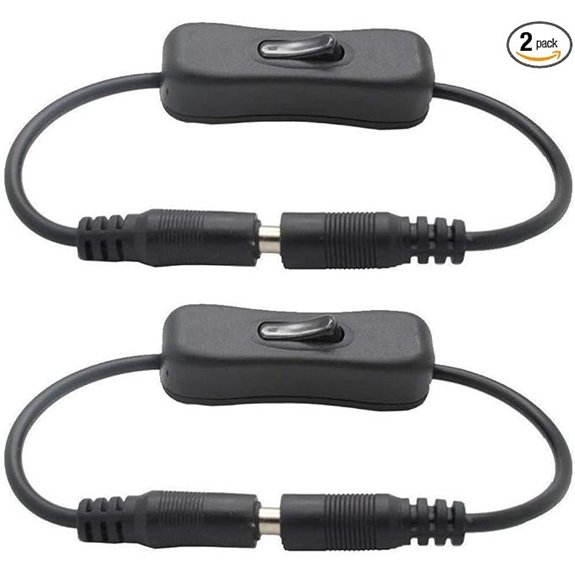
If you need a straightforward inline power switch for a 12V LED setup, this 2-pack LED Strip Inline On/Off Switch Cable is a practical choice. You’ll receive two 30 cm cables with a DC jack (5.5×2.1 mm) male to female connector and an inline rocker switch. Connect the DC jack to your power supply and the female end to your LED strip, then use the rocker to toggle power. It supports 5–24V and up to 2A, which fits COB, SMD, and LED tape. Suitable for cameras, monitors, or massagers; warranty is 1 year. Easy, plug-and-play installation.
Inline Cord Switch 2 Pack for Lamps
https://m.media-amazon.com/images/I/61L0mXuThfL._SX522_.jpg
This Inline Cord Switch 2 Pack is ideal for anyone needing a simple, reliable control for lamps and small appliances. You install it by connecting the two-pole switch into the cord, then insert the slide button to on or off. It handles AC 120V/10A or 250V/6A, depending on your supply, and supports cords up to 6.5 mm. Use it for table, desk, bed lamps, or LED lights. The pack includes two units in black for Durable plastic, heat resistance, and anti-aging properties. For installation, route the cord through the switch holes and secure before testing. Contact after-sales for stable products.
Philips 6 ft Grounded Power Cord with Switch
https://m.media-amazon.com/images/I/81ni8vgJzYL._AC_SX679_.jpg
The Philips 6 ft Grounded Power Cord with Switch stands out for quick, visible control of lamps or seasonal lights right at the outlet. You wire it to a lamp or device, then use the ON/OFF switch to power it. It has a 6 ft braided cord, a 3-prong plug, and a slip-resistant base for tabletop use. Wall mounting is possible via the back keyhole for secure placement. Use it to reset routers or manage electronics behind furniture with a tap. It supports 125 VAC, 8 A, up to 1000 W, and 60 Hz. Choose this cord for extended reach and simple control.
DC 12V Inline Power Toggle Switch with LED
https://m.media-amazon.com/images/I/71JQce5U7TL._SX522_.jpg
Designed for outdoor, high-current applications, the DC 12V Inline Power Toggle Switch with LED stands out for its IP67 waterproof rating and DPST configuration. You install it on DC 12V or 24V lines, using 12 AWG cable. The switch supports up to 25A and works as an ON/OFF for both incoming and outgoing wires. It uses a PA66 body and a transparent PC LED toggle, built for high temperature and abrasion resistance. Wire it with an SAE plug or quick-connects, verify IP67 seals, and test with a multimeter. Consider it for RVs, trailers, solar setups, and outdoor lighting.
Inline Cord Switch with 3-ft 14AWG Cable
https://m.media-amazon.com/images/I/61y5RHXXKpL._AC_SY300_SX300_QL70_FMwebp_.jpg
Looking for a reliable inline switch that’s ready for outdoor use? This Inline Cord Switch with 3-ft 14AWG Cable provides a piggyback plug and IP67 waterproofing. It supports AC/DC 20A-125V and 16A-250V, with a red LED rocker for status. Use it to turn devices on/off without unplugging, reducing standby current and safety risks. Install easily with the hanging hole and self-tapping screws. Connect a 3-ft, 14 AWG, 100% copper cable, and rely on double pole single throw (on/off) operation. It’s UL-listed, weatherproof, and built for harsh environments with durable PA66 shell. Warranty: 12 months.
Inline KCD1 Rocker Switch SPST ON-OFF, Self-Adhesive, 6A-250V/16A-125V
https://m.media-amazon.com/images/I/614vQHSlkFL._SX522_.jpg
This inline KCD1 Rocker Switch SPST ON-OFF with self-adhesive backing is a strong choice if you need a compact, easy-to-install control for low-power devices. You attach it to a flat surface using the included self-adhesive backing, then route wires through the safe, flame-retardant shell. Use the SPST ON-OFF action to switch lights, small motors, or electronic devices. Connect to power with the quick-connect terminals for a stable wiring path, and secure wires with the provided clamps. Choose this option for household appliances or car-board projects, ensuring correct voltage: 6A-250V or 16A-125V.
Factors to Consider When Choosing Inline Power Toggle Switches
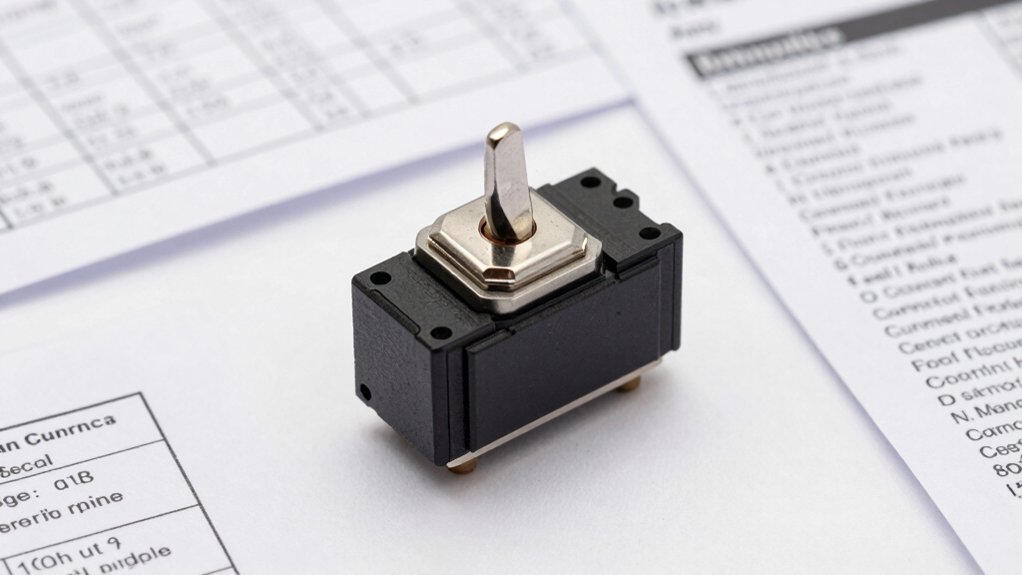
First, assess your system’s voltage and current needs to match the switch rating and prevent overload, then check weatherproofing and enclosure requirements to ensure the unit survives your environment. Next, verify the connection type fit and wire gauge compatibility, choosing a model that accepts your wiring and installations without modification, followed by confirming durability and rating to ensure long-term reliability. Finally, compare options by noting each switch’s specs, gather concrete examples, and outline the exact steps to install and test the chosen inline power toggle switch.
Voltage and Current
To choose the right inline power toggle switch, start by matching the switch’s voltage and current ratings to your load. Check the load’s requirements, such as 125V AC at up to 6A or 250V AC at up to 6A, and note DC variants like 12V with 25A. For DC applications, ensure the switch supports the appropriate voltage and current to safely handle the device without overheating. For AC loads, consider the motor or lamp load type and select switches with current ratings that exceed the peak inrush current to prevent contact wear. Higher current ratings, such as 16A or 25A, are essential for high-power devices or outdoor equipment, while 6A fits lamps and small electronics. Confirm single-pole vs. double-pole, and match to total current in DPST configurations.
Weatherproofing Needs
When selecting inline power toggle switches for outdoor or damp environments, start by checking the IP rating. Look for IP67 or higher to ensure dust and water intrusion protection in outdoor or wet settings. Ensure the switch housing and seals are rated for the ambient conditions you face, including temperature and humidity, to prevent corrosion or insulation failure. Confirm the switch is rated for the required voltage and current in your application to avoid overheating in damp settings. Prefer models with waterproof or weatherproof cable entries and gasketed connections to maintain enclosure integrity. Consider boom-proof features such as sealed toggle mechanisms and ingress protection around connectors to extend reliability in harsh outdoor use. Verify maintenance access remains feasible within the published protection levels.
Connection Type Fit
Choose the correct connector type to match your device’s input port. Inline power switches come with different connector styles, such as DC barrel jacks (for example 5.5×2.1mm) and SAE quick-connects, and they must fit your device’s input port for proper operation. Check the port size and polarity, then confirm how you will attach the switch. Match the current rating to your load; use at least the device’s draw, such as 2A for common LED strips, or higher for heavier loads. Verify the voltage rating aligns with your system voltage, like DC 12V or AC 125/250V, to prevent insulation problems. Decide if you need SPST or DPST to control one or two wires, based on your wiring plan.
Wire Gauge Compatibility
Start by matching the switch’s current rating to the wire gauge you’re using. Wire gauge compatibility determines how much current you can safely carry and how well the switch fits with your conductors. Typical inline switches support 12 AWG to 14 AWG, so choose a switch rated for 6A, 16A, or 25A that matches your wire size. A higher current rating usually needs thicker gauge to maintain insulation and safe operation under load. Check if the switch offers quick-connects or terminals and verify they fit your stripped wire length and gauge. For outdoor or waterproof setups, confirm the switch and wiring share equal or higher environmental ratings. Ensure secure connections, test for heat during initial use, and replace any components that show signs of distress.
Durability and Rating
Durability and rating determine how well an inline power toggle switch will perform over time and under different conditions. Start by checking the current rating to match your load, such as 6A, 16A, or 25A, and ensure it covers your application demand. Next, verify the voltage rating (AC or DC) and the corresponding current limit to prevent overheating or failure. Look for IP ratings, like IP67, to confirm suitability for outdoor or wet environments and resistance to dust and water ingress. Consider contact material and insulation, such as PA66 housing or flame-retardant plastics, for durability and safety in high-temperature or rugged use. Finally, review mechanical life, for example 10,000 cycles, to estimate long-term endurance and replacement intervals.
Final Thoughts
When selecting an inline power toggle, start by matching current needs to ratings (6A, 16A, or 25A) and voltage (12V–24V DC or 125V–250V AC). Check IP rating, LED indicators, and wiring length (3–6 ft) to fit your setup. Consider whether you need SPST or DPST, and if plug-and-play installation suits you. Review construction (PA66 housing, heat resistance) and warranty. Compare models, pick one with compatible cords, then install following the manufacturer’s steps exactly.

Meet Ry, “TechGuru,” a 36-year-old technology enthusiast with a deep passion for tech innovations. With extensive experience, he specializes in gaming hardware and software, and has expertise in gadgets, custom PCs, and audio.
Besides writing about tech and reviewing new products, he enjoys traveling, hiking, and photography. Committed to keeping up with the latest industry trends, he aims to guide readers in making informed tech decisions.