
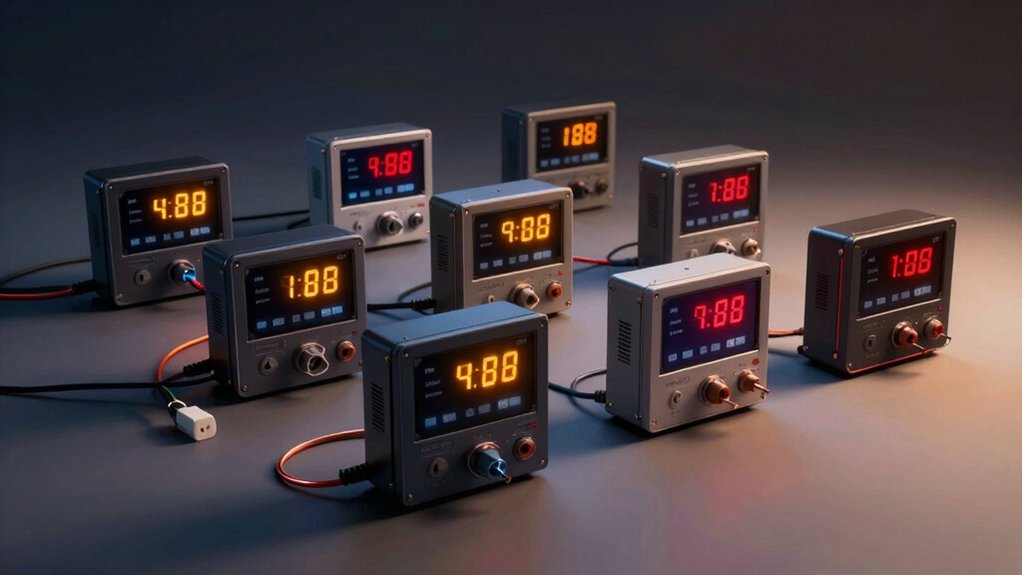

You’re likely wasting money on electricity without realizing it. Hidden energy drains from appliances running in standby mode or inefficient devices quietly inflate your utility bills each month. Power cost monitors help you identify these culprits by measuring exactly how much energy each device consumes. But choosing the right monitor matters—you’ll need to understand what features actually work best for your home setup and budget.
| Upgraded Watt Power Meter Home Electrical Usage Monitor |
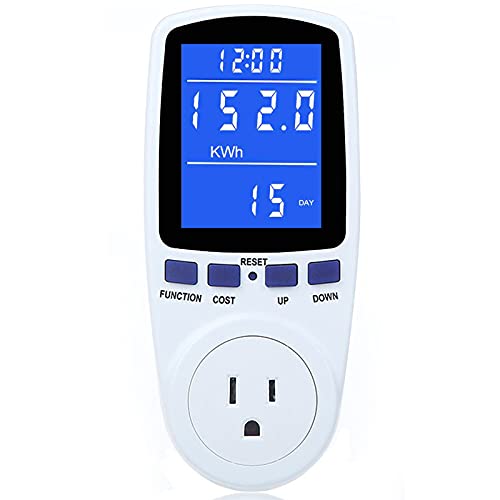
| Most Comprehensive | Display Type: 2.36″ LCD with backlight and 180° wide viewing angles | Overload Protection: Adjustable threshold (0–3680W, default 3680W) | Data Memory & Retention: Retains power data during power failure; shows last data on next use | VIEW LATEST PRICE | Read Our Analysis |
| Upgraded Watt Meter Power Monitor with 8 Display Modes |

| Best Value | Display Type: LCD display with white text on black background | Overload Protection: Default threshold 1800W with flashing backlight alert | Data Memory & Retention: Stores electricity quantity, cost, unit price across power interruptions | VIEW LATEST PRICE | Read Our Analysis |
| Suraielec Plug-in Watt Meter with Backlit Display |

| Most Accurate | Display Type: LCD display with backlight and wide-angle viewing | Overload Protection: Adjustable threshold (680–3680W) with overload indication | Data Memory & Retention: 90 days long-term data memory with rechargeable backup | VIEW LATEST PRICE | Read Our Analysis |
| P3 International P4460 Kill A Watt EZ Electricity Usage Monitor grey |

| Best Overall | Display Type: Large LCD display | Overload Protection: Not specified | Data Memory & Retention: Built-in backup of accumulated information | VIEW LATEST PRICE | Read Our Analysis |
| 2 Pack Watt Meter Power Consumption Monitor with Backlight |

| Best For Beginners | Display Type: 8 display modes with backlight (white on black text) | Overload Protection: Adjustable threshold (0–3680W, default 3680W) with buzzer alarm | Data Memory & Retention: Auto-saves cumulative data (electricity, cost, time) across power events | VIEW LATEST PRICE | Read Our Analysis |
| KETOTEK Watt Meter Power Consumption Monitor with LCD Display |

| Best Compact Design | Display Type: Upgraded LCD with wide viewing angles | Overload Protection: Adjustable threshold (0–3680W, default 3680W) with LED indicator | Data Memory & Retention: Built-in chip stores data during power failure | VIEW LATEST PRICE | Read Our Analysis |
| PN2500 Professional Wi-Fi EV Charger with Power Monitor |

| Smart Home Integration | Display Type: Digital display (Wi-Fi enabled) | Overload Protection: Class 1.0 accuracy with pass-through monitoring | Data Memory & Retention: Forecasts consumption by hour, day, week, month, year | VIEW LATEST PRICE | Read Our Analysis |
| Smart Home Energy Monitor with 16 Circuit Sensors |

| Most Versatile | Display Type: Real-time digital monitoring via 2.4 GHz WiFi app | Overload Protection: Circuit-level monitoring with 16 x 50A sensors | Data Memory & Retention: Hourly data valid 90 days; day/month/year data export permanent | VIEW LATEST PRICE | Read Our Analysis |
| Emporia Vue 3 Home Energy Monitor Smart Meter |

| Professional Grade | Display Type: Real-time digital monitoring via 2.4 GHz WiFi app | Overload Protection: Circuit-level monitoring with 16 x 50A sensors | Data Memory & Retention: 1-minute data retained 7 days; 1-hour data retained indefinitely | VIEW LATEST PRICE | Read Our Analysis |
| AC Multi-Function Power Monitor LCD Digital Display Meter |

| Best For Professionals | Display Type: Large 180° viewing angle LCD | Overload Protection: Preset power limit alarm with flashing backlight | Data Memory & Retention: Automatic data storage if power is cut unexpectedly | VIEW LATEST PRICE | Read Our Analysis |
More Details on Our Top Picks
Upgraded Watt Power Meter Home Electrical Usage Monitor
Want to see exactly how much power your appliances are consuming and what they’re costing you? The Upgraded Watt Power Meter monitors watts, kilowatt-hours, voltage, current, and frequency on its 2.36″ LCD screen. You’ll track cumulative energy costs and identify which devices drain the most power. The meter stores data even during power outages, so you won’t lose information. Set your overload protection threshold (default 3680W, though 1800W is recommended initially) to receive alerts when appliances exceed safe limits. Adjust the backlight from 10 minutes to always-on using the UP and DOWN buttons, then save your settings with the COST button.
- Display Type:2.36″ LCD with backlight and 180° wide viewing angles
- Overload Protection:Adjustable threshold (0–3680W, default 3680W)
- Data Memory & Retention:Retains power data during power failure; shows last data on next use
- Cost Calculation & Forecasting:Calculates estimated electricity cost; tracks cumulative cost
- Measured Parameters:Power (W), energy (kWh), voltage (V), current (A), frequency (Hz), power factor, cost
- Installation Type:Plug-in outlet power meter
- Additional Feature:Adjustable backlight time options
- Additional Feature:Customizable overload threshold settings
- Additional Feature:Min/max power tracking capability
Upgraded Watt Meter Power Monitor with 8 Display Modes
This power monitor’s eight display modes make it an excellent choice for anyone who needs quick access to specific energy data without cycling through unnecessary screens. You’ll view power consumption in watts, electricity in kilowatt-hours, voltage, frequency, current, power factor, unit price per kilowatt-hour, and total cost. The electricity mode tracks your appliance’s power usage directly, while the total cost mode displays your cumulative electricity bill. Press the UP button to navigate between modes quickly. The white backlight activates automatically and dims after ten minutes of inactivity, though you can manually toggle it anytime. This design lets you monitor energy consumption efficiently without unnecessary complexity.
- Display Type:LCD display with white text on black background
- Overload Protection:Default threshold 1800W with flashing backlight alert
- Data Memory & Retention:Stores electricity quantity, cost, unit price across power interruptions
- Cost Calculation & Forecasting:Shows total cost in dollars; cumulative electricity bill display
- Measured Parameters:Power (W), energy (kWh), voltage (V), frequency (Hz), current (A), power factor, unit price, cost
- Installation Type:Plug-in outlet monitor (US standard socket and plug)
- Additional Feature:High-quality ABS construction
- Additional Feature:Fireproof, anti-drop design
- Additional Feature:Factory reset via button
Suraielec Plug-in Watt Meter with Backlit Display
If you’re monitoring appliances in dimly lit spaces or need dependable long-term energy tracking, the Suraielec Plug-in Watt Meter delivers a backlit LCD display that lets you read measurements in low light without guesswork. You’ll measure power consumption in watts, volts, amps, frequency, and power factor to identify energy drains. The meter tracks maximum and minimum power usage, cumulative operating time, and energy consumption in kilowatt-hours. Set your local electricity rate into the auto cost calculator to see exactly what devices cost to run. You can adjust the overload threshold between 680 and 3680 watts based on your needs. Data stays preserved for ninety days using the built-in rechargeable backup, protecting your records during power outages.
- Display Type:LCD display with backlight and wide-angle viewing
- Overload Protection:Adjustable threshold (680–3680W) with overload indication
- Data Memory & Retention:90 days long-term data memory with rechargeable backup
- Cost Calculation & Forecasting:Auto cost calculator based on set prices
- Measured Parameters:Power (W), volts (V), amps (A), frequency, power factor, energy (kWh), max/min power, cumulative time
- Installation Type:Plug-in outlet meter (compact, keeps lower outlet accessible)
- Additional Feature:90-day long-term data memory
- Additional Feature:Built-in rechargeable backup battery
- Additional Feature:Wide voltage range support (90-250V)
P3 International P4460 Kill A Watt EZ Electricity Usage Monitor grey
For anyone seeking straightforward energy cost tracking without complicated setup, the P3 International P4460 Kill A Watt EZ delivers practical monitoring through its large LCD display that shows eight key measurements including real-time power usage and estimated costs. You’ll get accurate readings within 0.2%, ensuring reliable data for your energy assessments. The device forecasts your electricity expenses by week, month, and year, helping you understand spending patterns. Its built-in backup feature preserves accumulated information, so you won’t lose tracking data during power interruptions. Simply plug the monitor between your outlet and appliance to begin collecting usage statistics immediately.
- Display Type:Large LCD display
- Overload Protection:Not specified
- Data Memory & Retention:Built-in backup of accumulated information
- Cost Calculation & Forecasting:Calculates cost and forecasts by week, month, and year
- Measured Parameters:Eight critical units of measure (specific units not detailed)
- Installation Type:Plug-in outlet monitor
- Additional Feature:Week/month/year cost forecasting
- Additional Feature:Built-in accumulated data backup
- Additional Feature:0.2% measurement accuracy
2 Pack Watt Meter Power Consumption Monitor with Backlight
Want to track exactly how much electricity each appliance in your home consumes? The 2 Pack Watt Meter monitors power, energy, voltage, amps, and cost across eight display modes with a readable backlight. Set your overload limit—the default is 3680W, though 1800W is recommended initially—and the device triggers an alarm when appliances exceed that threshold. You’ll access cumulative data on energy usage, minimum and maximum power readings, and operational time. The meter retains all settings and consumption data even after power loss, displaying saved information when reconnected. Its durable PC housing resists heat and falls, fitting standard US outlets for household monitoring.
- Display Type:8 display modes with backlight (white on black text)
- Overload Protection:Adjustable threshold (0–3680W, default 3680W) with buzzer alarm
- Data Memory & Retention:Auto-saves cumulative data (electricity, cost, time) across power events
- Cost Calculation & Forecasting:Calculates cost with KWH alarm when consumption reaches set value
- Measured Parameters:Power (W), energy (kWh), volts, amps, hertz, power factor, cost, min/max power, cumulative days/time
- Installation Type:Plug-in outlet monitor (US standard socket, 2-pack)
- Additional Feature:KWh alarm threshold feature
- Additional Feature:Buzzer alert on overload
- Additional Feature:Five backlight time options
KETOTEK Watt Meter Power Consumption Monitor with LCD Display
The KETOTEK Watt Meter works best for homeowners who want to track energy use on individual appliances without installing permanent monitoring systems. Insert it between your appliance and outlet to monitor consumption. Press M to view kilowatt-hours and electricity costs. Use the + button to see watts and VA, or the – button for frequency and power factor. Press OK to check maximum and minimum power usage, or hold OK for three seconds to see total accumulated time. The device stores data during power outages and allows you to reset information while keeping switch settings intact for monitoring multiple appliances. Set the overload alarm around 1800W beforehand to receive alerts when usage exceeds safe levels.
- Display Type:Upgraded LCD with wide viewing angles
- Overload Protection:Adjustable threshold (0–3680W, default 3680W) with LED indicator
- Data Memory & Retention:Built-in chip stores data during power failure
- Cost Calculation & Forecasting:Displays electricity cost; KWh ALARM or COST ALARM options
- Measured Parameters:Voltage (Vrms), current (Arms), watt, VA, Hz, PF, KWH, cost, max/min power, accumulated time
- Installation Type:Plug-in outlet monitor (US plug with ground)
- Additional Feature:True RMS voltage/current measurement
- Additional Feature:Wide LCD viewing angles
- Additional Feature:2-watt minimum energy threshold
PN2500 Professional Wi-Fi EV Charger with Power Monitor
If you’re charging an electric vehicle at home and want to understand exactly how much energy you’re using, the PN2500 combines EV charging with built-in power monitoring. This Level 1 charger measures watts, kilowatt-hours, voltage, amperage, and power factor with 0.001A resolution accuracy. You’ll access real-time data through the Wi-Fi app on iOS or Android devices. The PN2500 forecasts your consumption by hour, day, week, month, and year, then calculates your charging costs. The pass-through current design lets you monitor both your EV charger and connected appliances simultaneously, revealing where energy drains occur in your home’s electrical usage patterns.
- Display Type:Digital display (Wi-Fi enabled)
- Overload Protection:Class 1.0 accuracy with pass-through monitoring
- Data Memory & Retention:Forecasts consumption by hour, day, week, month, year
- Cost Calculation & Forecasting:Forecasts consumption by hour, day, week, month, year; calculates cost
- Measured Parameters:Watts/VA, kWh, time, amp, start-up amp, volt, PF, Hz, cost
- Installation Type:Plug-in EV charger with pass-through monitoring
- Additional Feature:Wi-Fi app remote monitoring
- Additional Feature:Hourly consumption forecasting capability
- Additional Feature:Pass-through current design support
Smart Home Energy Monitor with 16 Circuit Sensors
Need to track energy costs across multiple rooms or circuits in a rental property, shared apartment, or multi-room home? Install 16 clamp-on sensors directly into your circuit panel—no rewiring required. Each sensor monitors up to 50A, enabling you to measure real-time spending per circuit or appliance. Set customizable electricity rates accounting for peak, off-peak, and holiday pricing. Access hourly data for 90 days or permanent day/month/year records via the Android/iOS app over 2.4 GHz WiFi. Use actionable notifications to identify which circuits consume the most energy, then adjust usage accordingly. For complete privacy, enable Super Privacy Mode for LAN-only operation without cloud storage.
- Display Type:Real-time digital monitoring via 2.4 GHz WiFi app
- Overload Protection:Circuit-level monitoring with 16 x 50A sensors
- Data Memory & Retention:Hourly data valid 90 days; day/month/year data export permanent
- Cost Calculation & Forecasting:Customizable electricity rates (peak, off-peak, holiday) for time-of-use billing
- Measured Parameters:Real power, energy usage, solar/net metering per circuit
- Installation Type:Circuit panel clamp-on sensors (16 sensors, 50A each)
- Additional Feature:16 clamp-on branch sensors
- Additional Feature:Super Privacy Mode available
- Additional Feature:Multi-room circuit tracking
Emporia Vue 3 Home Energy Monitor Smart Meter
Want to monitor individual appliances and circuits without the guesswork? The Emporia Vue 3 installs directly in your circuit panel with clamp-on sensors. You’ll receive sixteen 50A branch sensors to track critical loads like your AC, furnace, water heater, and washer-dryer. The system supports most electrical configurations and connects via 2.4 GHz Wi-Fi. Access real-time data through the iPhone, Android, or web app. One-second readings display only when the app’s open; minute and hourly data stay in the cloud for seven days and indefinitely. Configure settings for time-of-use rates and solar monitoring. A one-year warranty covers the UL and CE-listed device, with ±2% sensor accuracy ensuring reliable readings.
- Display Type:Real-time digital monitoring via 2.4 GHz WiFi app
- Overload Protection:Circuit-level monitoring with 16 x 50A sensors
- Data Memory & Retention:1-minute data retained 7 days; 1-hour data retained indefinitely
- Cost Calculation & Forecasting:App-configurable settings for time-of-use and peak demand
- Measured Parameters:Real-time energy data per circuit with solar/net metering support
- Installation Type:Circuit panel clamp-on sensors (16 x 50A sensors included)
- Additional Feature:UL and CE safety listed
- Additional Feature:1-second real-time data streaming
- Additional Feature:Solar/net metering capability
AC Multi-Function Power Monitor LCD Digital Display Meter
The AC Multi-Function Power Monitor with its 180° LCD display works best for users who need to track multiple electrical metrics at once without switching between devices. You’ll monitor voltage, current, active energy, frequency, and power factor simultaneously on a single screen. The split core current transformer installs easily without disconnecting wiring. Set custom power alarm limits using the one-button control, and the backlight flashes when you exceed your preset threshold. If power cuts unexpectedly, the device automatically stores your last test data, preventing information loss. Use this monitor across household, commercial, or industrial settings to identify energy waste and manage consumption effectively.
- Display Type:Large 180° viewing angle LCD
- Overload Protection:Preset power limit alarm with flashing backlight
- Data Memory & Retention:Automatic data storage if power is cut unexpectedly
- Cost Calculation & Forecasting:Preset power alarm limits; one-button control
- Measured Parameters:Voltage, current, active energy, energy, frequency, power factor (simultaneous display)
- Installation Type:Split core current transformer for easy installation
- Additional Feature:Split core current transformer
- Additional Feature:180° viewing angle display
- Additional Feature:Single-button operation design
Factors to Consider When Choosing an Electricity Usage Power Cost Monitor
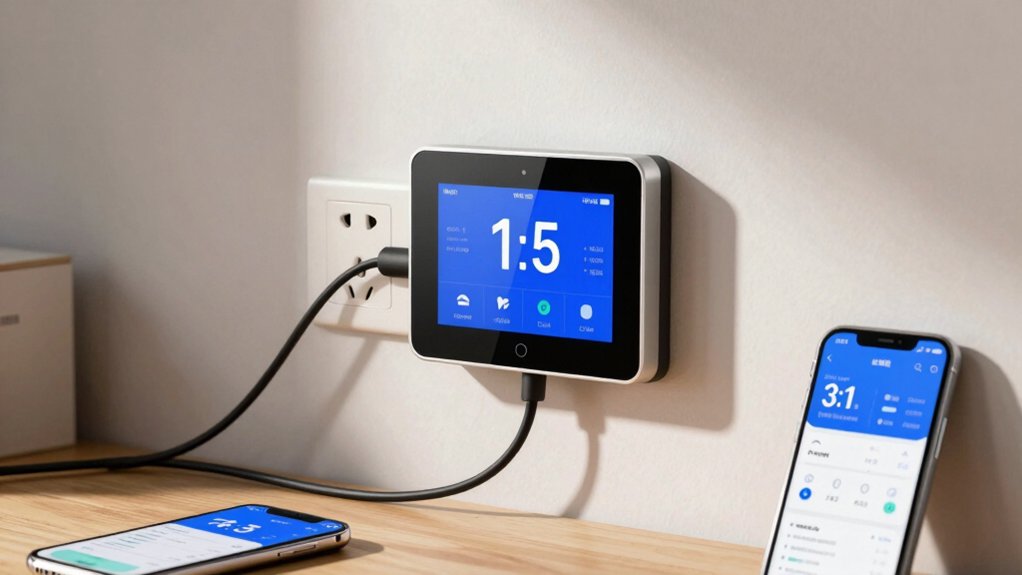
When you’re selecting an electricity usage power cost monitor, you’ll want to assess five critical features: display quality and readability so you can easily view measurements, measurement accuracy and parameters that match your needs, data memory and retention capabilities for tracking usage over time, overload protection settings to safeguard your devices, and backlight and power options that suit your installation location. Each of these factors directly affects how well the monitor performs in your home and how useful the information it provides will be. By assessing each feature against your specific situation, you’ll choose a monitor that gives you reliable data about your energy consumption.
Display Quality and Readability
Most power cost monitors won’t help you identify energy drains if you can’t read what they’re displaying, so display quality deserves careful attention when you’re comparing models. Look for monitors with large LCD screens and backlighting, which improve readability in both daylight and low-light conditions. Check the viewing angle—180-degree angles let you read measurements from multiple positions without losing clarity. Evaluate backlight options: auto-off settings preserve battery life, while always-on modes guarantee visibility in darkness. Prioritize high-contrast displays using white-on-black schemes, which speed up parameter checks. Finally, examine numeral and unit clarity (W, kWh, V, A, Hz, PF, $/kWh, $). Clear, legible text reduces misreading errors on both real-time and cumulative measurements, ensuring you accurately track your energy consumption and costs.
Measurement Accuracy and Parameters
How do you know whether a power cost monitor’s readings are actually reliable? Check the meter’s accuracy class rating, typically listed as Class 1.0 or similar on the product specifications. This rating tells you how closely the device measures true power consumption. Next, verify the resolution for each measurement—look for 0.1 W for power, 0.1 V for voltage, and 0.001 A for current. These finer resolutions help you catch small energy drains you’d otherwise miss. Confirm the meter displays true RMS measurements for voltage and current, which accurately reflect real-world electrical loads rather than simplified estimates. Finally, check which parameters the device reports: power, voltage, current, frequency, power factor, and cumulative energy in kWh. More parameters give you better insight into your energy usage patterns.
Data Memory and Retention
What happens to your power monitor’s data if the device loses power or you unplug it? Data memory capabilities determine whether your historical usage and cost information survive power interruptions. Some monitors automatically save electricity quantity, costs, and unit prices, preserving this data even after unplugging. Others retain only current readings while losing cumulative totals. Choose monitors that offer long-term memory storage—such as 90-day histories or cloud-backed records—to track consumption patterns over extended periods. Check whether the model saves data during power failures and displays last-saved information upon restart. This capability directly affects your ability to analyze accurate historical trends and identify energy drains. Verify data retention features before purchasing to ensure continuity in your energy-tracking efforts.
Overload Protection Settings
Your power monitor’s overload protection settings determine when and how the device alerts you to excessive electrical loads on a circuit. Most monitors let you adjust thresholds from 0 to 3680 W, with 1800 W recommended for initial setup. When a connected appliance exceeds your set limit, the monitor displays an “OVERLOAD” warning and deactivates buttons until you reduce the load. Many units combine overload alerts with kWh or cost alarms for comprehensive monitoring. The device uses both visual indicators—flashing or backlit “OVERLOAD” messages—and audible signals like buzzers to ensure you notice warnings immediately. Set your threshold high enough to prevent false alarms from high inrush appliances, yet low enough to protect your circuit from genuine overload conditions.
Backlight and Power Options
When you’re deciding between power cost monitors, the backlight and power consumption features shouldn’t be overlooked, since they directly affect how easily you’ll read your meter in dim lighting and how much electricity the monitor itself will draw. You’ll find backlight options range from fixed durations—10 minutes, 1 hour, 4 hours, or 8 hours—to always-on settings. Some models include manual toggle buttons for immediate control. Many meters automatically disable backlighting after 10 minutes without use to preserve battery life. Check whether your chosen model requires button combinations to adjust settings or offers dedicated backlight toggles. Pair backlight selection with high-contrast displays for optimal readability. Evaluate these features against your specific usage environment and power budget requirements.
Installation and Compatibility
How you’ll install your power cost monitor depends largely on the design type you choose. Plug-in models require you to insert the meter between your outlet and appliance, making installation straightforward with no tools needed. Clamp or split-core sensors offer an easier alternative, allowing you to attach them directly to existing circuits without disconnecting anything.
Before purchasing, verify that your monitor’s voltage range (typically 90–250 VAC) matches your home’s electrical system. Check the current rating—most household devices require 0–15 or 0–16 amperes—and confirm your plug type aligns with US standard receptacles. Determine whether you need single-phase or three-phase capability based on your electrical setup. Additionally, confirm the meter stores data during power outages and retains previous readings for accurate tracking.
Final Thoughts
You’ll find the right power cost monitor by matching your needs to available features. Pick a plug-in model for individual outlets or a smart monitor with multiple sensors for whole-home tracking. Prioritize True RMS accuracy, clear displays, and cost forecasting functions. Compare resolution levels (0.1 W minimum), backlight options, and data retention during outages. Test the device’s interface before purchasing to ensure you can read measurements easily and navigate settings quickly.

Meet Ry, “TechGuru,” a 36-year-old technology enthusiast with a deep passion for tech innovations. With extensive experience, he specializes in gaming hardware and software, and has expertise in gadgets, custom PCs, and audio.
Besides writing about tech and reviewing new products, he enjoys traveling, hiking, and photography. Committed to keeping up with the latest industry trends, he aims to guide readers in making informed tech decisions.